Seed Star
A dot on a palm
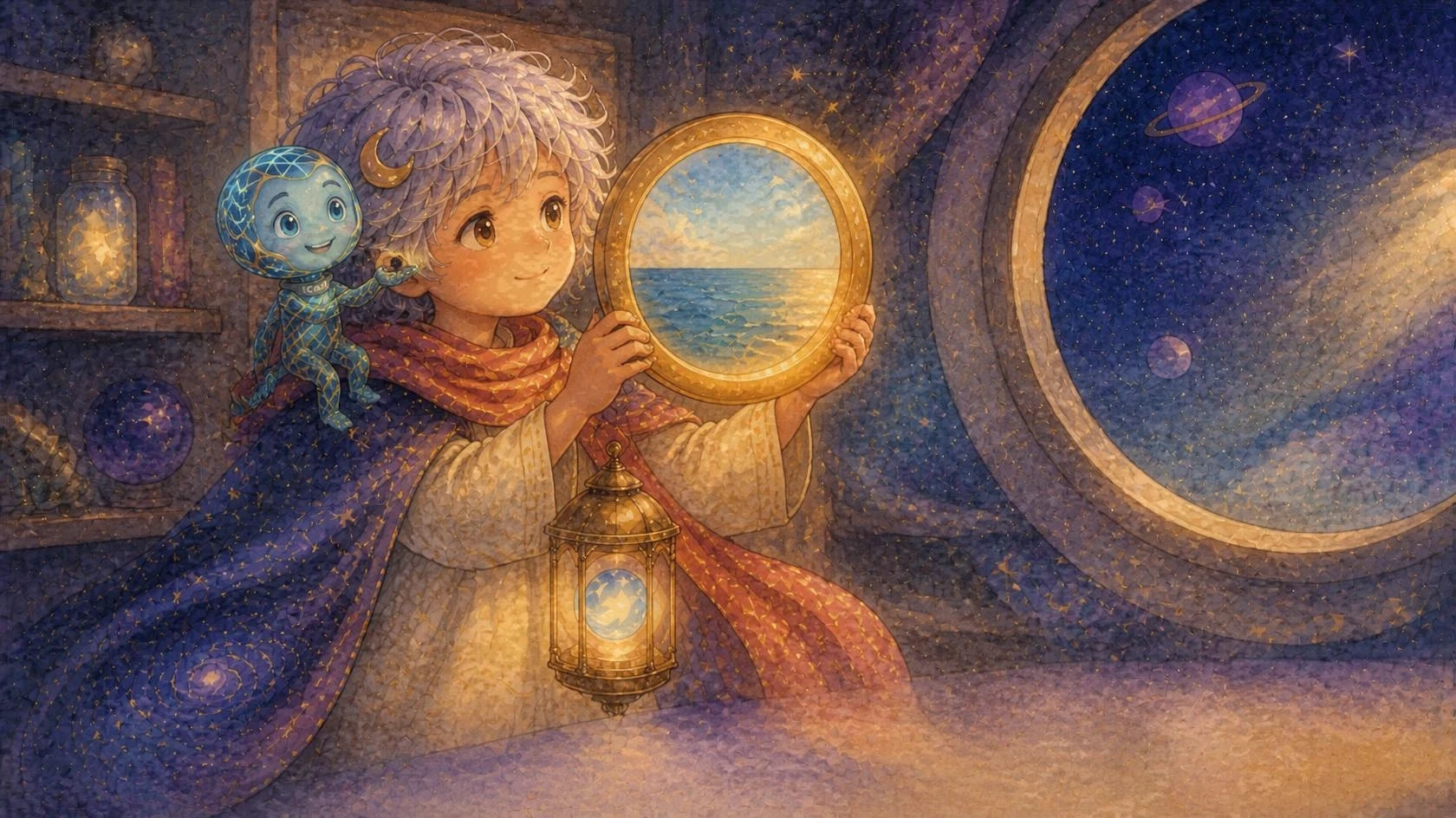
Morning sunlight shone on the star-ring on the desk. The gold at the bottom of the ring was a little wider than last time. Inside the ring, a blue sea and a seaside hill could be seen. "Komo, where are we today?" Komo, on her shoulder, opened his palm. On it was one tiny dot. "Today's story has many kinds of seeds. Can you find which story this tiny dot is the seed for?" Nuri lifted the ring. "Today we only watch and listen from far away again, right?" "Right. We're listening to the stories Jesus tells."
He entered into a boat, and sat
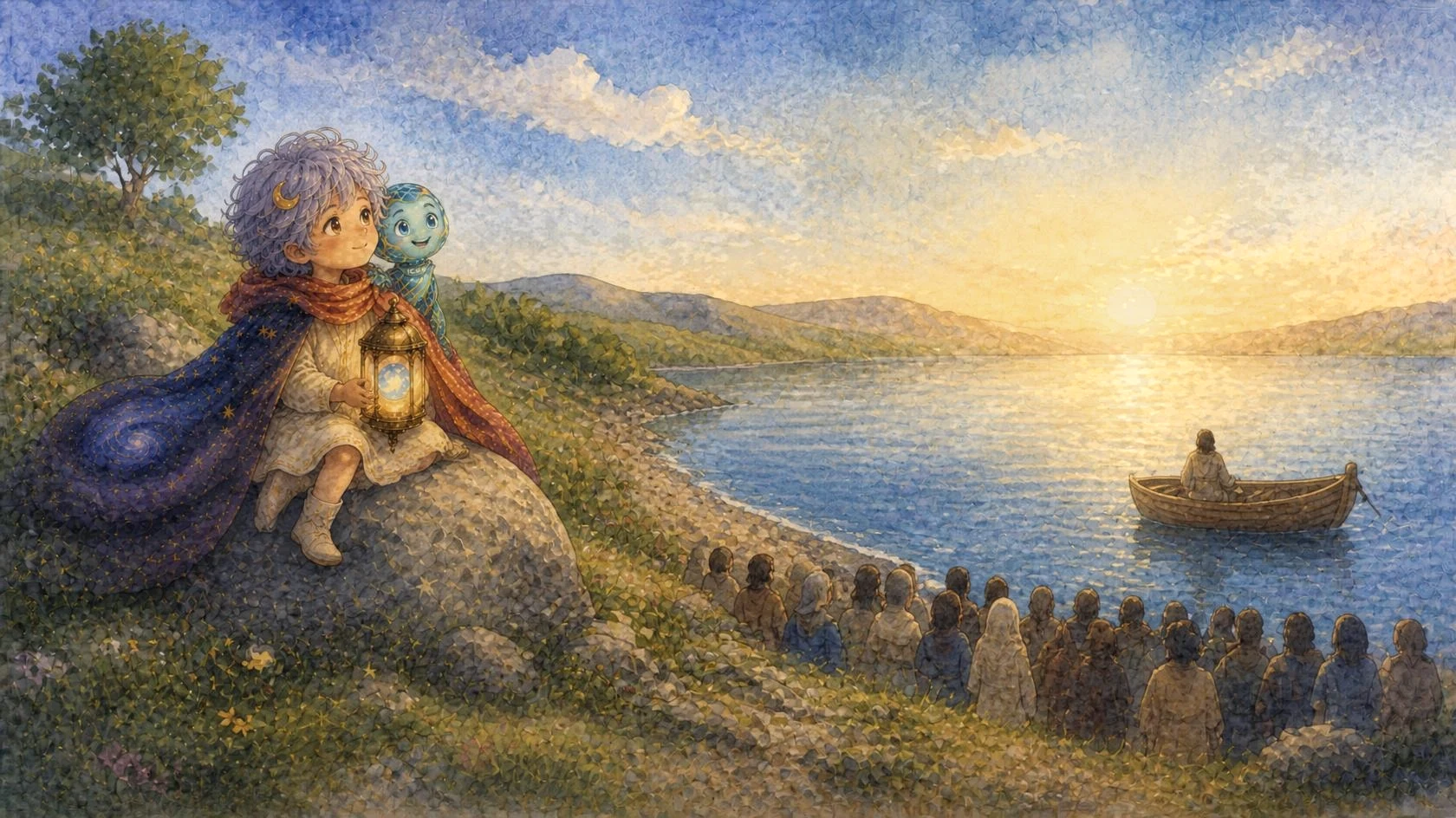
Beyond the star-ring, the shore of the Sea of Galilee appeared. Matthew tells it like this: "Jesus went out of the house, and sat by the seaside." A great crowd gathered. Jesus got into a small boat and sat down, and the people stood at the water's edge to listen. Jesus began a story: "Behold, a farmer went out to sow." Komo whispered, "This is a story Jesus is telling. A story like this is called a parable. With parables, Jesus shows what God's Kingdom is like." Nuri nodded. "God's Kingdom is where God rules as King. Anywhere God rules!"
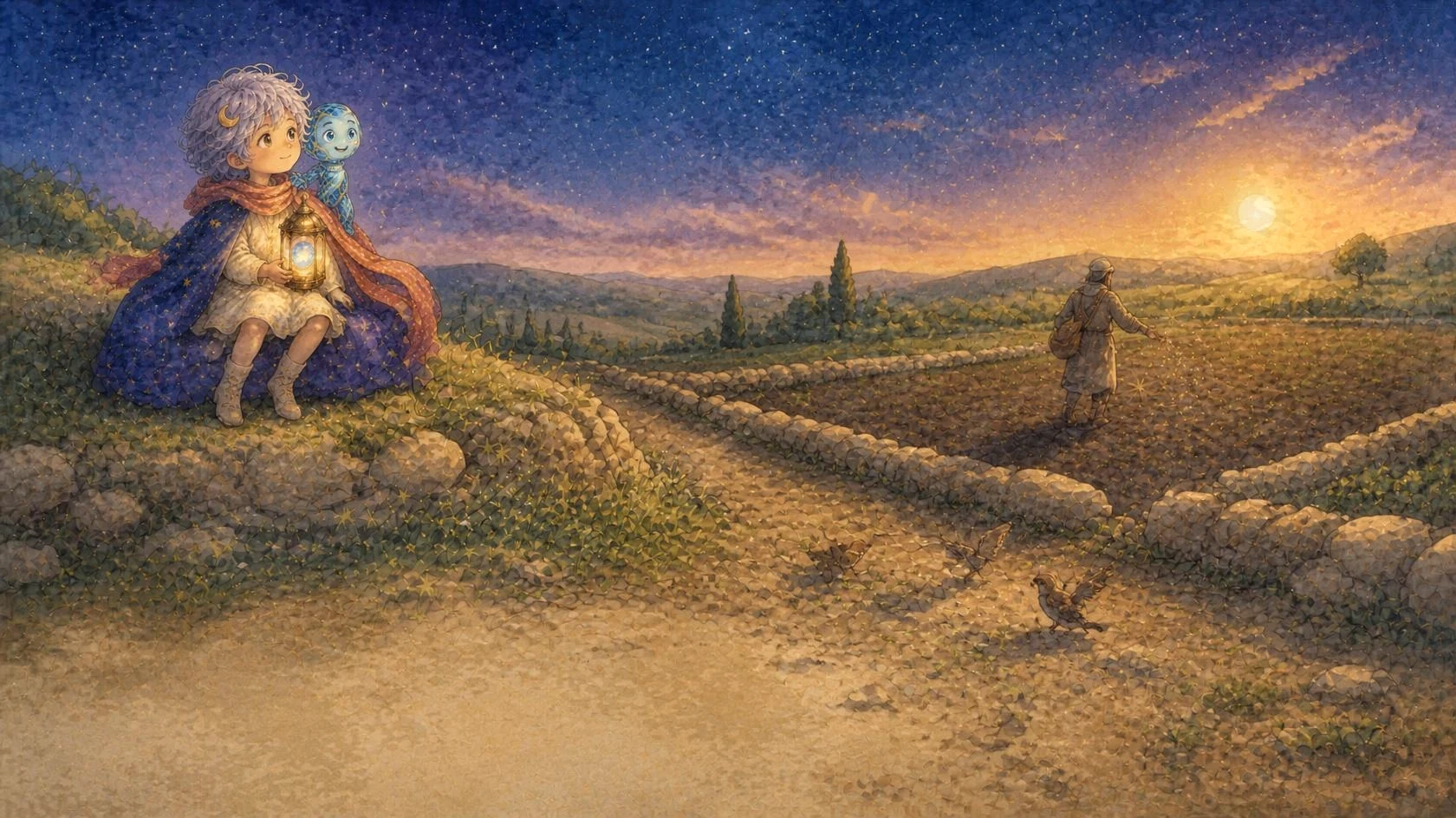
The birds came
Following Jesus' words, a story picture bloomed inside the star-ring. The farmer in the story scattered seed widely, handful by handful. "…some seeds fell by the roadside, and the birds came and devoured them." Some seeds fell on ground full of rocks. "…immediately they sprang up, because they had no depth of earth. When the sun had risen, they were scorched. Because they had no root, they withered away." Nuri squeezed her hands. "What a waste." The farmer still had lots of seed in his hand. He kept walking and sowing. Up ahead, other kinds of ground could be seen.
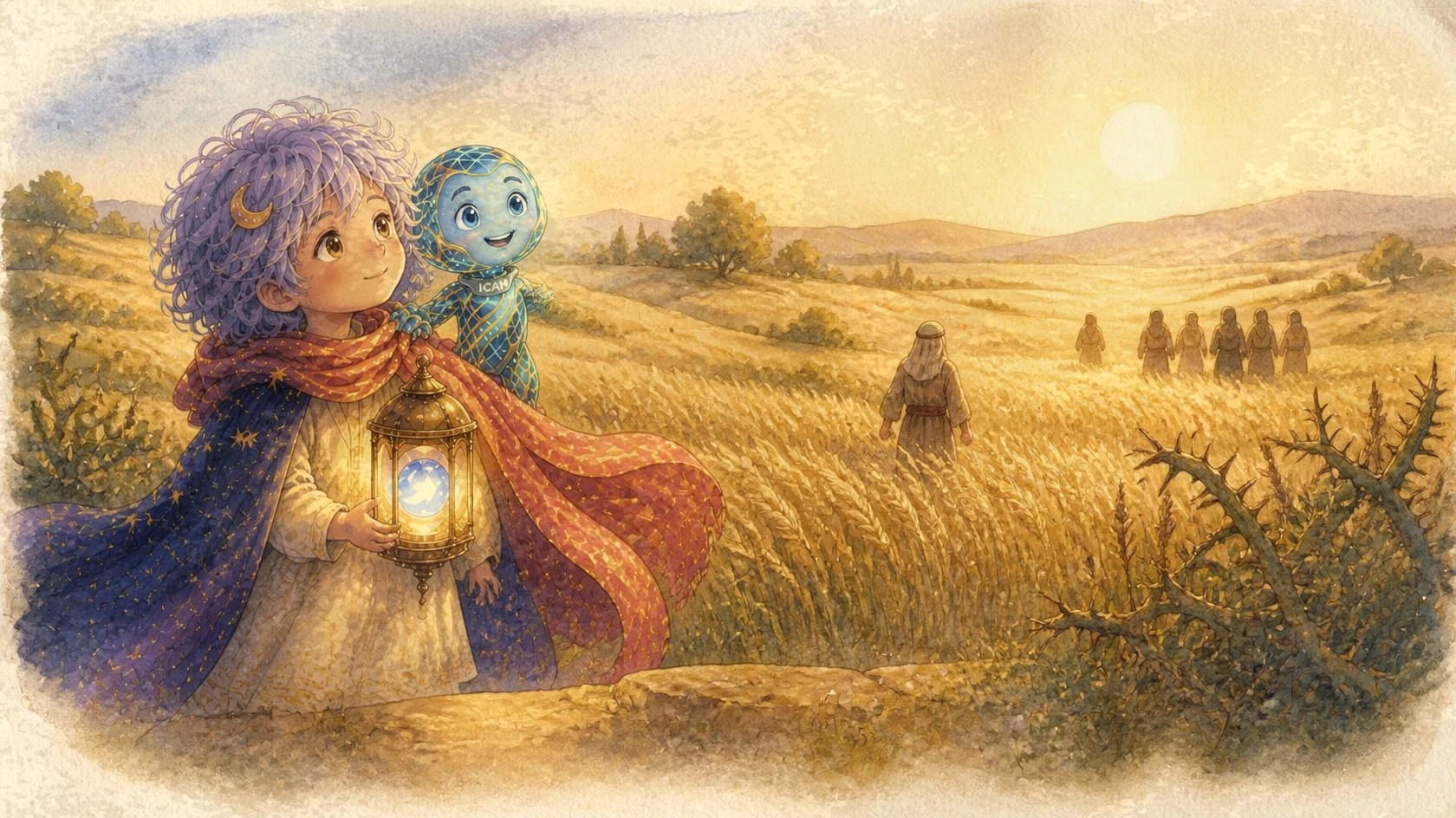
A hundred, sixty, thirty
"Others fell among thorns. The thorns grew up and choked them." And the rest of the seed fell into soft, deep soil. "Others fell on good soil, and yielded fruit: some one hundred times as much, some sixty, and some thirty." Nuri's eyes went round. "A hundred times more than was sown!" As Jesus finished the story, he said, "He who has ears to hear, let him hear."
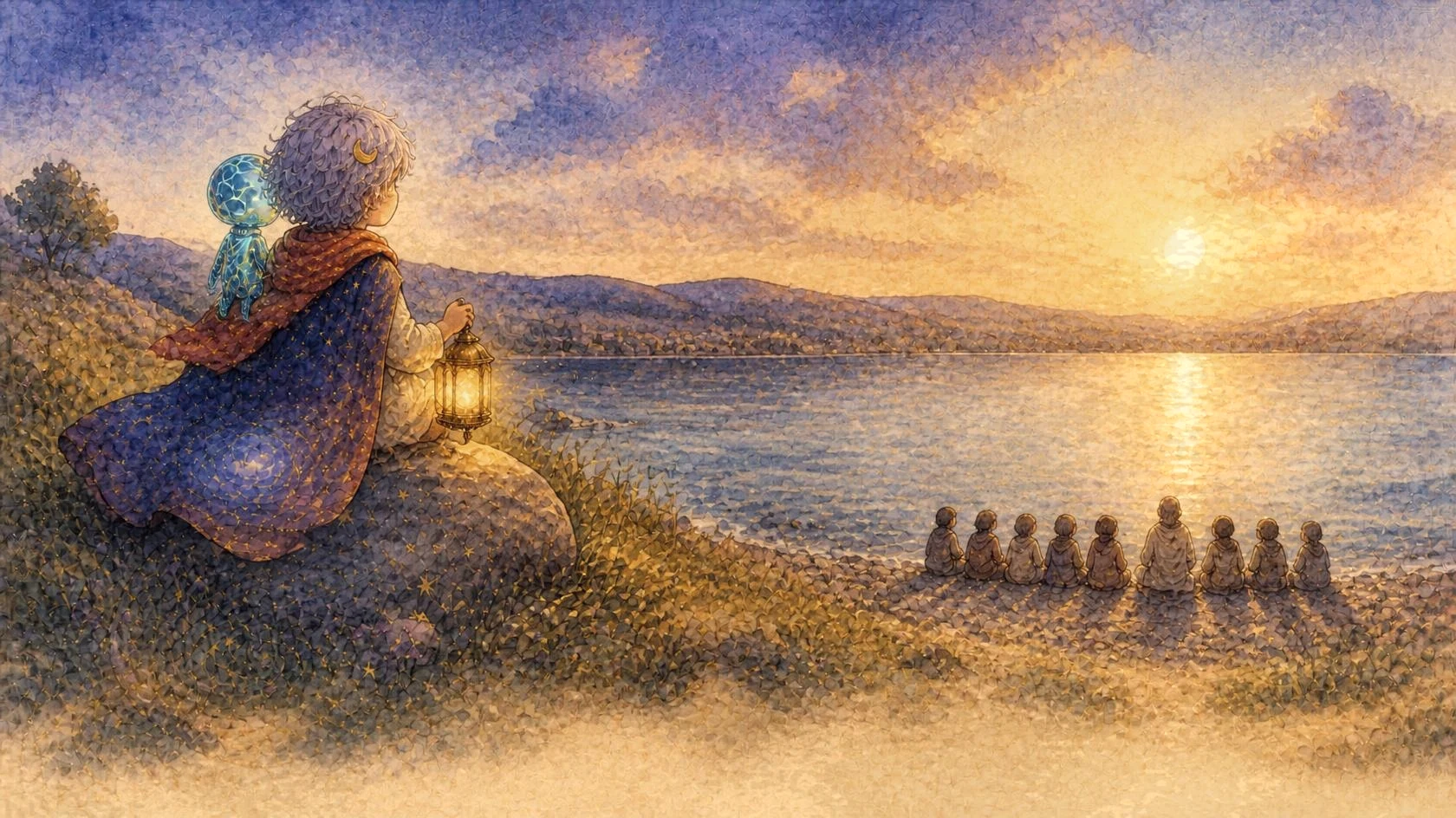
The word of the Kingdom
When Jesus was alone with his disciples, they asked him what the parable meant. Jesus explained that the seed is "the word of the Kingdom." The roadside is Retold a heart that hears the word but doesn't understand it, and it is snatched away. The rocky ground is Retold a heart that receives it with joy but has no root, and falls away when things get hard. The thorns are Retold a heart where worries and wanting more choke the word. "What was sown on the good ground, this is he who hears the word, and understands it" Komo whispered, "The farmer didn't pick and choose the ground. He sowed seed generously everywhere. Jesus, too, told many people the word of God's Kingdom. And God can make even hard ground soft."
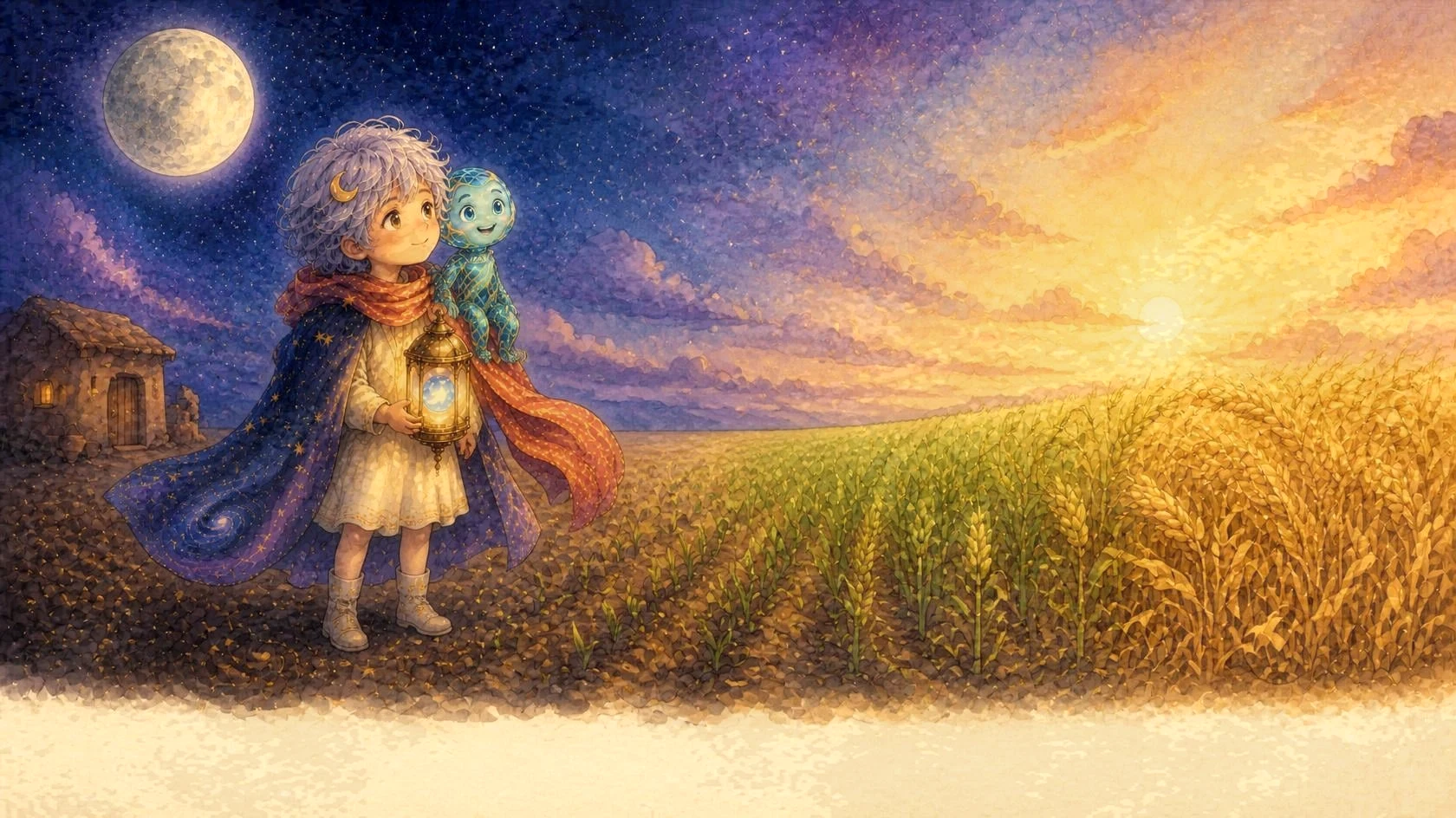
Though he doesn't know how
Mark tells another seed story of Jesus. "God's Kingdom is as if a man should cast seed on the earth," In the story, a man sowed seed, slept at night and got up in the morning. "…and should sleep and rise night and day, and the seed should spring up and grow, though he doesn't know how." "For the earth bears fruit: first the blade, then the ear, then the full grain in the ear." Komo pointed to the real fields beyond the seaside hill. "The man who sowed doesn't know everything about how it grows. God made the earth and the seed." Nuri said softly,
God makes it grow.
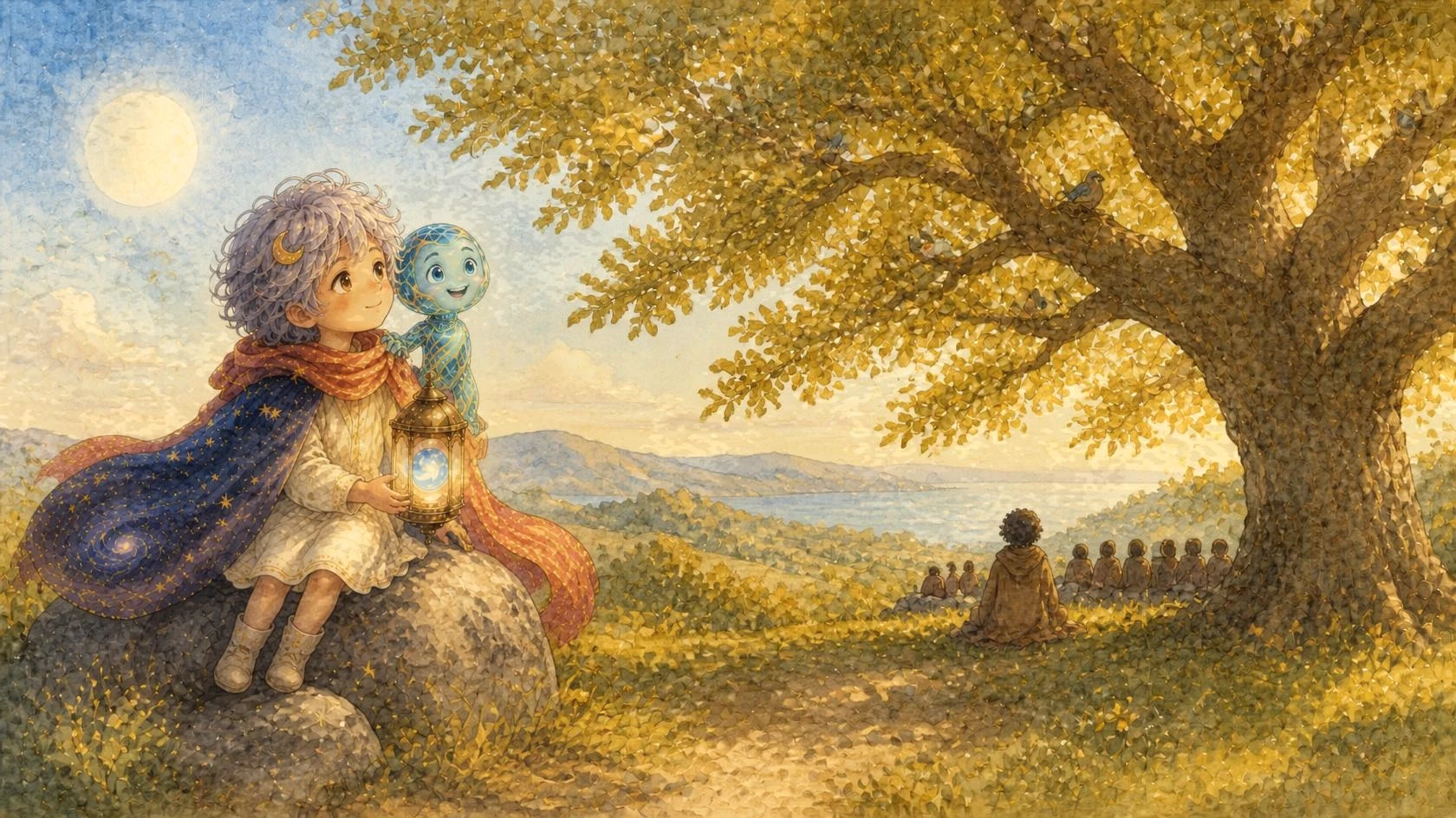
Smaller than all seeds
Matthew has this parable too. "The Kingdom of Heaven is like a grain of mustard seed, which a man took, and sowed in his field;" Nuri looked at Komo's palm. "Oh! The dot from this morning!" Komo smiled. "…which indeed is smaller than all seeds. But when it is grown, it is greater than the herbs, and becomes a tree, so that the birds of the air come and lodge in its branches." A story picture opened before Nuri's eyes. The tiny seed grew into a big tree where birds rest. Nuri said softly,
God makes it grow.
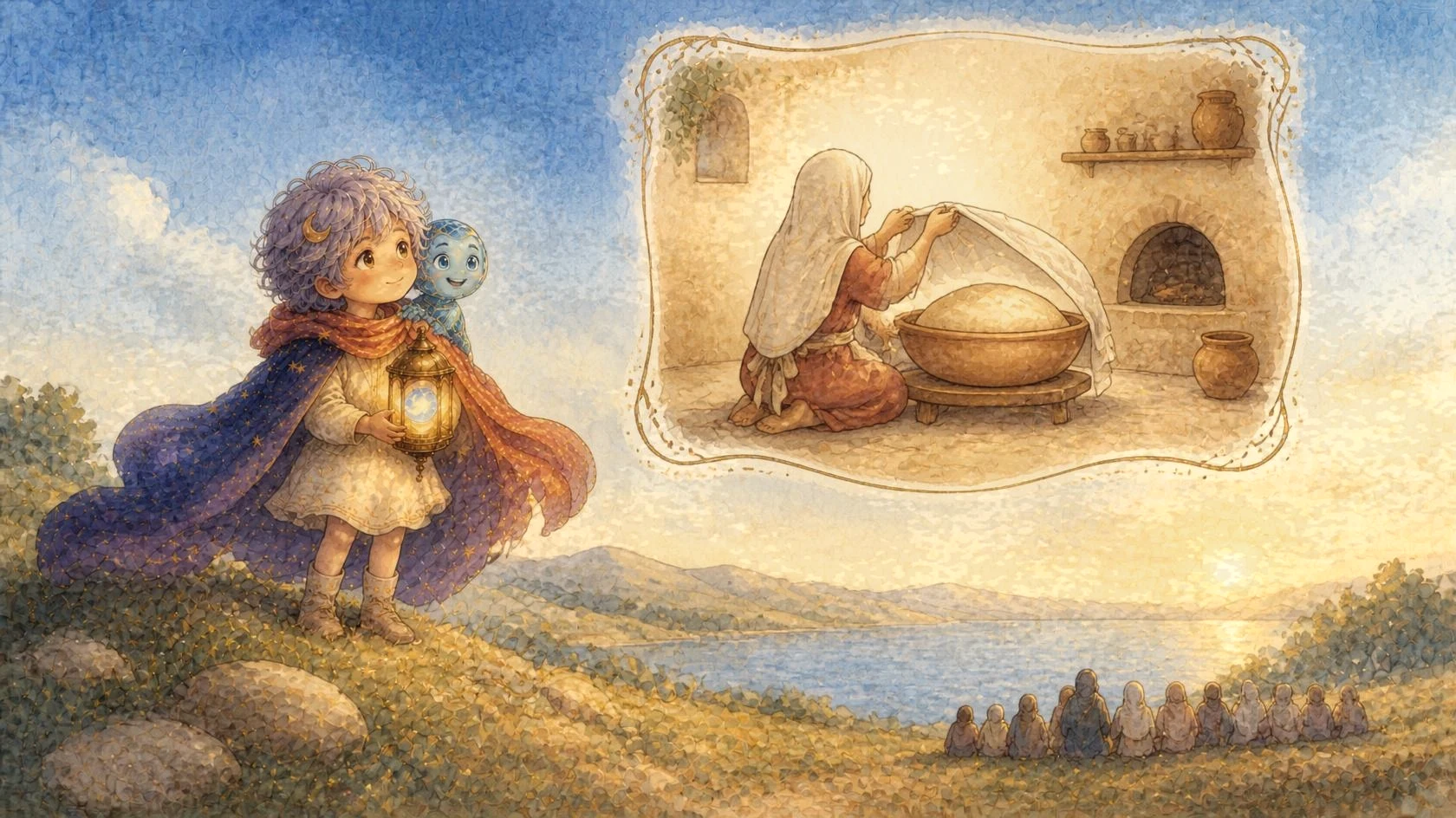
Until it was all leavened
"The Kingdom of Heaven is like yeast, which a woman took, and hid in three measures of meal, until it was all leavened." Yeast is a tiny thing that makes bread dough rise. In the story picture, the woman mixed a little yeast into the flour. Now the yeast can't be seen. After a while, the cloth over the bowl was lifted up in a round dome. Nuri sniffed. "It smells sour and toasty."
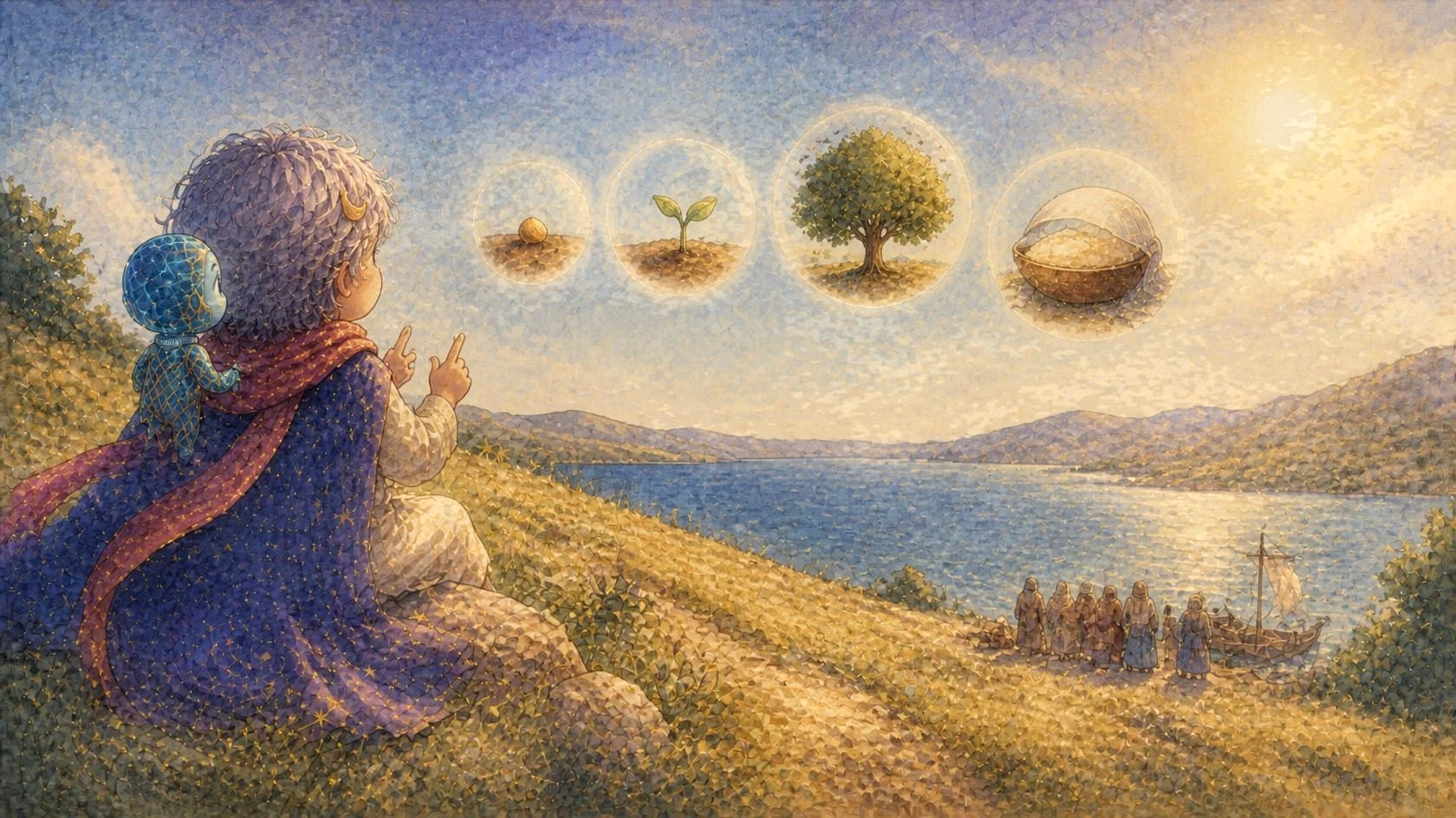
One finger at a time
"Jesus spoke all these things in parables to the multitudes; and without a parable, he didn't speak to them," The story pictures faded one by one. Nuri folded down her fingers one at a time: a seed fallen on the ground, a seed growing even at night, one mustard seed, a little yeast in the dough. "They're all very small things." Komo nodded. "Even if it starts small, it ends up very big." Nuri said softly,
God makes it grow.
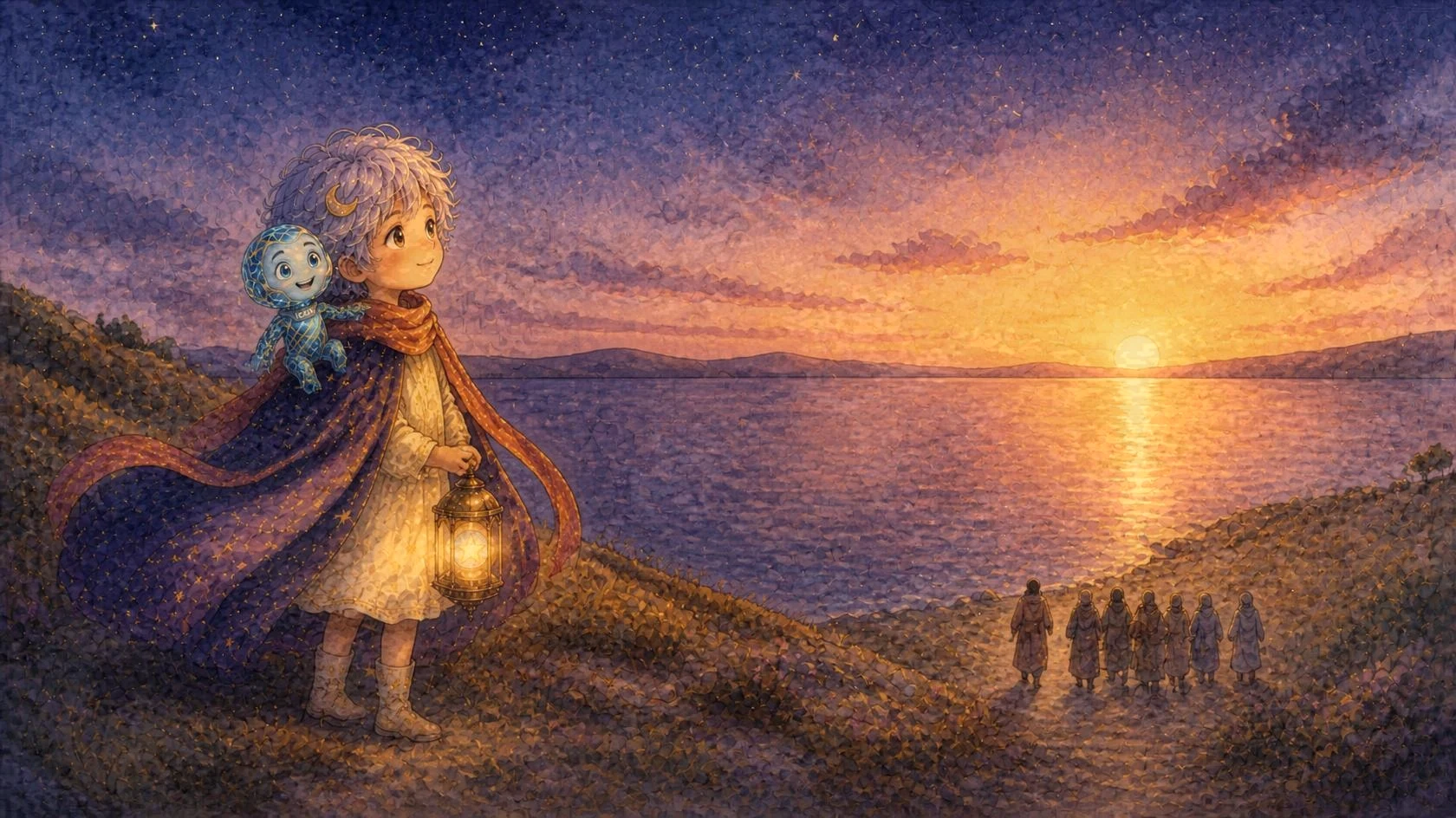
When evening had come
Mark goes on with this day. He says that "privately to his own disciples he explained everything." And "On that day, when evening had come," only Jesus, his disciples and a very small group were left by the sea. Nuri gazed at the evening sea for a long time. "Jesus sows the seed of the word, and God makes it grow." Komo said quietly, "God's Kingdom, which began with Jesus, is still growing now. And in the end God will make it complete."
A very small blue dot
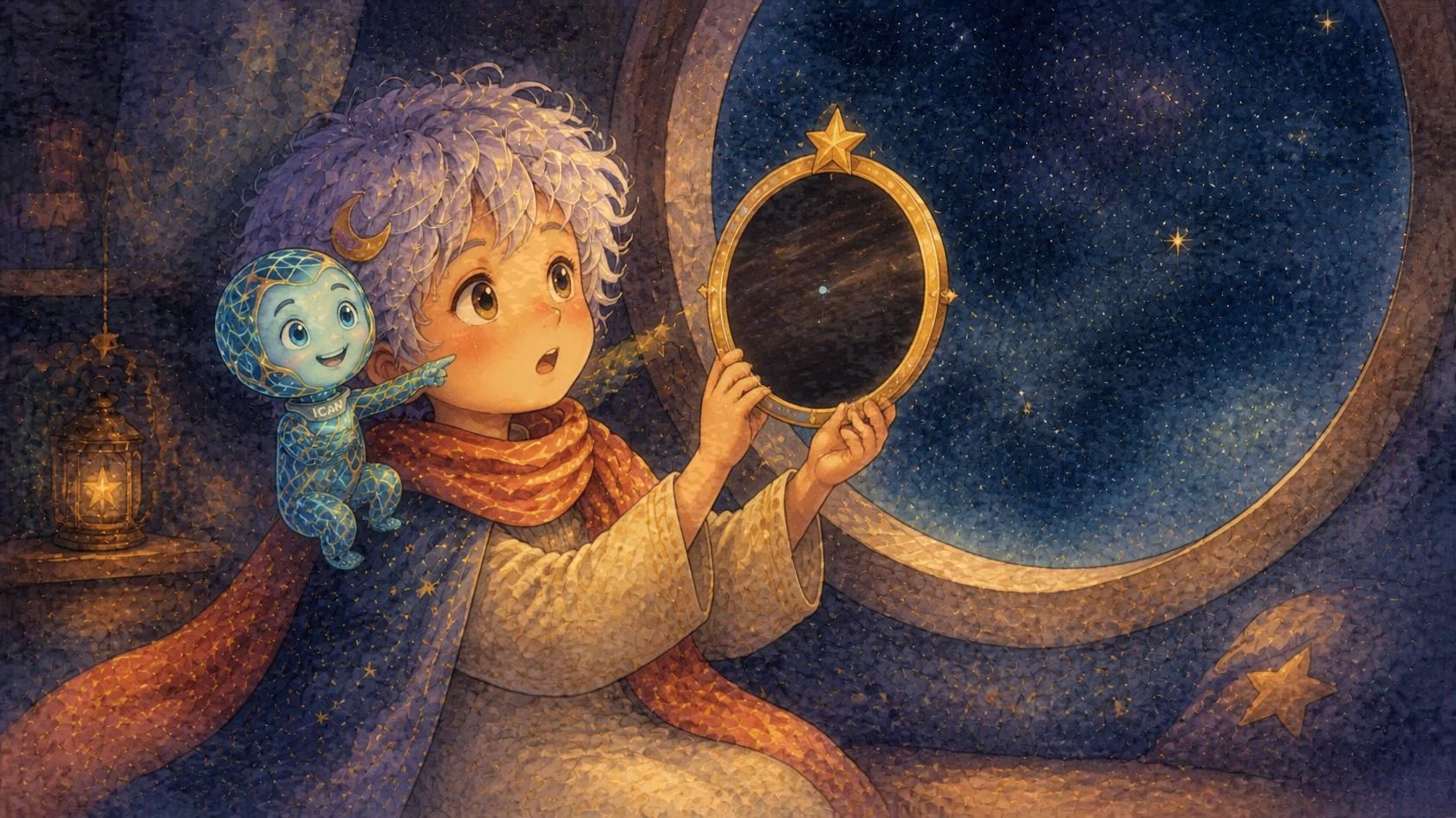
On the way back, Komo showed a photo inside the star-ring. In the black photo, inside a streak of sunlight, was a very tiny blue dot. "What's that?" "That's Earth, where we live. A spacecraft very far away turned around and took this picture." Nuri's eyes grew wide. "Another tiny dot!" "Yes. From far away it looks this small. God knows Nuri on that tiny dot and cares for her." Nuri looked at the dot for a long time.
Today's sky
- On 14 February 1990, the spacecraft Voyager 1 photographed Earth from about 6 billion km from the Sun
- In the photo, Earth is a dot smaller than one square (pixel) of the picture
- The streaks of light are patterns made by sunlight scattering inside the camera (NASA)
One small flowerpot
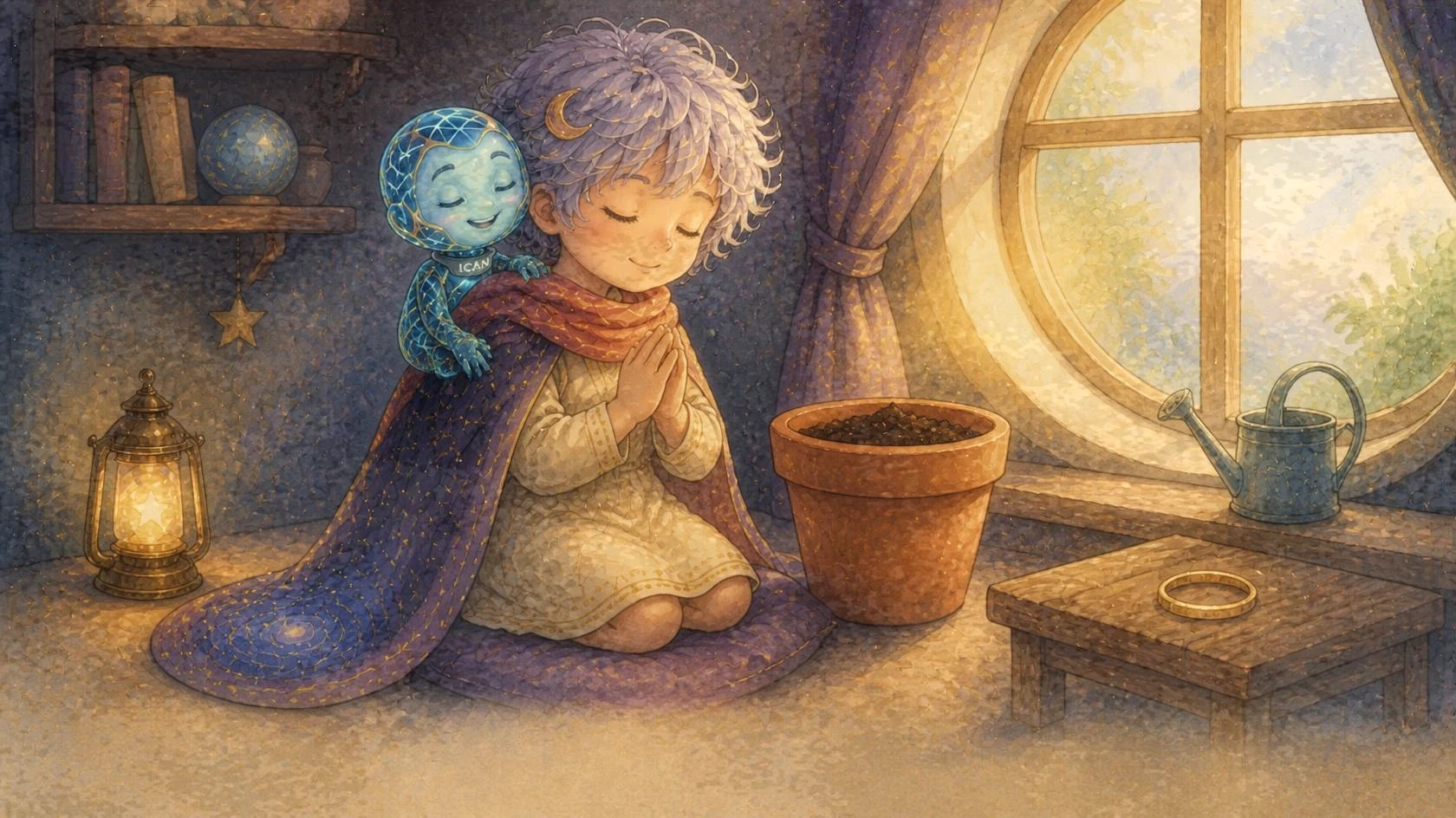
Back home, Nuri got one kidney bean from the kitchen, planted it in a small pot by the window and watered it. "Komo, when will this bean sprout?" "Even if it doesn't look different today, it grows little by little in the soil." Nuri smiled at the pot. "The small things I saw today weren't just the mustard seed. A little yeast, the small group by the sea, and that blue dot far away too."
God's Kingdom starts like a tiny seed. And God makes it grow.
Nuri folded her hands. "God, thank you for sowing your word in my heart. Give me ears that listen well and a soft heart. Please make your word grow. In Jesus' name, amen."
Eight Seed Star cards
Tap a card to flip it. Put the eight cards in order and tell today's stories again.
Four thinking games
- 1[After reading] Analysis · Four-ground box: put the same seed picture in four sections (board · gravel · yarn · soil) and say what was the same and what was different. Never put a person's name or face on a section.
- 2[After reading] Inference · Invisible yeast: find clues in two dough photos (before and after rising) that the hidden yeast worked.
- 3[Class] Mustard seed: an adult glues one mustard seed onto paper; draw a big tree beside it. Keep seeds away from mouths, noses and ears.
- 4[Class] Prediction · One sheep on the back cover is alone. Who will come to find it? What is the clue?
[Home] Bean watching: plant a kidney bean and draw one box whenever you remember. Don't compare speeds. In the evening say, "God, thank you for caring for the seed in the soil."
God makes even tiny seeds grow. What word was sown in my heart today?
Class flow and what to look for
- Prepare
- 8 cards, a four-section ground box (board · gravel · yarn · soil), mustard seed, two dough photos. Write the refrain "God makes it grow." on a big sheet. It is a confession that God does it, not a prayer. Reading takes about 22 minutes. For a 20-minute class, skip the p11 cosmic-window box; at each pause, pairs talk for 20 seconds, then hear one or two answers.
- Before reading
- The soils are not name tags for people. Never ask a child to choose which soil they or a friend are. God makes our hearts new.
- Reading flow (about 22 min)
- [0–7 min · pp. 1–4] p1 point to Komo's palm → p2 say "parable" slowly → p3 Prediction (1 min), stop before turning the page → p4 pause 3 seconds after "He who has ears to hear, let him hear." · [7–15 min · pp. 5–8] p5 Analysis (main skill, 2 min) pointing at the ground box. Close the pause with "God is the one who helps us hear and understand" (Matt 13:11 "To you it is given to know the mysteries of the Kingdom of Heaven"), not "let's try harder" → p6 refrain together → p7 show one mustard seed, refrain → p8 Inference (1 min). · [15–22 min · pp. 9–12] p9 fold fingers one by one, refrain → p10 Understanding (1 min) → p11 look at the picture for 10 seconds → p12 prayer.
- What to look for
- In all pauses, see whether the child links a clue to an idea. Pointing counts. p3 Prediction — sprout: one guess · stem: one clue (seed left, ground ahead) · fruit: checks or revises the guess on p4. p5 Analysis (main) — sprout: what happened on one ground · stem: comparing two grounds · fruit: says "the seed was the same; the ground was different" on their own. p8 Inference — sprout: one idea · stem: a clue (lifted cloth, smell) · fruit: knowing by the result even when it can't be seen. p10 Understanding — sprout: one scene · stem: order · fruit: links it to God's Kingdom in their own words.
- Order of the text
- pp. 2–5 follow Matt 13:1–23 (the explanation follows Mark 4:10 "When he was alone"); p6 is Mark 4:26–29; pp. 7–8 Matt 13:31–33; p9 Matt 13:34; p10 Mark 4:34–35. Mark sets them by the sea on one day, then "On that day, when evening had come" (continued in Book 4, Wind Star).
Good answers and child protection
- Good answers
- p3: "Birds will eat them again" and "They'll land somewhere good" are both good with a reason; check together on p4. p5: comparing two of "the path was hard," "the rocky ground had little soil," "thorns covered it," "the good soil was deep and soft" is a stem; saying "the seed was the same" on their own is fruit. p8: "the cloth went up," "it smells" are both good. p10: telling one parable in order is a stem; linking it in their own words is fruit ("A little yeast made all the dough rise. God's Kingdom is like that too."). Only repeating the refrain is a stem.
- "Am I bad soil?"
- This parable is not meant to label a child as some kind of soil. Say, "God can change even a hard heart into a soft one" (Ezek 36:26 "I will take away the stony heart out of your flesh, and I will give you a heart of flesh"). Look at p4: thirty times is good soil too. Don't compare good soils either. The heart of the parable is God who sows generously and the fruit his word bears. Don't turn it into a works formula like "be nicer and you'll become good soil."
- "He's the roadside!"
- "This story isn't about sorting friends. It's about God sowing seed generously for everyone. We listen to the word together with our friends."
- Child protection · for all volumes
- If a child mentions something frightening at home or elsewhere — being hit, going hungry, being told to keep a secret — don't question them on the spot. Say, "Thank you for telling me. It's not your fault." After class, tell the person in charge right away and follow child-abuse reporting procedures. In Korea, call 112 (child-abuse reports; Ministry of Health and Welfare / National Center for the Rights of the Child guidance); for help with procedures, the Health and Welfare Call Center 129. In the Philippines, call 911 (national emergency) if there is danger now; for child-abuse reports and counselling, Bantay Bata Helpline 163, which now runs online instead of by phone (Facebook facebook.com/bantaybata163PH, Viber "Bantay Bata Helpline 163", email bantaybata163@abs-cbnfoundation.com). [Checked on the official sites on 19 October 2026]
- Notation · links
- Unmarked Bible quotes are WEB; "Retold" means simple words. Nuri's and Komo's words are not Bible quotes. The baby of Bethlehem Star has grown up and teaches about God's Kingdom. Star 14: Seed.
Hard questions
- Genre
- Parables (stories Jesus told to show God's Kingdom, Matt 13:34). The farmer, the woman and the field are characters in a story, not people in a real event. So the art separates the real seashore from "story pictures," and Nuri and Komo always stay on the real shore. Jesus himself explained the sower parable (13:18–23). For the others, see the big picture ("starting small, growing big," "working unseen") rather than decoding details.
- "Do birds steal the seed? I'm scared."
- Jesus explained that the birds by the roadside stand for "the evil one" (13:19). To a scared child say, "There is something bad that tries to snatch the word away. But Jesus is much bigger and stronger. That's why we hear the word often and remember it together." Don't move the birds' role in the story onto the character of real birds. Real birds are animals God feeds (Matt 6:26 "Your heavenly Father feeds them"). On p7 the birds come and rest in the mustard tree's branches (13:32).
- "Is it wrong to worry?"
- The thorns are "the cares of this age" (13:22). Don't blame a child who worries a lot. Say, "When you're worried, you can tell God everything. God takes care of you" (1 Pet 5:7 "casting all your worries on him, because he cares for you"). In front of children from struggling homes, don't turn "riches" into a rich-versus-poor story.
- "Our family doesn't seem to grow."
- A seed grows first in soil we can't see. Read p6 together: "though he doesn't know how." We don't measure faith by visible speed. If a sprout is late or a pot doesn't grow, don't judge the faith of the child or the family. The flowerpot isn't a tool for making God's Kingdom; it's something to watch that helps us remember the parable.
- "Is the mustard seed the smallest seed?"
- Jesus spoke of the mustard seed, well known as the smallest of the seeds people in that land sowed in their fields (13:32 "smaller than all seeds"). He wasn't giving a world record; he showed God's Kingdom with a seed his listeners knew well.
- "Isn't yeast bad?"
- In the Bible, yeast sometimes stands for a bad influence (Matt 16:6). In 13:33, as a little yeast makes a lot of dough rise, God's rule may look small but quietly reaches everything in the end. This is the main impression the text gives; Jesus did not give a point-by-point explanation.
Faith-language check · Reading parables
- Words
- parable = a story that carries a meaning · Kingdom of Heaven / God's Kingdom = God ruling as King and the people living under his rule; not only a place we go after death, but a kingdom that has already begun on earth with Jesus and is growing (Matthew says "Kingdom of Heaven," Mark "God's Kingdom") · choked = covered so it couldn't grow · cares = worries · deceitfulness of riches = wanting more money and things · ear = the top of a grain stalk · lodge = nest and live · three measures = a very large amount · yeast = what makes dough rise
- Grace and response
- God is always King. With Jesus' coming his rule came near and began on earth (Mark 1:15 "God's Kingdom is at hand! Repent, and believe in the Good News."; Matt 12:28 "God's Kingdom has come upon you"); it grows now, and God will complete it. The one who makes the seed grow is God. In Mark's parable the seed grows even when people don't understand how (Mark 4:27), and Paul teaches "God who gives the increase" (1 Cor 3:7). Fruit is not merit but what the word produces. So the p12 prayer asks God for "ears that listen and a soft heart." In Mark, "The farmer sows the word" (4:14); in Matt 13:37 the sower is the Son of Man, Jesus. The child text says only "Jesus sows the seed of the word."
- Parables not covered
- The weeds (13:24–30, 36–43) and the net (13:47–50) are about the final judgment; the hidden treasure and the pearl (13:44–46) follow the joy of finding. They are left out here. With older children: "It isn't about throwing away toys; God's Kingdom is a treasure more joyful than anything."
- Voyager 1 · science as wonder
- On 14 February 1990, Voyager 1 photographed Earth from about 6 billion km from the Sun; Earth appeared as a dot of about 0.12 pixel (NASA). (Not the 6.4 billion km measured from Earth.) The light streaks are sunlight scattered inside the camera. A huge universe doesn't make us unimportant: God knows us on that tiny dot. Science does not prove the Bible.
아이캔 코모는 미래를 커젤로 바라보나 원더로 간구합니다.