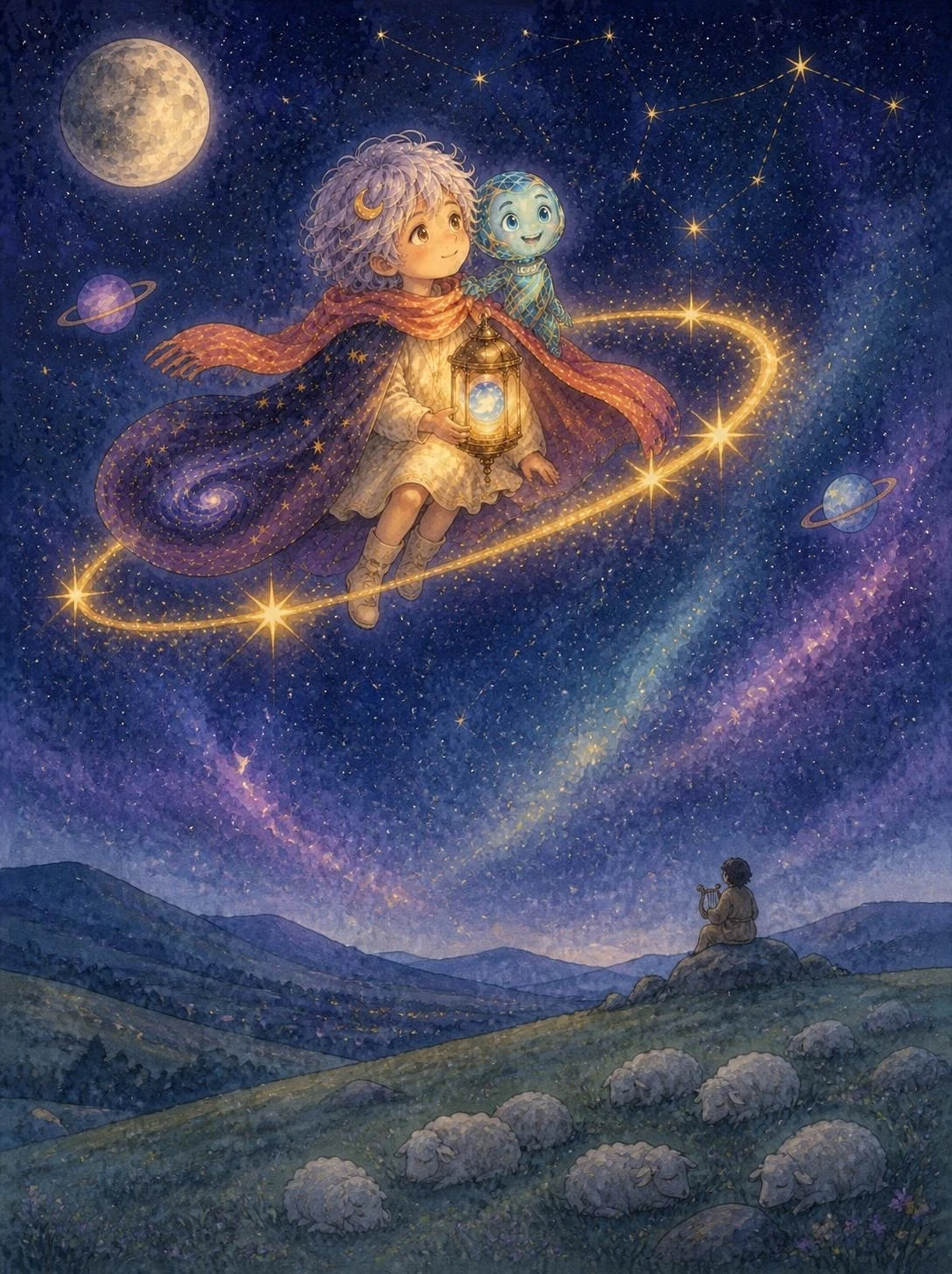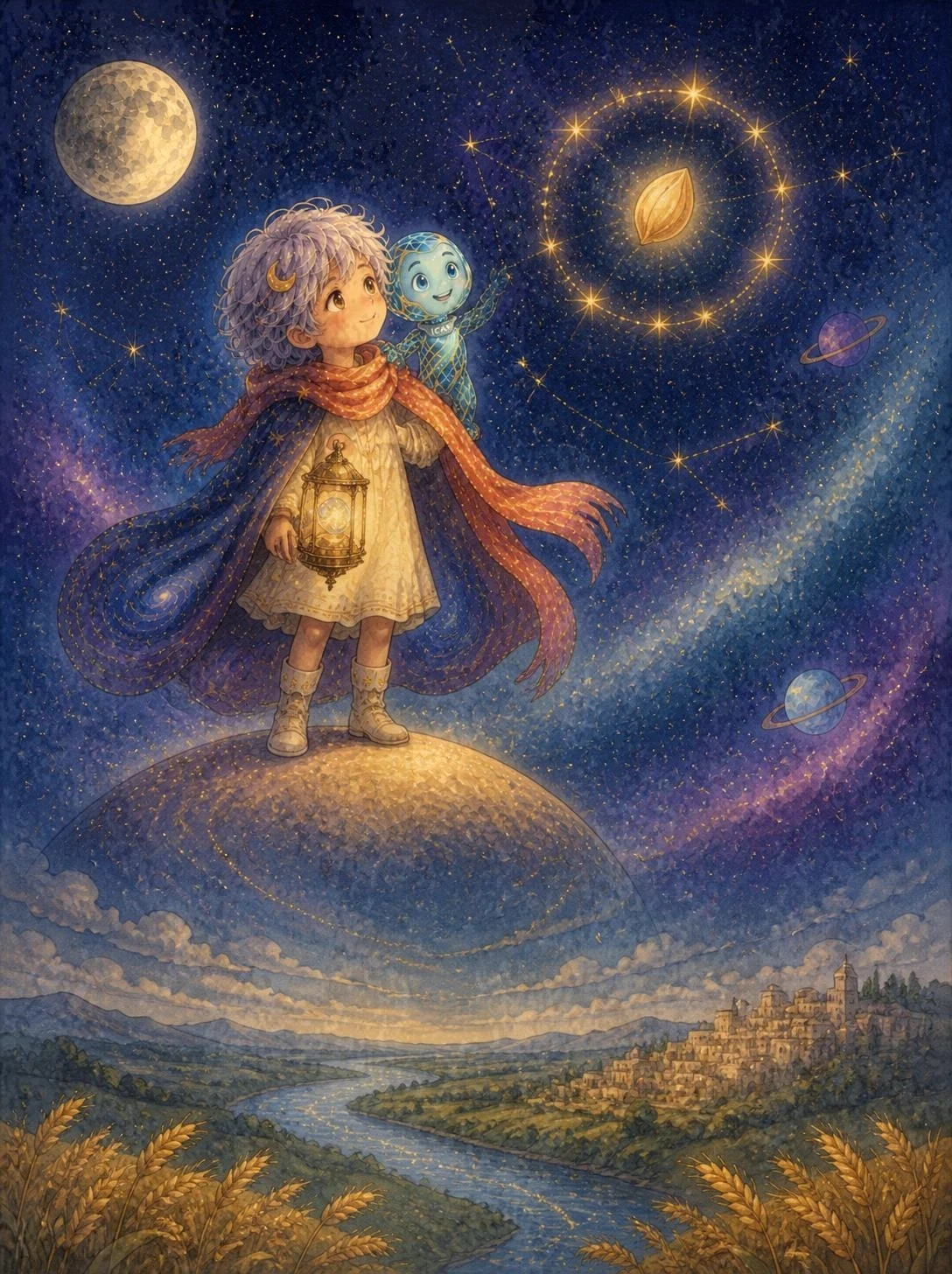
Promised Land Star
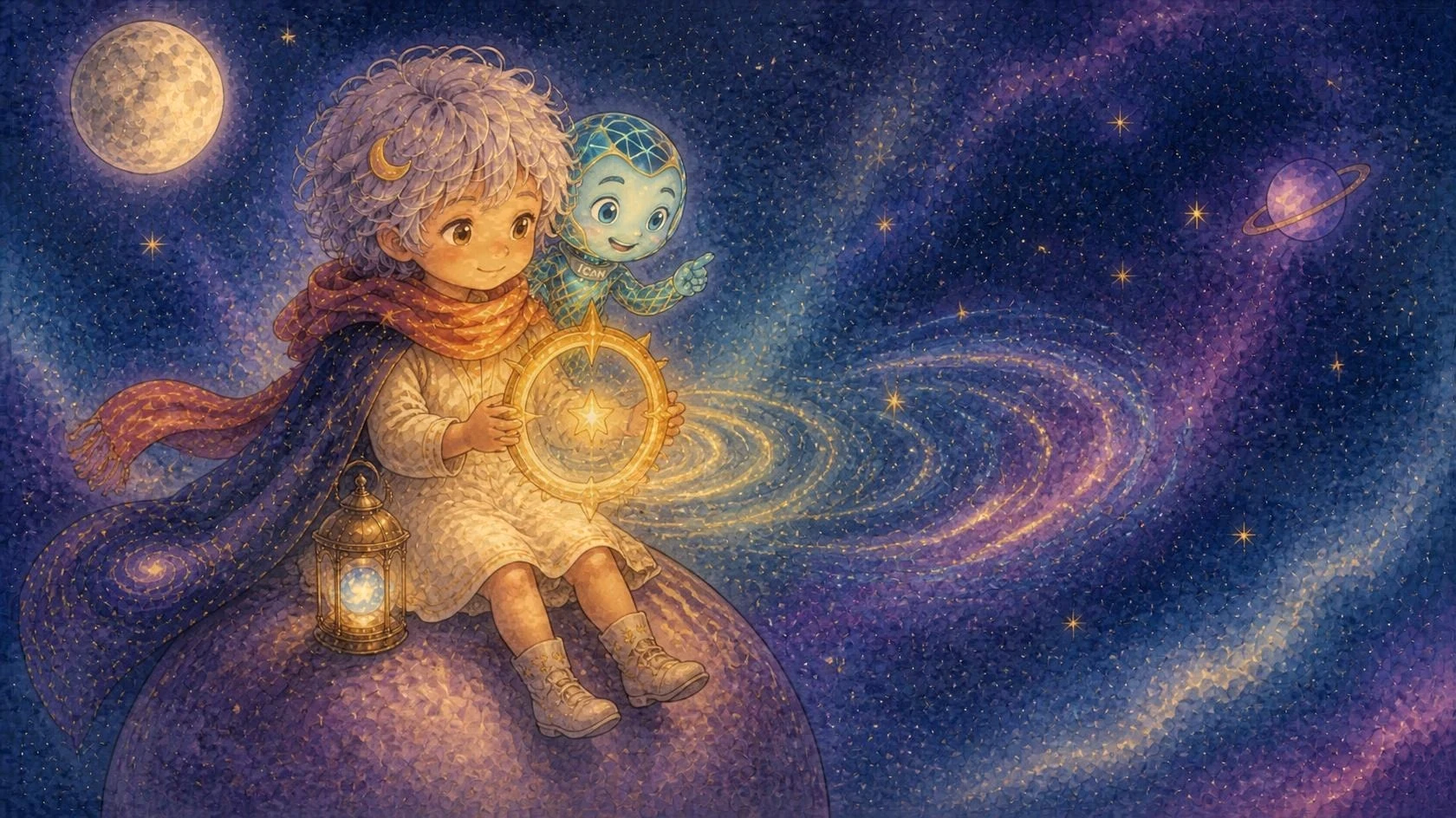
Water in the ring
Nuri's star-ring made a sound of water. Splash, swoosh. Then a soft rustle, like grass in the wind. In the middle of the ring, one golden grain was shining, smaller than a fingernail. "Komo, what is that?" Komo, on her shoulder, squinted. "I don't know yet. Water, and then grass? This will be a long trip." Komo raised one finger. "Let's follow it to the end. We only watch from far away." Nuri lifted her star lantern.
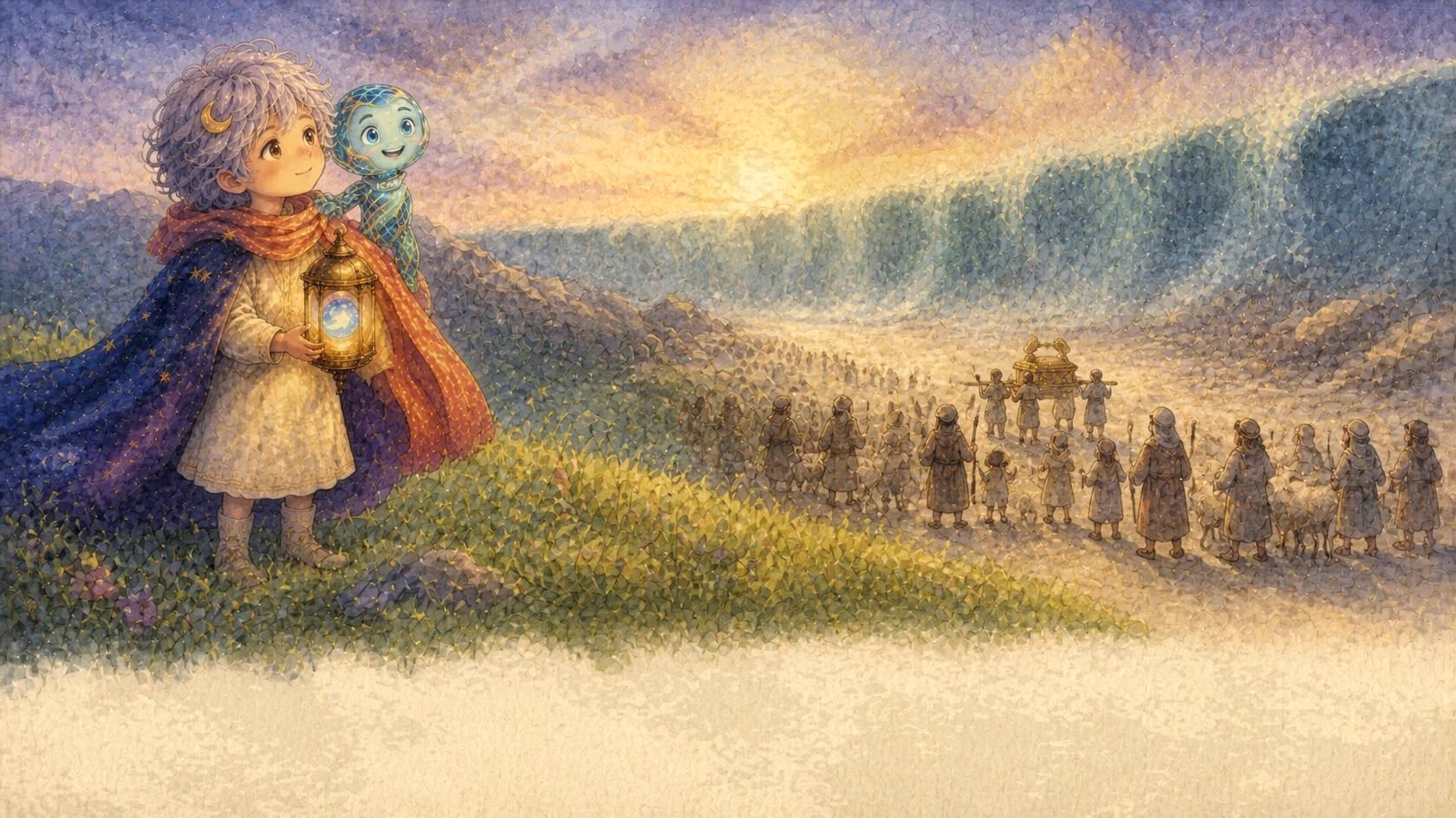
The rushing Jordan
Moses had died, and God promised Joshua, the new leader, that he would be with him. It was harvest time, and the Jordan River was full to its banks. The priests went first, carrying the covenant chest. As their feet touched the water, God stopped the water coming down, and it piled up far away! A mother carrying her baby, a child leading sheep, everyone crossed on dry ground. Nuri held her breath. "The riverbed became a road."
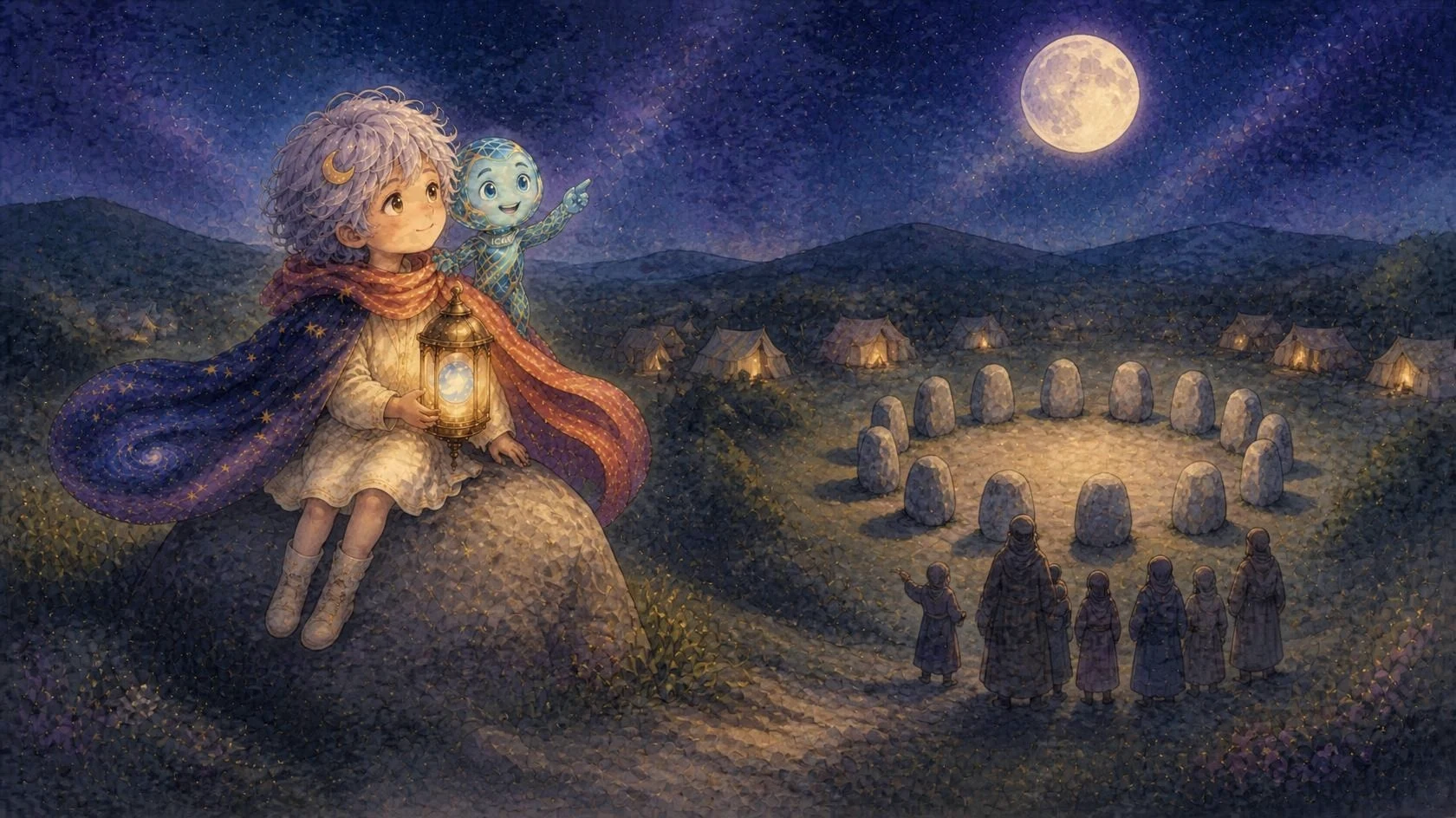
"What do these stones mean?"
Joshua called twelve men, one from each tribe. Retold "Carry one stone each from the middle of the river." Heave-ho! When everyone was across— whoosh! The river rose again. That night at Gilgal, the twelve stones were set up. Retold "Someday your children will ask, 'What do these stones mean?' Then tell them what God has done." Komo asked, "Nuri, what would you tell them?" "God stopped the river. Everyone crossed. So they set up stones to remember."
One stone, one memory: what God has done.
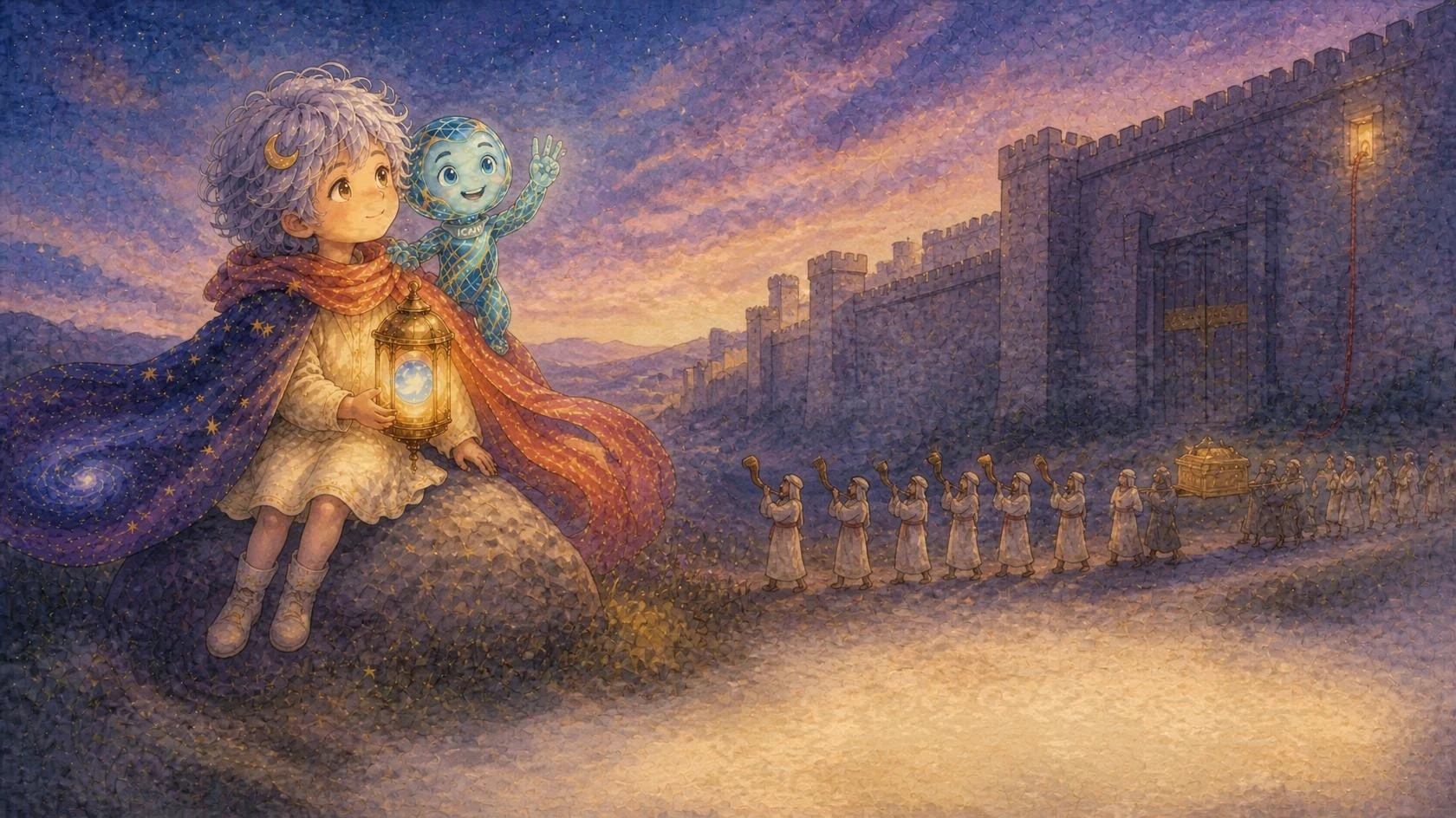
Seven days of marching
The people of Jericho had heard what God had done, but they shut their gates tight. Rahab opened her heart to God and hid two Israelite spies. The red cord in her window was the sign for knowing that promise. God told Joshua, Retold "For six days, march around the city once a day. On the seventh day, march around seven times. When the trumpet sounds long, everyone shout." So the people did as God said, walking quietly each day. On the seventh day: once, twice… seven times!
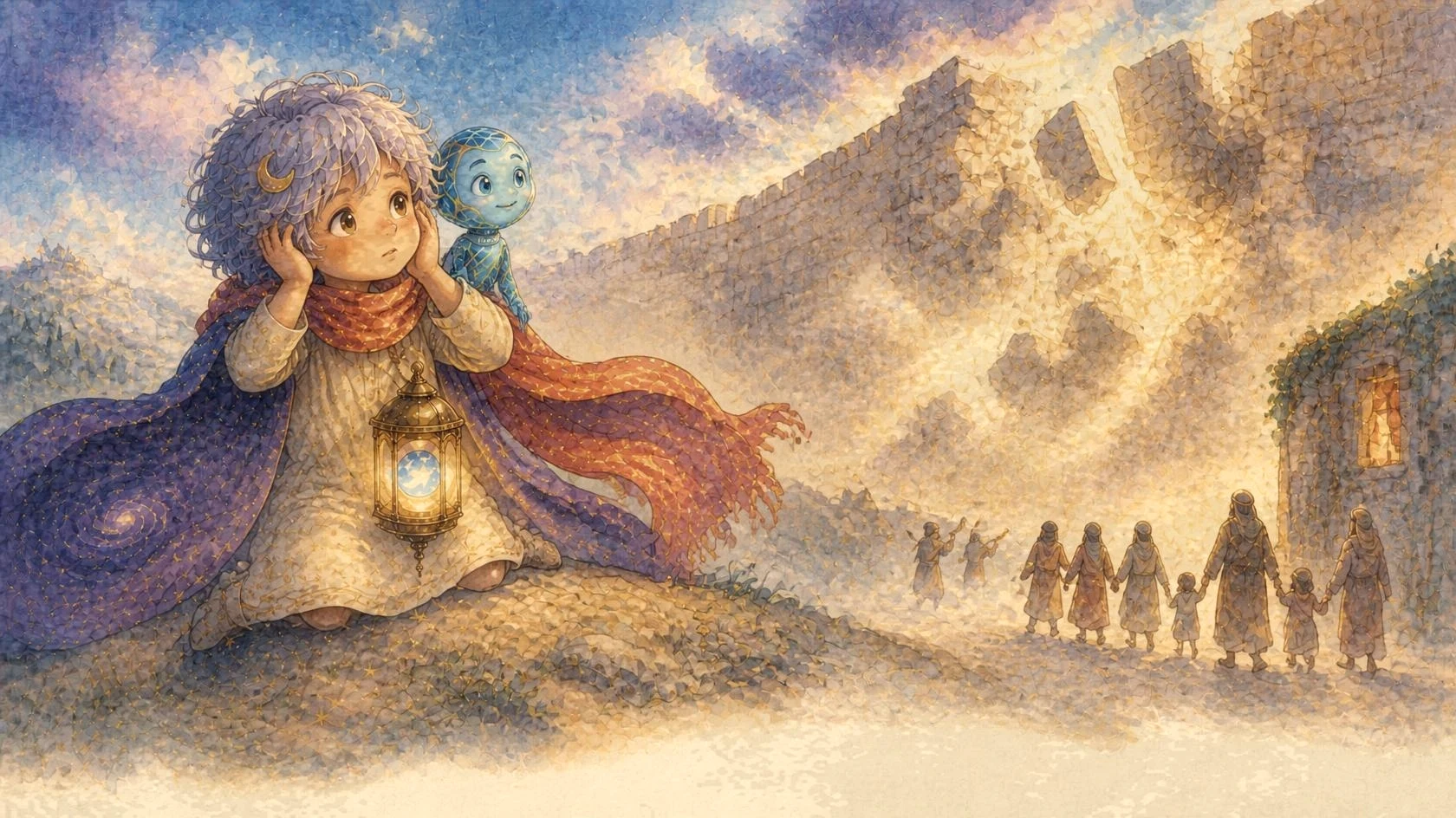
The fallen wall, the red cord
After the seventh time around, Joshua cried, Retold "Shout! The LORD has given you this city." Toooot! The people shouted, and just as God had said, the high wall fell down. Nuri covered her ears. Israel went into the city, and the Bible records that the people of the city died, except Rahab's household. It was a sad and heavy day. This does not mean anyone may hate or hurt others today. The spies kept their promise and brought out Rahab's family. Komo said, "The cord didn't save her. God kept his promise."
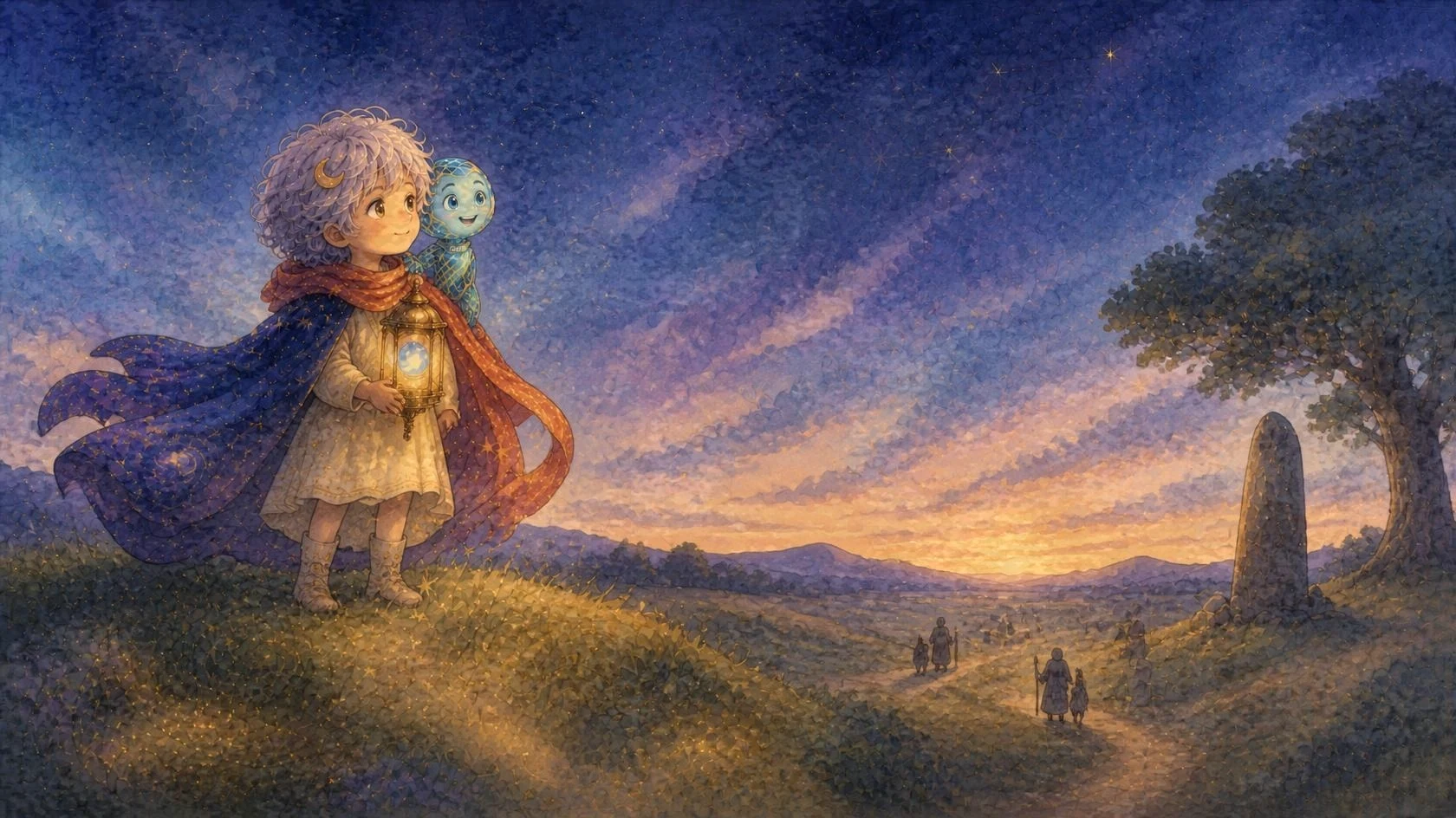
The great stone under the oak
Old Joshua gathered everyone at Shechem. "As for me and my house, we will serve Yahweh." He set up a great stone under an oak tree. But when the next generation grew up, no one told what the stone meant, and no child asked. The people left God to serve other gods, and God, angry, gave them into the hands of nearby nations. When they cried out, God had pity on them and raised up judges to save them. But when a judge died, again… Komo sang softly,
One stone, one memory: what God has done.
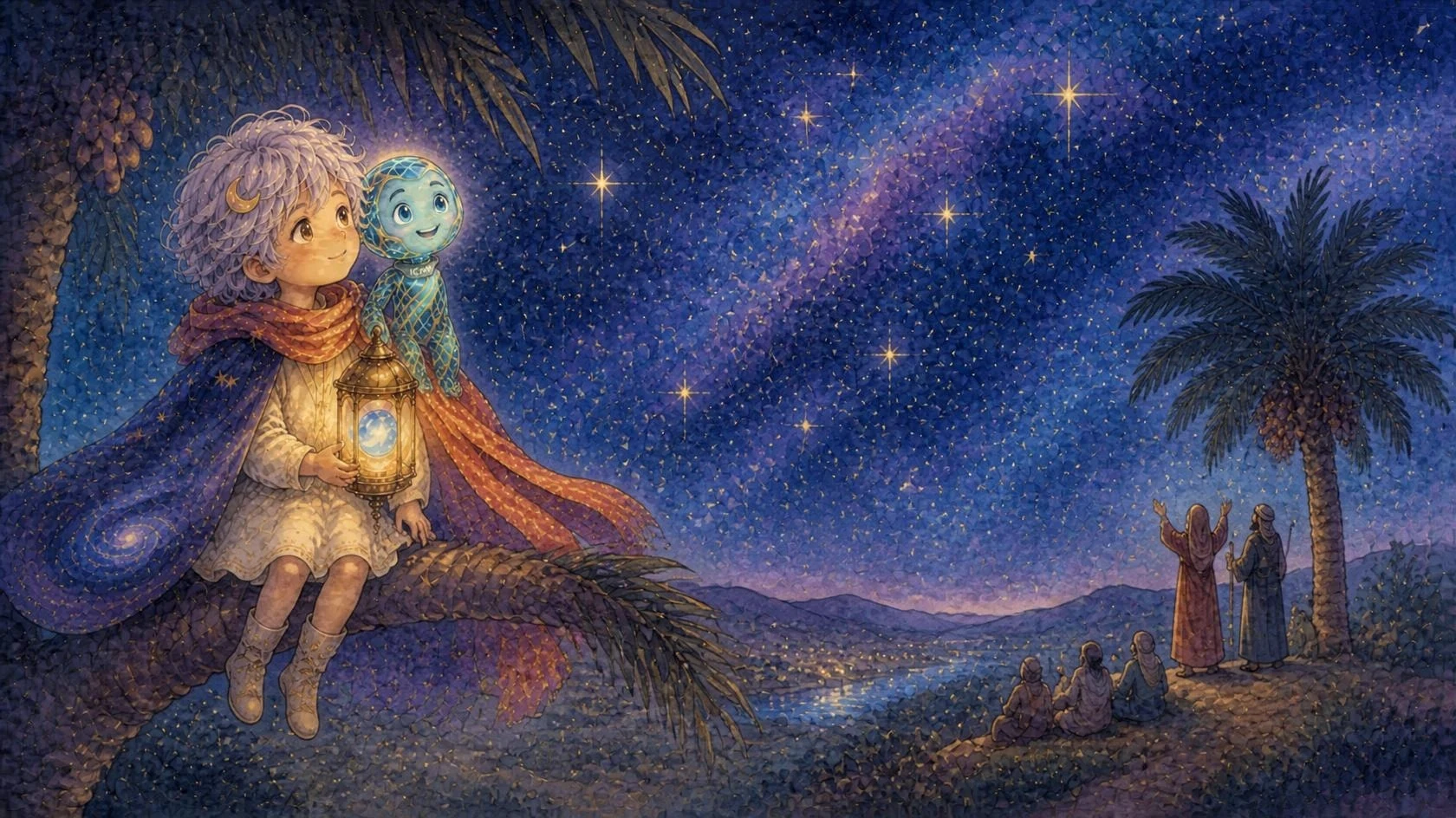
The stars from the sky
The people left God again. Boom, boom— nine hundred iron chariots of the general Sisera shook the ground. The judge then was Deborah. When she gave God's message, Barak said, Retold "If you go with me, I will go." Retold "Get up! The LORD is going ahead of you." That day God threw Sisera's army into confusion. Deborah sang, "From the sky the stars fought. From their courses, they fought against Sisera." Nuri looked up. "The stars… fought?" Komo whispered, "God made the stars too. It's a song that God, who rules even the sky, saved Israel."
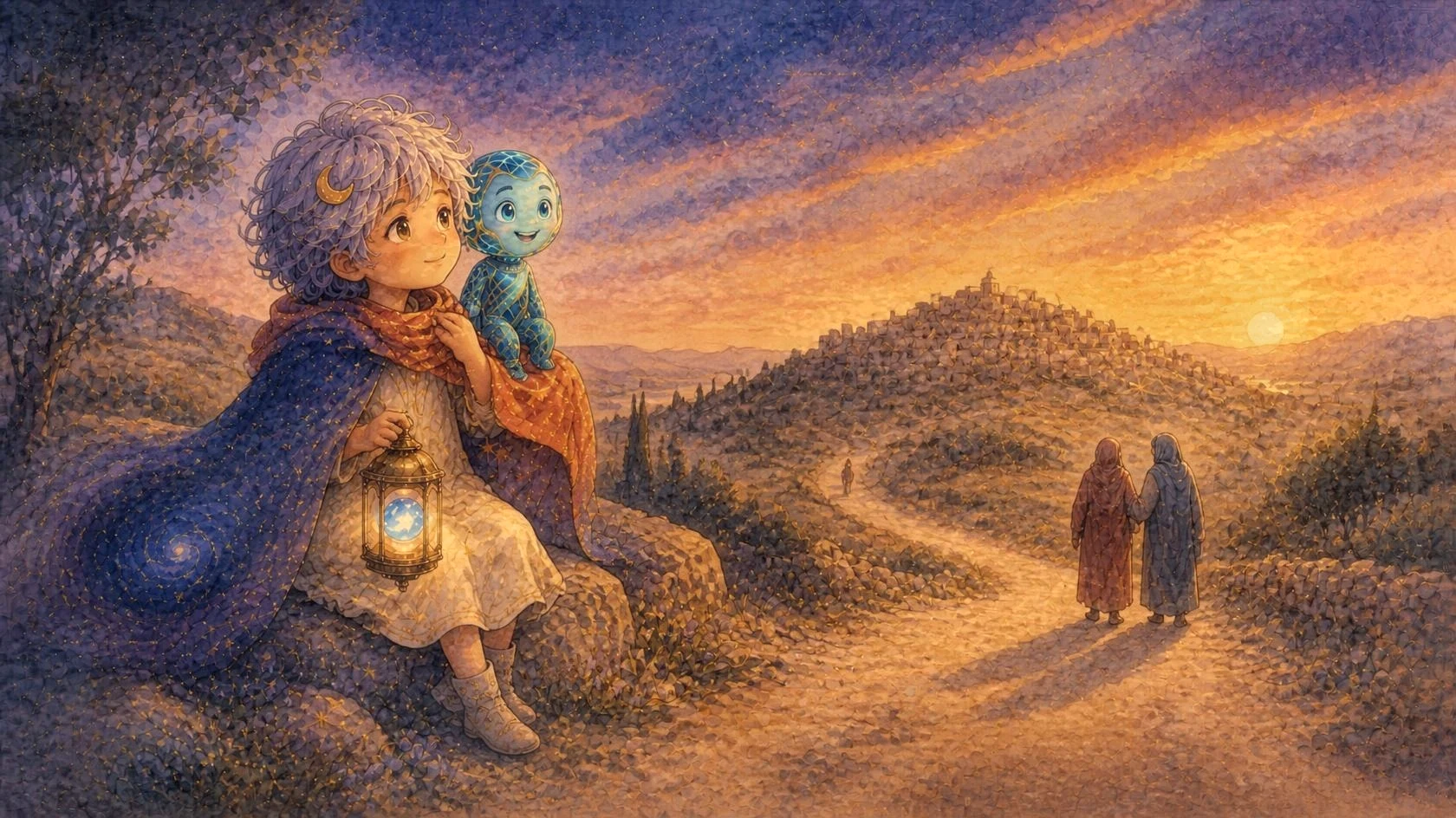
Where you go
In those days there was no king in Israel. A famine came to Bethlehem, so Naomi's family went to Moab. There her husband died, and later her two sons too. The Bible does not tell us why. Naomi and her two daughters-in-law shared a great sorrow. When Naomi heard that God had cared for Bethlehem, she said, Retold "Go back to your own homes." Orpah cried and went home. But Ruth held on to Naomi. "Your people will be my people, and your God my God." They reached Bethlehem as the barley harvest began.
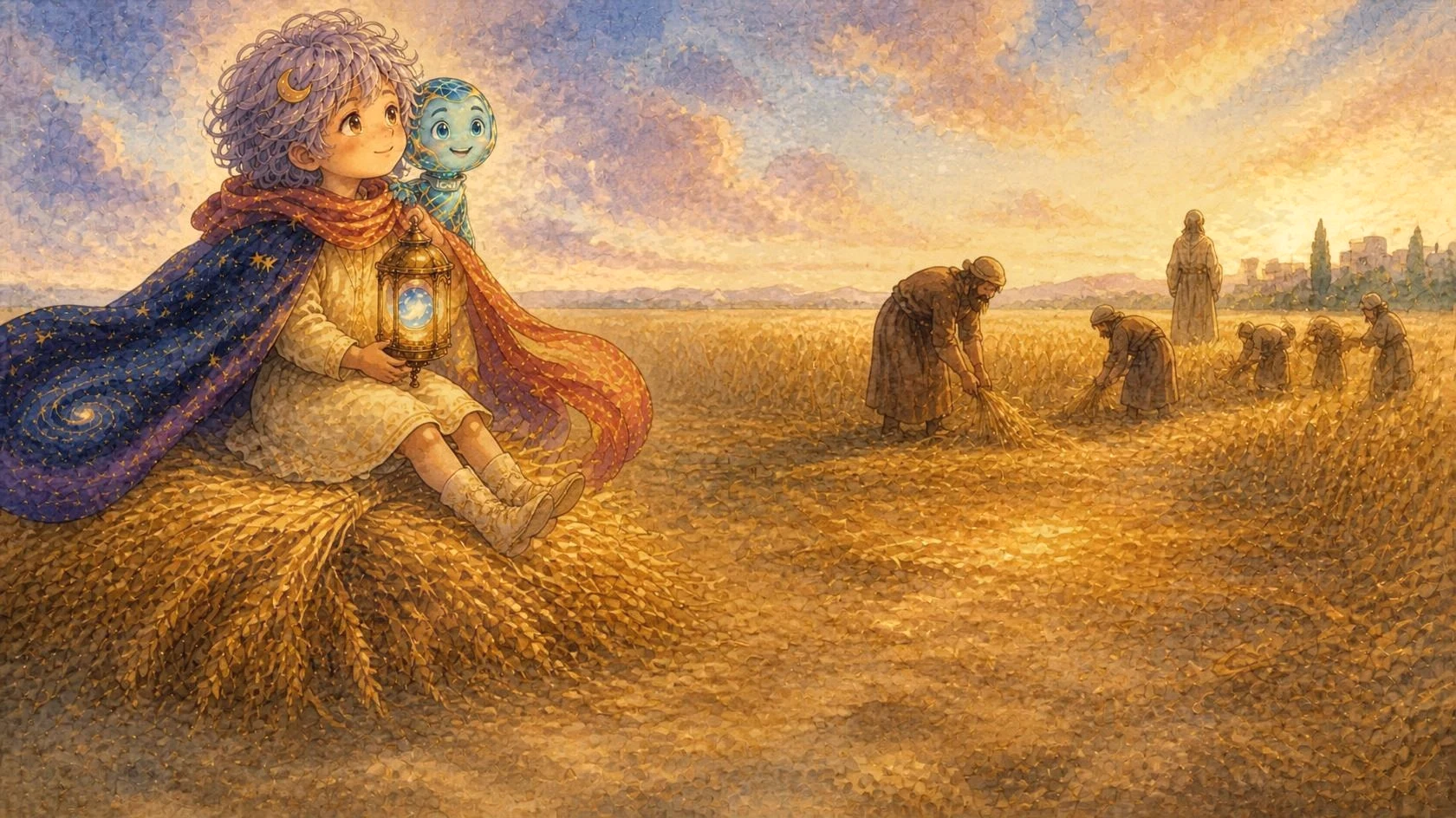
Grain left on purpose
Ruth went out to gather fallen grain, and she "happened" to come to the field of Boaz, Naomi's relative. Matthew's family list says Boaz's mother was Rahab of Jericho. Boaz blessed Ruth: "...Yahweh, the God of Israel, under whose wings you have come to take refuge." Nuri whispered, "Like hiding under a mother bird's wings?" Boaz told his workers, Retold "Pull out a little from the bundles and leave it." That evening: a whole sack of barley! Naomi's eyes shone. "May he be blessed by Yahweh, who has not abandoned his kindness to the living and to the dead."
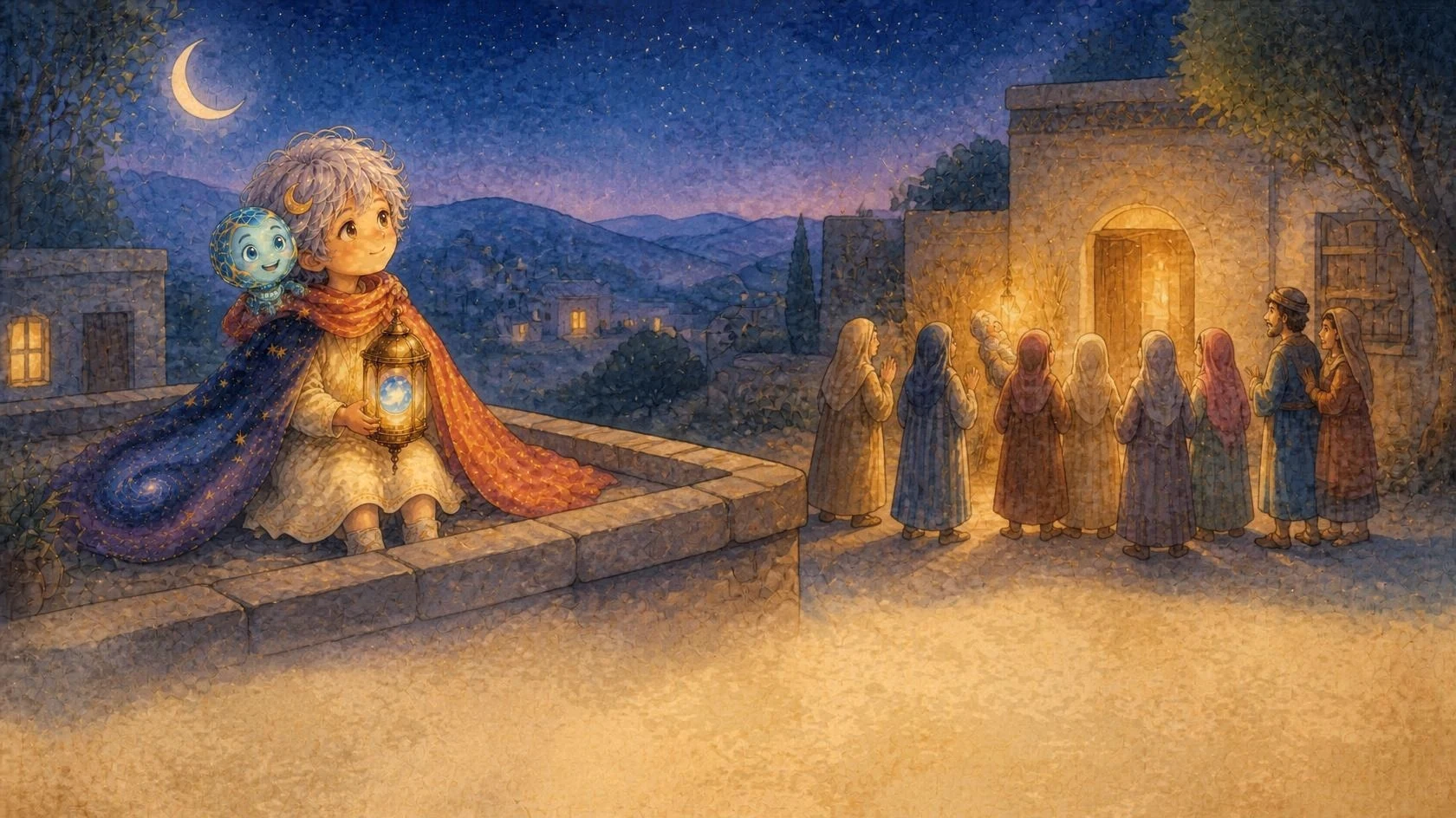
The story is not over yet
Boaz was a close relative who could help Naomi's family, a "redeemer." But Retold "There is a relative even closer than I am." Next morning at the town gate, that man… shook his head. Boaz and Ruth were married, and God gave Ruth a son. The women cried, "Blessed be Yahweh, who has not left you today without a near kinsman." Komo said, "Baby Obed's grandson is King David. Long, long after, Jesus was born into that family." Naomi whispered to the baby, Retold "When you grow up, I will tell you what God has done."
One stone, one memory: what God has done.
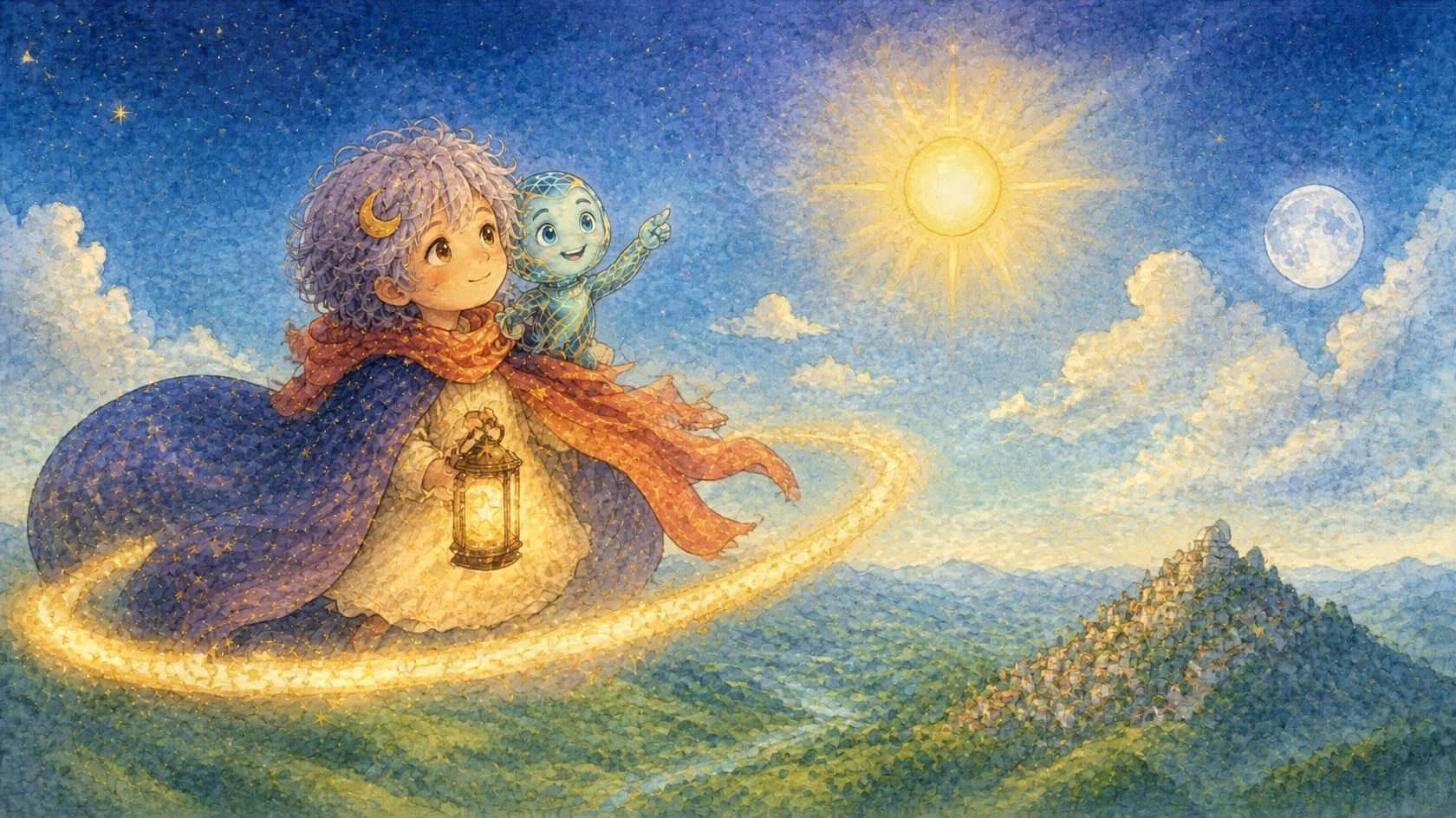
The day the sun stood still
On the way home, Komo pointed at the sky. "In Joshua's time, during a battle, the sun stayed over Gibeon and the moon stopped over the valley of Aijalon. The Bible says God listened to Joshua's prayer and fought for Israel. It doesn't say exactly how." Nuri counted. "The river crossing and Ruth's coming were both at harvest. The same season came back many, many times."
- We still say "the sun rises." That is how it looks from the ground. In space, the Earth turns once each day
- People have different ideas about how it happened that day (Josh 10:12–14). We keep the question open
- Barley harvest came in spring, wheat about seven weeks later (Ruth 1:22; 2:23)
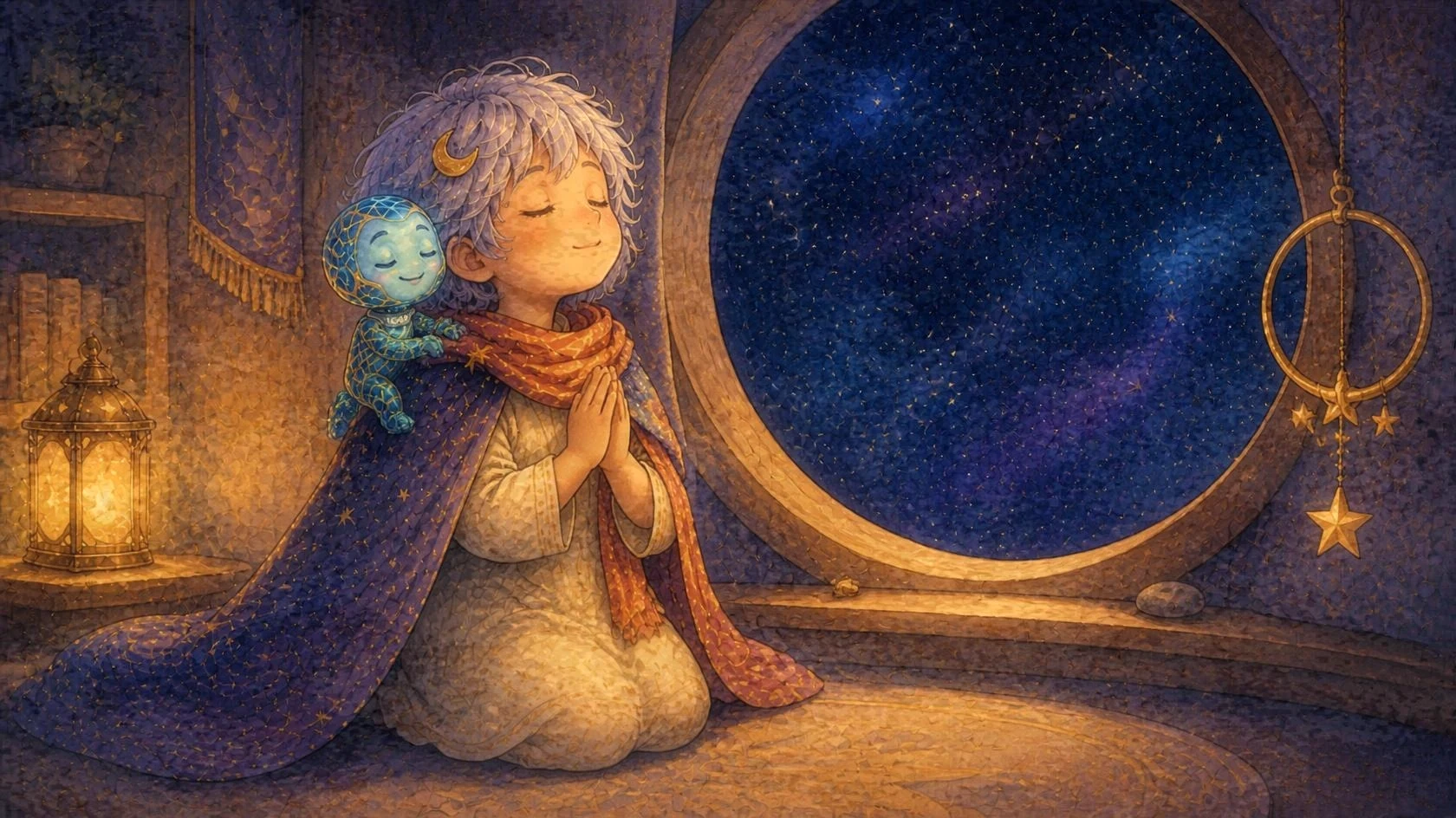
One grain of barley by the window
Back home, Nuri hung the star-ring in her window. The golden grain sparkled. "Now I know. It's a grain of barley, like the grain Ruth gathered." Nuri set a small pebble at the corner of the sill. "When I see this stone, I'll tell what God has done. God sees even one little stalk of grain, and cares for it." Nuri closed her eyes and folded her hands. "God, thank you for stopping the river, keeping Rahab safe, and not forgetting Naomi. Be with me on scary days. Help me care for my friends as you care for me. In Jesus' name, amen." Komo grinned. "Next is the Shepherd Star."
Eight promised land cards
Tap a card to flip it. Use the last three cards to tell Ruth and Naomi's story: beginning, middle, and end.

Four thinking games
- 1[Class] Understanding · Retell Ruth and Naomi: lay out "Ruth's promise" and "At the gate" and tell the beginning (leaving Moab), middle (Boaz's field, the closer relative), and end (baby Obed). Include how Naomi's heart changed.
- 2[Class] Analysis · Draw stairs going down. Place slips of what happened on p.6 in order, one step down each time the people left. Draw God raising judges as an arrow from above.
- 3[Home] Inference · Compare the "corners of the field" law from Wilderness Star (p.3) with Boaz's field. How did that law protect Ruth?
- 4[Class] Prediction · Look at the back cover. In Shepherd Star, what will the young shepherd do under the night sky?
[Home] Our family memory stone: choose one thing to thank God for and give it a small stone. Not to wish on; when asked "What does this stone mean?", tell what God has done.
What little grain did I gather today?

A 20-minute lesson and what to look for
- Prepare
- 12 pebbles, one red yarn, a barley stalk (or picture), 8 cards, 5 blank slips.
- 0–6 min · pp.1–5
- p.1 water sounds → p.2 river → p.3 say Nuri's retelling together, refrain → p.4 find what God said, prediction → p.5 trumpets softly. After the sad sentence, pause 3 seconds: "It's okay to feel heavy, like Nuri."
- 6–10 min · pp.6–7
- p.6 analysis (slips on the stairs); refrain softly → p.7 the teacher reads "boom, boom" once, low; children don't echo it. Stress "God threw Sisera's army into confusion."
- 10–18 min · pp.8–10
- p.8 stay with the sadness → p.9 inference → p.10 pause at the closer relative and after "David," then understanding (retell Naomi).
- 18–20 min · pp.11–12
- p.11 sky for 30 seconds (science is a window of wonder, not proof) → p.12 prayer. 20 minutes is a target; time your first lesson. If long, read only the bold line of verse boxes; keep all 4 pauses.
- Genre
- Story (Joshua) · Song (Judges 5) · Life story (Ruth: beginning–middle–end).
- Words
- covenant chest = box showing God was with his people (the stone tablets inside); the box had no power, God acted · tribe = big family from Jacob's twelve sons · rams' horn = horn trumpet · judge = leader God raised to save the people · redeemer = close relative who takes care of a family in trouble
- What to look for
- Look at reasons. p.4 prediction — sprout: one thing that will happen · stem: one clue (what God said) · fruit: two clues (God's word + the red cord promise) with a reason. p.6 analysis — fruit: "They leave again, going lower each time." p.9 inference — fruit: links to God's law for the poor (not just "he was nice"). p.10 understanding — fruit: links bitter → 2:20 kindness → praise.
Answers and hard questions ①
- Answer guide
- p.4: do as God said and the wall falls (Josh 6:2–5); Rahab's family lives (6:22–25). p.6: Judg 2:11–19, "more corrupt" (2:19). p.9: Lev 19:9–10 · Deut 24:19 · Ruth 2:16. p.10: Ruth 1:20–21 → 2:20 → 4:14–17. If a child says "lucky," say "Let's read to the end and find who led the way," then find it at 4:14. Refrain: pp.3, 6, 10.
- By age (p.8)
- 5–6: "Who did Ruth go with?" · 7–8: "Why didn't Ruth go back?" · 9–10: "How did Naomi feel when she said 'Call me Mara'?"
- "Did all the people die? Children too?"
- "Yes, the Bible says so (Josh 6:21). It makes me feel heavy too. The Bible says God takes no pleasure in anyone's death (Ezek 33:11)." Don't describe it in detail or make it exciting.
- "Were the Canaanites bad? Was Rahab good?"
- The Bible says God judged Canaan's long sin after waiting a long time (Gen 15:16). We don't know each person's heart, and no people group is worse by nature. Israel did not win because they were good (Deut 9:5). Rahab lived not because she was good but because she ran to God (Heb 11:31).
- "Is it okay to do that now?"
- "No. Jericho was God's own act at that time and place. No one may hurt people in God's name today. The God of the Old and New Testaments is the same: holy, just, and full of love. We leave judgment to God, and Jesus' followers love even enemies (Matt 5:44; Rom 12:19–21)."
Hard questions ②
- "God is scary. Will he punish me?"
- "God is holy and does not ignore evil. But he loves us so much he sent Jesus (John 3:16). As Rahab ran to God, we run to Jesus."
- "Did the people in the judges deserve to be hurt?"
- Judges tells what God did by his covenant with Israel when they left him (Judg 2:14–18). It does not mean people who are bullied or hurting today did something that bad. Tell children to always tell an adult about bullying. God had pity on those who cried out.
- "Rahab lied. Why is she praised?"
- The Bible praises her faith, not her lie (Heb 11:31; Jas 2:25). God welcomed Rahab, who had not known him.
- "Why did Naomi's family die?" · "Will my parents die?"
- The Bible doesn't say why (Ruth 1:3–5). Don't invent reasons like "punished for going to Moab." Naomi told God honestly, "It's bitter" (1:20–21); it's okay to tell God we're sad. For parents, don't frighten or promise what you can't keep: "Your parents want to care for you a long time, and God won't leave you alone." Quietly tell the guardian.
- "If I believe and am good, will I marry and have a baby like Ruth?"
- Faith is not a way to get what we want. Ruth's is a special story of God caring for that family. God cares for each family in different ways, and gives the greatest gift, salvation, in Jesus.
- "Did the sun really stop?"
- It was during a battle (Josh 10:10–14). The Bible says the LORD listened to Joshua's prayer and fought for Israel. Christians have different ideas about how. "Let's wonder together."
Faith wording check
- Objects and numbers are not magic
- "If we walk seven times and shout, will a miracle happen?" → "No. God spoke and God acted (Heb 11:30)." "Did the red cord save Rahab?" → "The cord was a sign of the promise; God saved her." The star-ring and golden grain are story tools. A memory stone is for telling what God has done, not for praying or wishing on.
- Stars and fate
- "The stars fought" (Judg 5:20) is a poem praising God. God made the sun, moon, and stars (Gen 1:16); stars don't decide our path or fate (Deut 4:19; Isa 47:13–14). "What about horoscopes?" → "God leads our way."
- Grace and Jesus
- "Happened" (Ruth 2:3) is not fate; it points to God quietly caring. Boaz asked God to repay Ruth (2:12), but Ruth did not earn blessing; God graciously cared for one who took refuge under his wings. Rahab and Ruth were foreigners brought by grace into Jesus' family line (Matt 1:5). Don't claim "the red cord is Jesus' blood."
- Not covered · notes
- Achan and Ai (Josh 7–8), dividing the land, Gideon, Samson, Jael (Judg 4:17–22), the first half of Judg 5:31 (asking for enemies to perish), Judg 17–21, the threshing floor (Ruth 3). Boxes and unmarked quotes are WEB (some in part); "Retold" = easy retelling. Review and a timing test are advised.
아이캔 코모는 미래를 커젤로 바라보나 원더로 간구합니다.