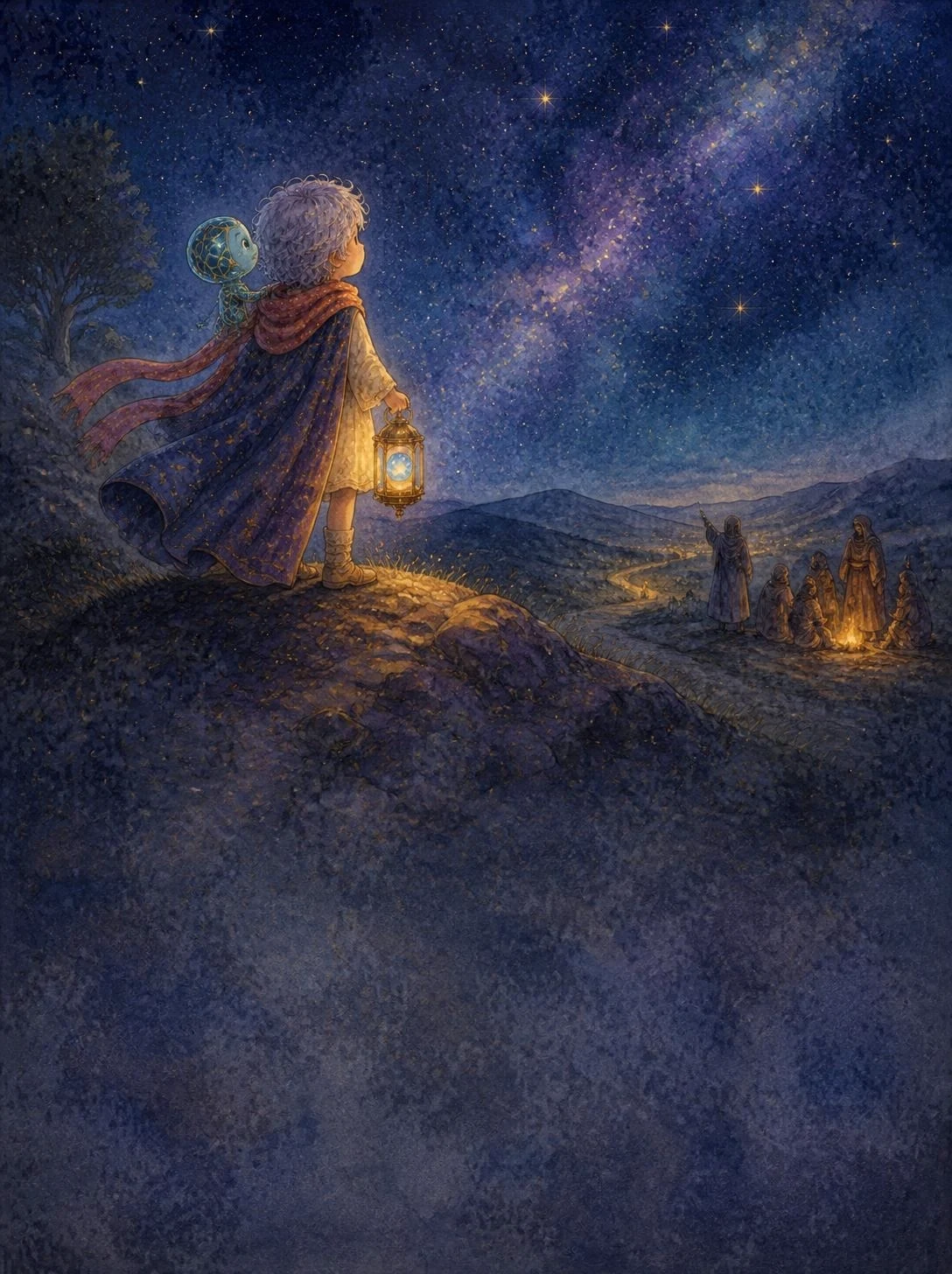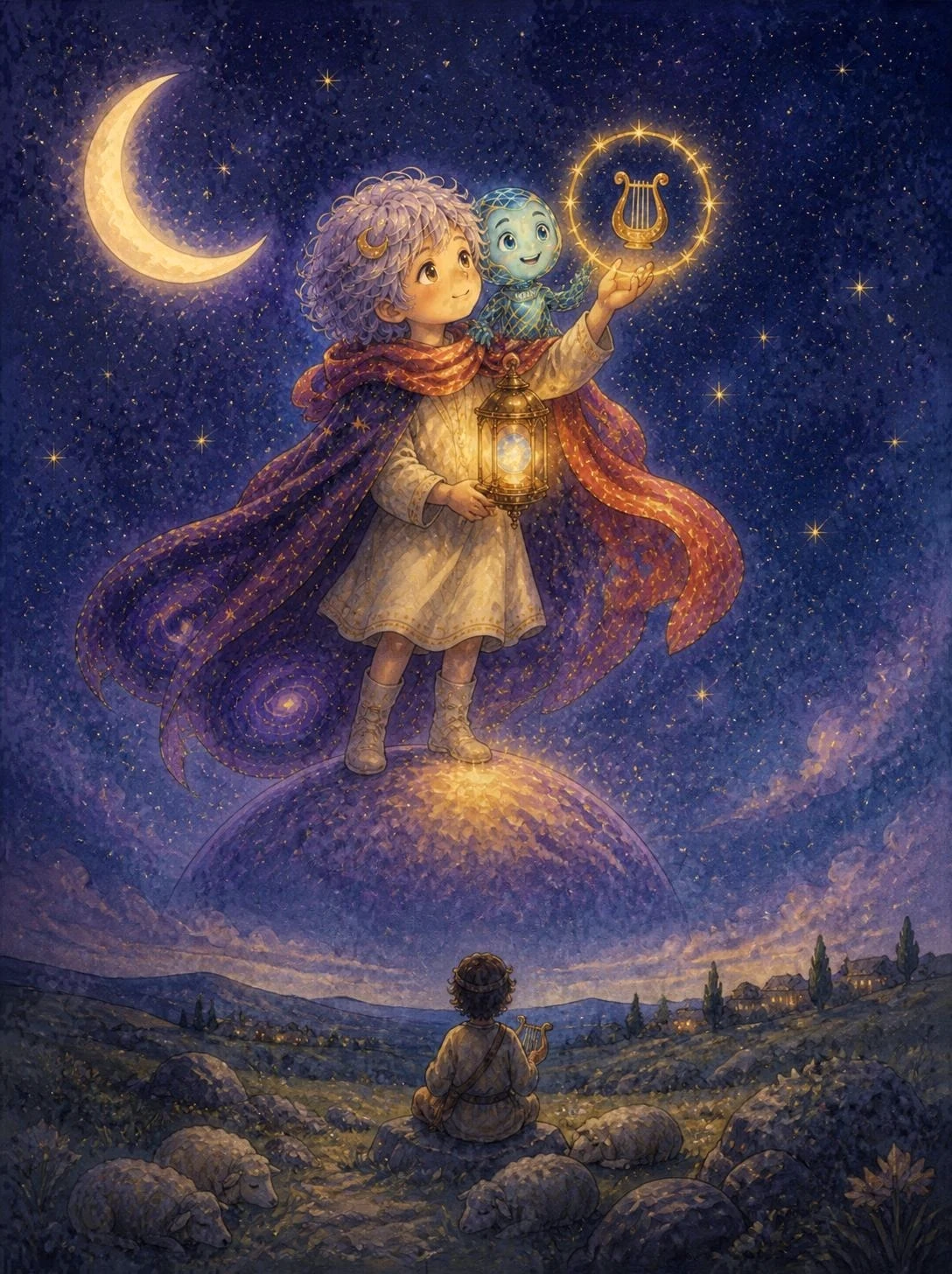
Song Star
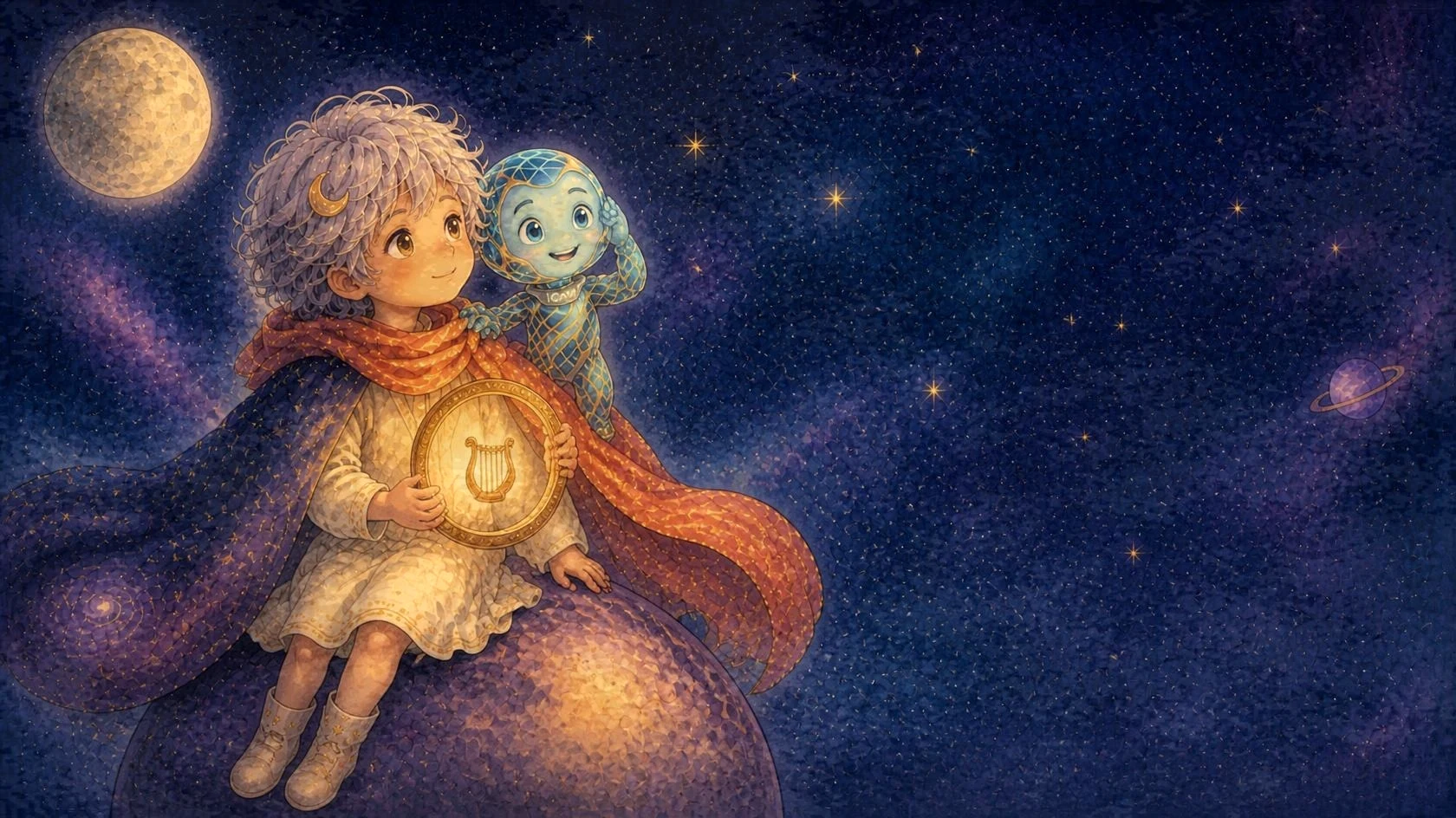
A little lyre in the ring
From far, far beyond Nuri's star-ring came a sound. Ding— ding-a-ling— someone was plucking strings. In the middle of the ring, a little lyre showed, no bigger than a hand. "Komo, what instrument is that?" Komo, on her shoulder, smiled. "A lyre. You pluck its strings with your fingers. Long ago people sang to God with it. That sound comes from an old, old story. The star-ring is a window to watch that story together." Komo raised one finger. "We only watch and listen from far away."
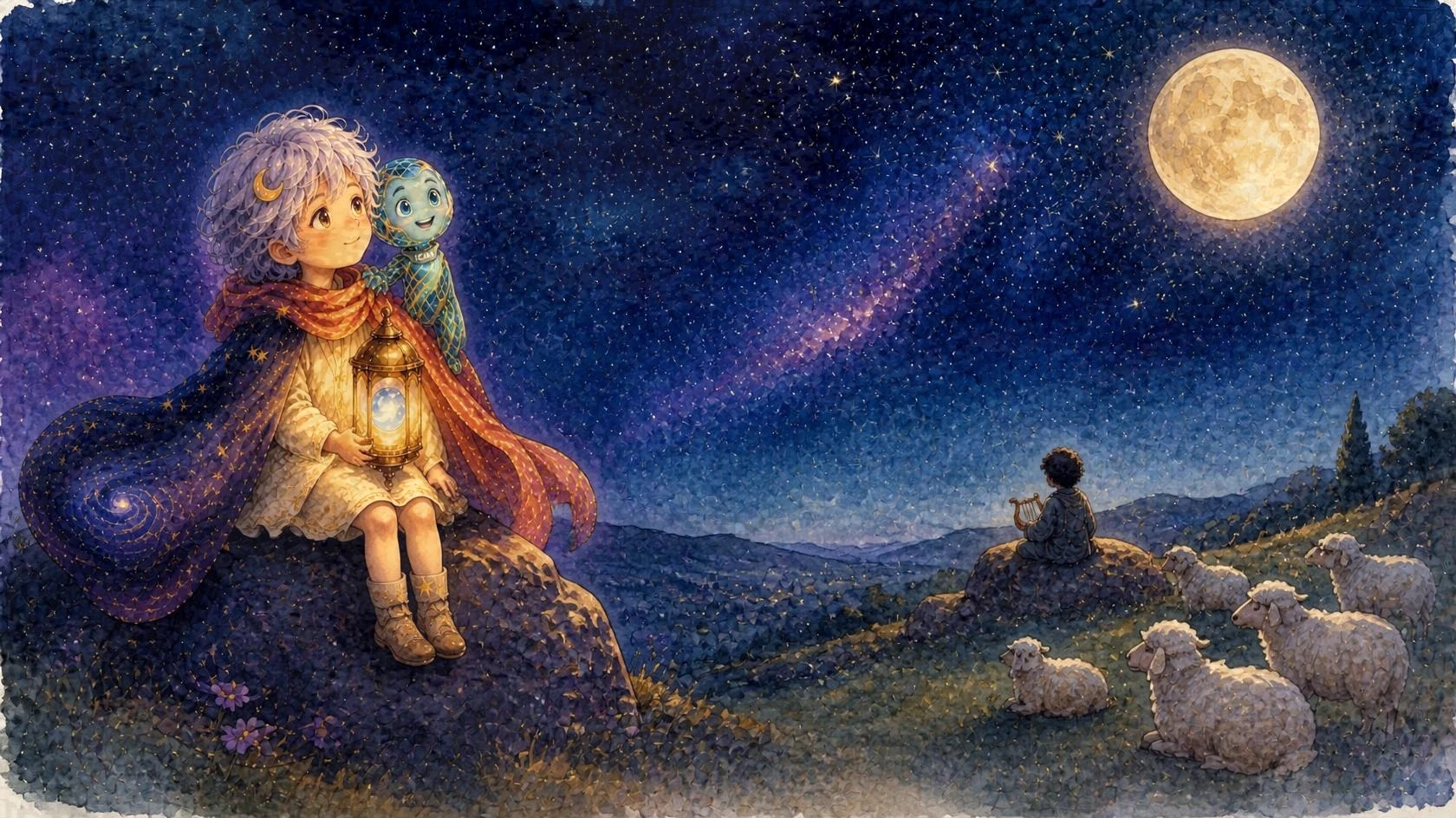
The sky your fingers made
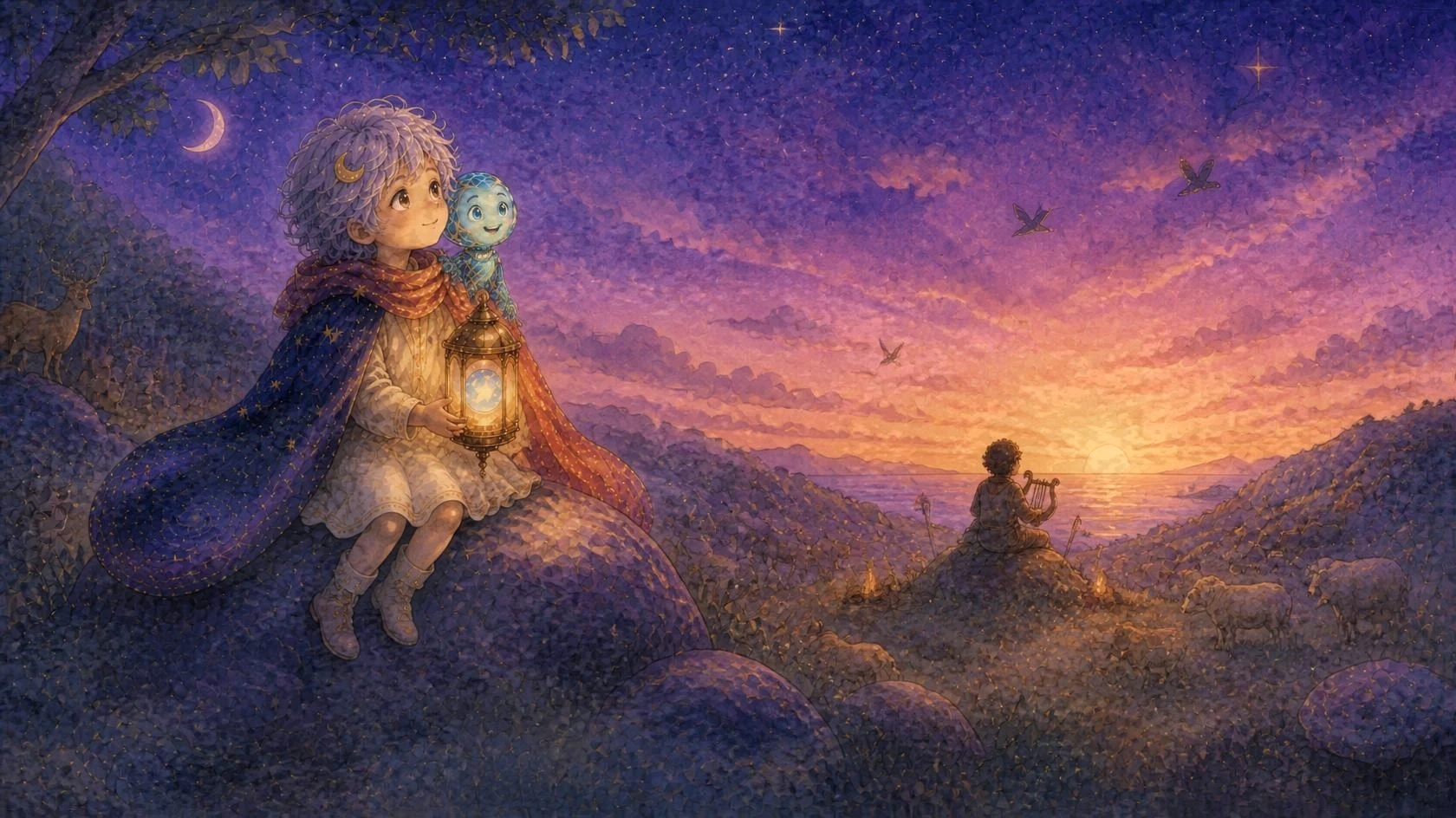
The ring showed a hill at night where sheep were sleeping. A young shepherd boy plucked a lyre. Komo whispered, "At the top of Psalm 8 it says 'A Psalm by David.' The Bible doesn't tell us if David wrote it as a boy or as a king. So today we imagine a young shepherd singing it." First the boy sang, "Yahweh, our Lord, how majestic is your name in all the earth!" Then he looked up. "When I consider your heavens, the work of your fingers, the moon and the stars, which you have ordained; what is man, that you think of him? What is the son of man, that you care for him?"
The first line and the last line
The song went on. "For you have made him a little lower than the angels, and crowned him with glory and honor." Retold "You let people rule over the works of your hands: cattle and sheep, wild animals, birds of the sky, and fish of the sea." Komo whispered, "To rule means to take good care of what God gave us, the way God cares." As the song came near its end, Nuri whispered, "I think I know the last line!" The boy finished: "Yahweh, our Lord, how majestic is your name in all the earth!" Nuri's eyes went wide. Komo softly sang along,
How majestic is your name in all the earth!
The sky that sings without words
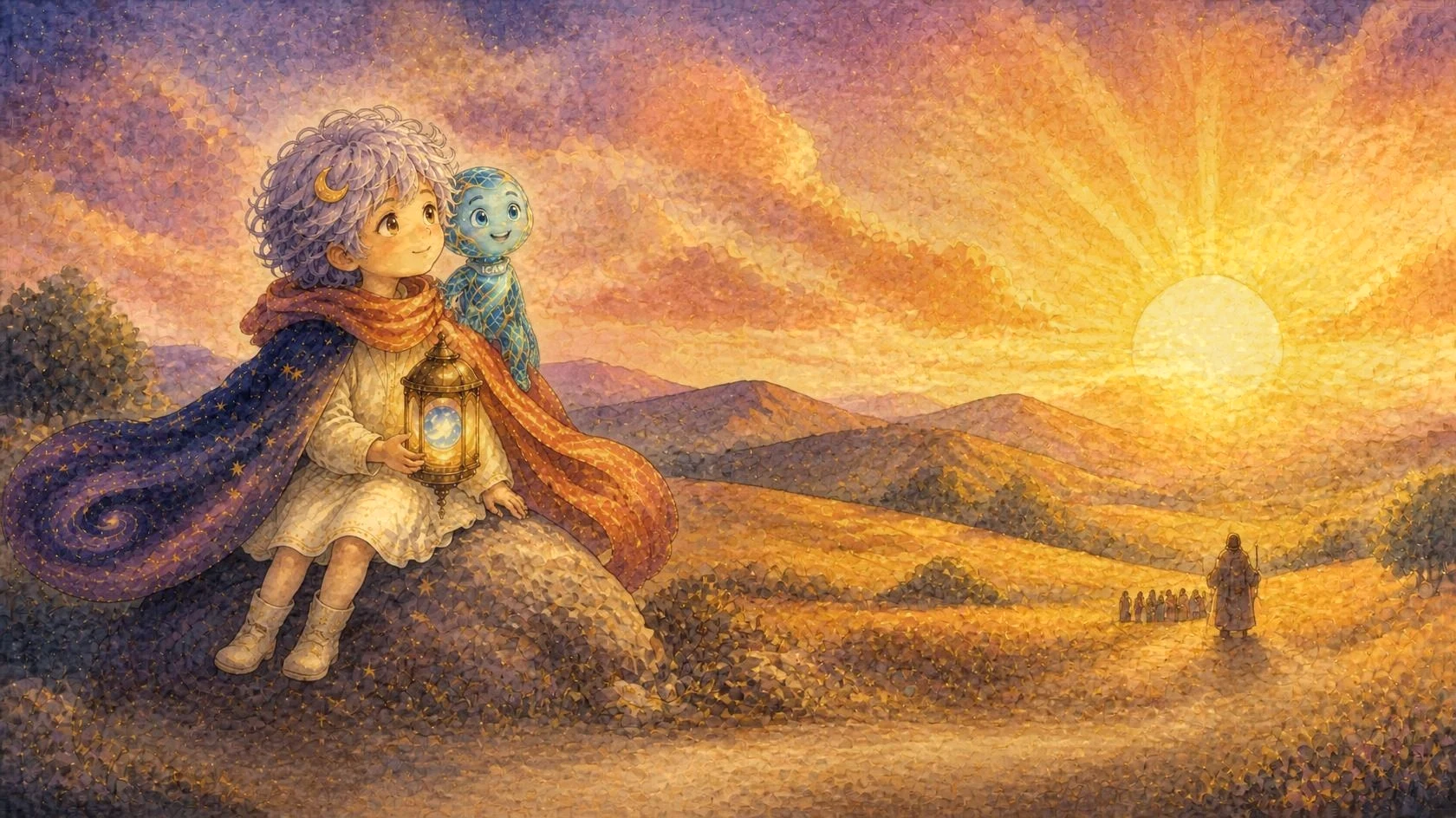
Night passed and the eastern sky grew bright. Another song marked "A Psalm by David" came. "The heavens declare the glory of God. The expanse shows his handiwork." "There is no speech nor language, where their voice is not heard." Nuri tilted her head. "But the sky doesn't make any sound." Komo smiled. "Right, the sky makes no sound. But when we look at it, we see how great and wonderful God is. So the psalm says the quiet sky is singing." The sun rose and turned the whole sky gold.
Sweeter than honey
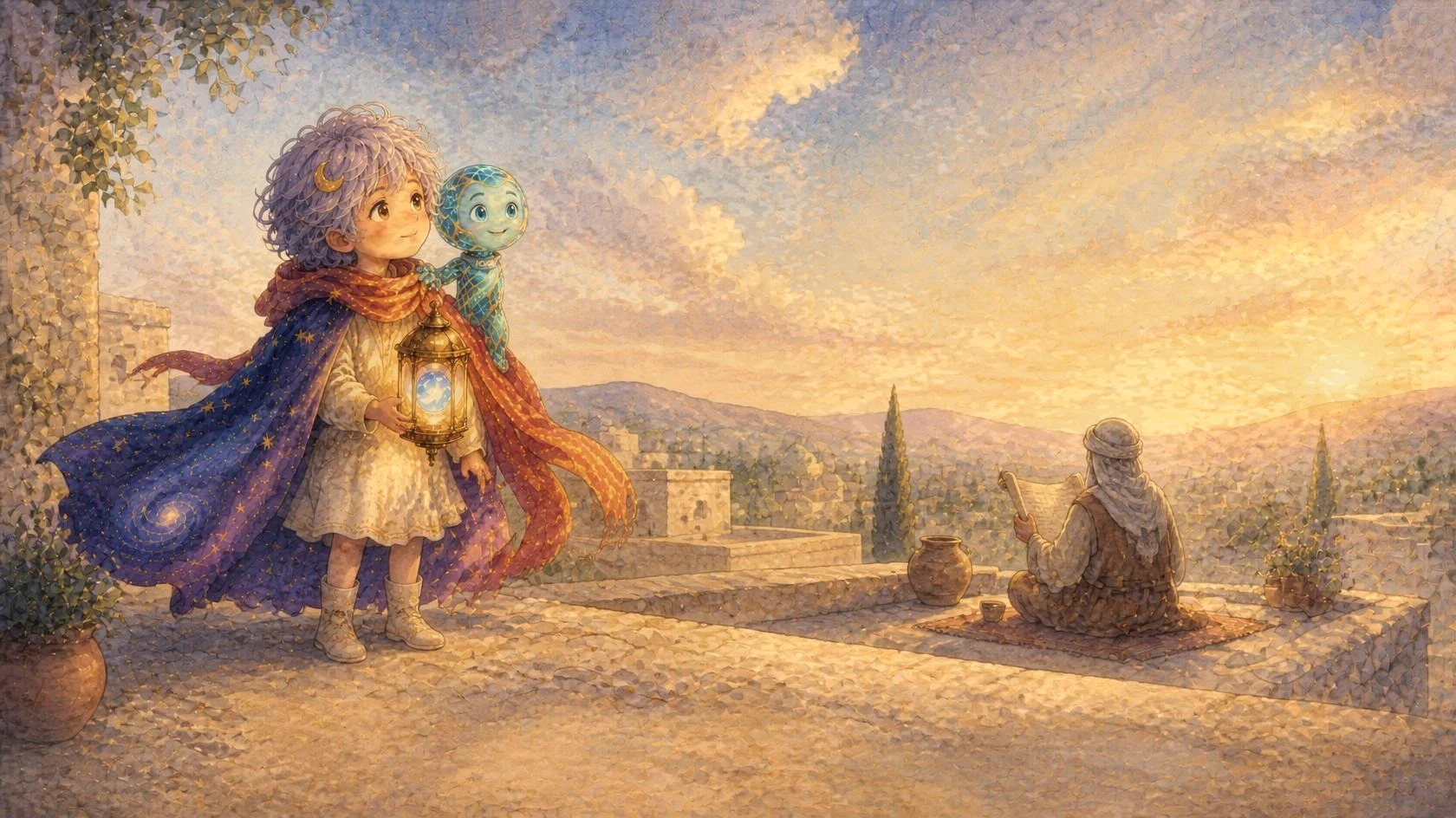
The song didn't stop at the sky. After the sky came God's word. "Yahweh's law is perfect, restoring the soul." Retold "God's word makes a tired heart new." "Sweeter also than honey and the extract of the honeycomb." In front of God's word, the singer saw his own wrongs too. "Forgive me from hidden errors." Retold "Keep me from doing wrong on purpose. Don't let sin rule over me." Then he prayed, "Let the words of my mouth and the meditation of my heart be acceptable in your sight, Yahweh, my rock, and my redeemer."
The One who names the stars
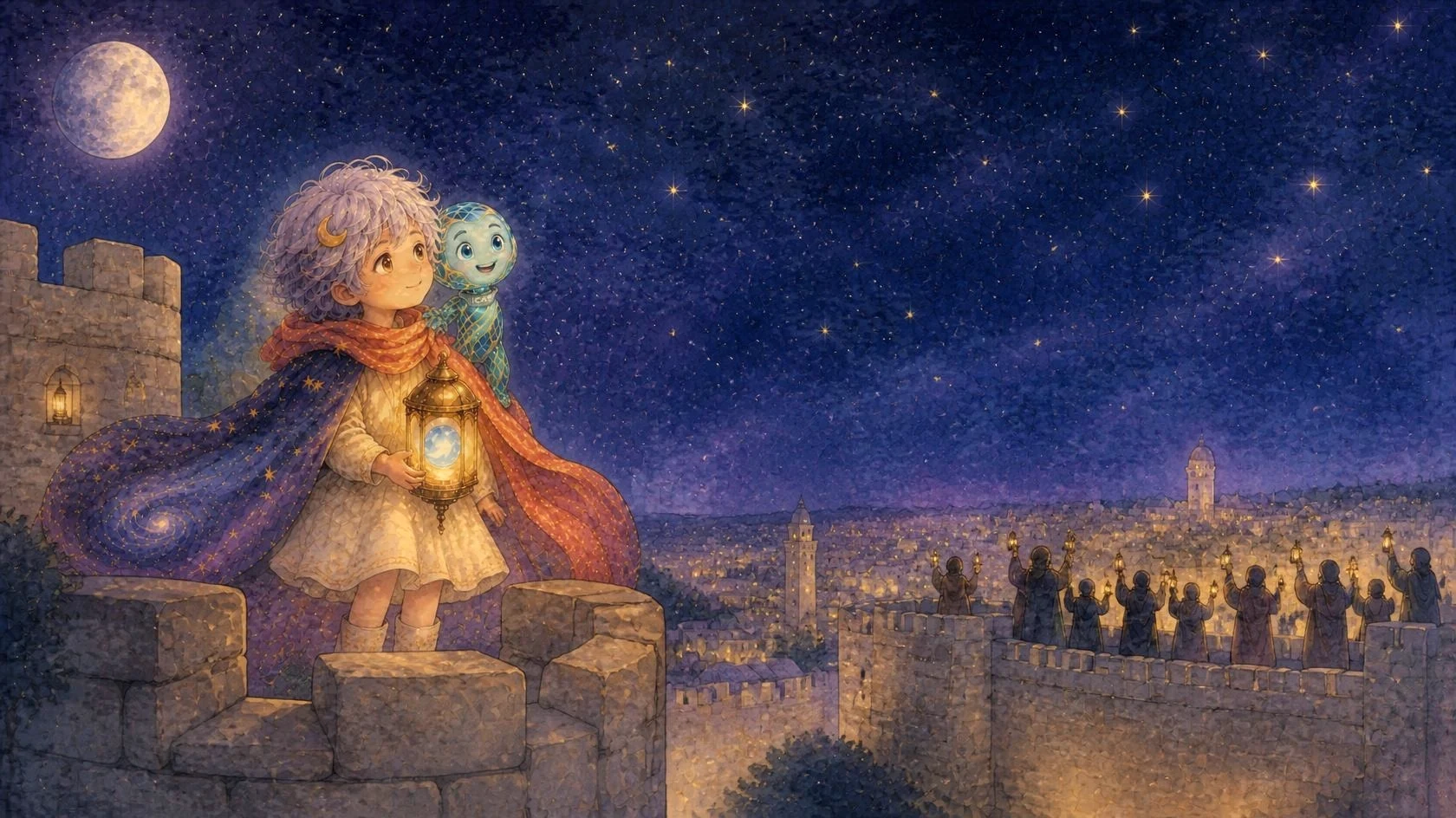
Next the ring showed a city wall under the stars. Komo whispered, "Psalm 147 doesn't say who wrote it or when. But 'he gathers the outcasts' makes me think of people coming home from far away. Let's imagine them singing on the wall." "Yahweh builds up Jerusalem. He gathers together the outcasts of Israel." "He heals the broken in heart, and binds up their wounds." "He counts the number of the stars. He calls them all by their names." Nuri looked up. "God knows every star, one by one. He knows every hurting heart too, and cares for it up close."
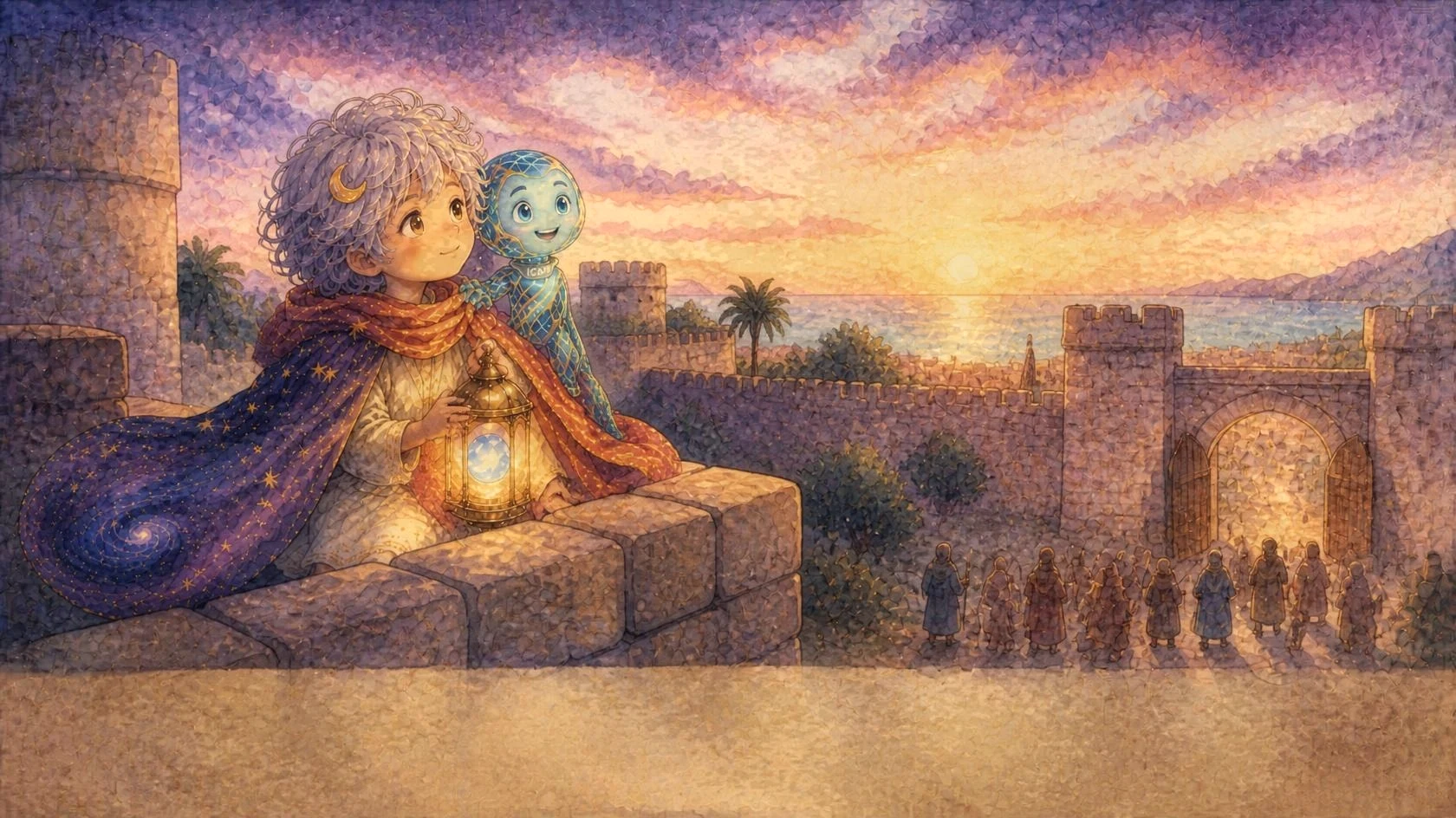
Wisdom's song
Following the starlight, the ring showed a busy city gate. Wisdom's song from Proverbs rang out. "Doesn't wisdom cry out? Doesn't understanding raise her voice?" Komo said, "Proverbs lets God's own wisdom, the wisdom he made the world with, speak like a person." "When he established the heavens, I was there." Retold "Day by day I was God's delight, always happy before him. I was glad in the world where people live, and I delighted in people." Nuri remembered the line from the psalm on the hill of sheep.
How majestic is your name in all the earth!
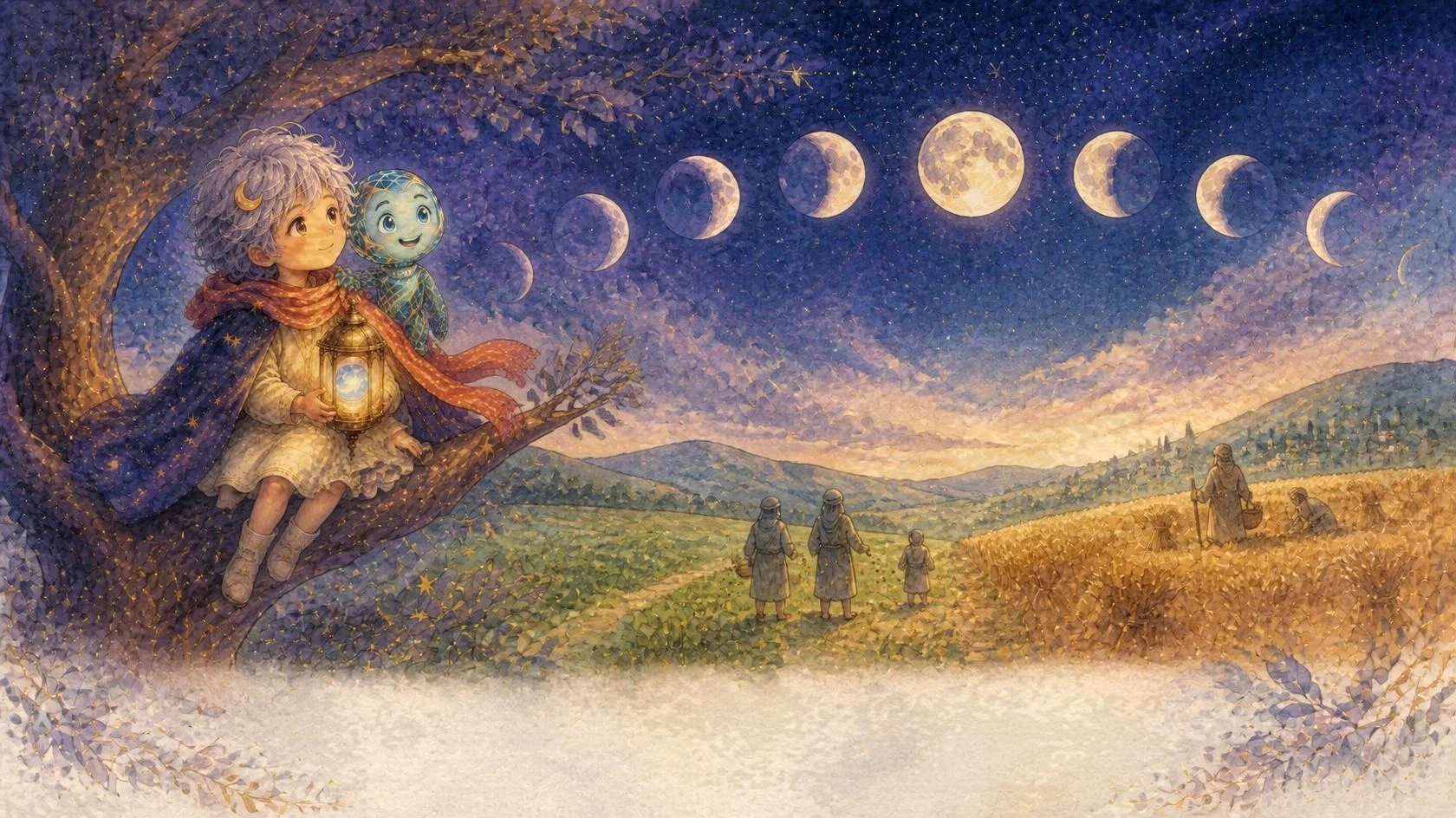
A time for everything
The ring showed a wide field. Among the workers someone sang slowly, the "time" song of Ecclesiastes. "For everything there is a season, and a time for every purpose under heaven." Retold "A time to be born and a time to die. A time to plant and a time to pull up what was planted. A time to weep and a time to laugh. A time to mourn and a time to dance." And there were many more times, happy ones and sad ones. "He has made everything beautiful in its time." Komo said, "Times aren't luck. Even the times we can't understand, God knows and rules."
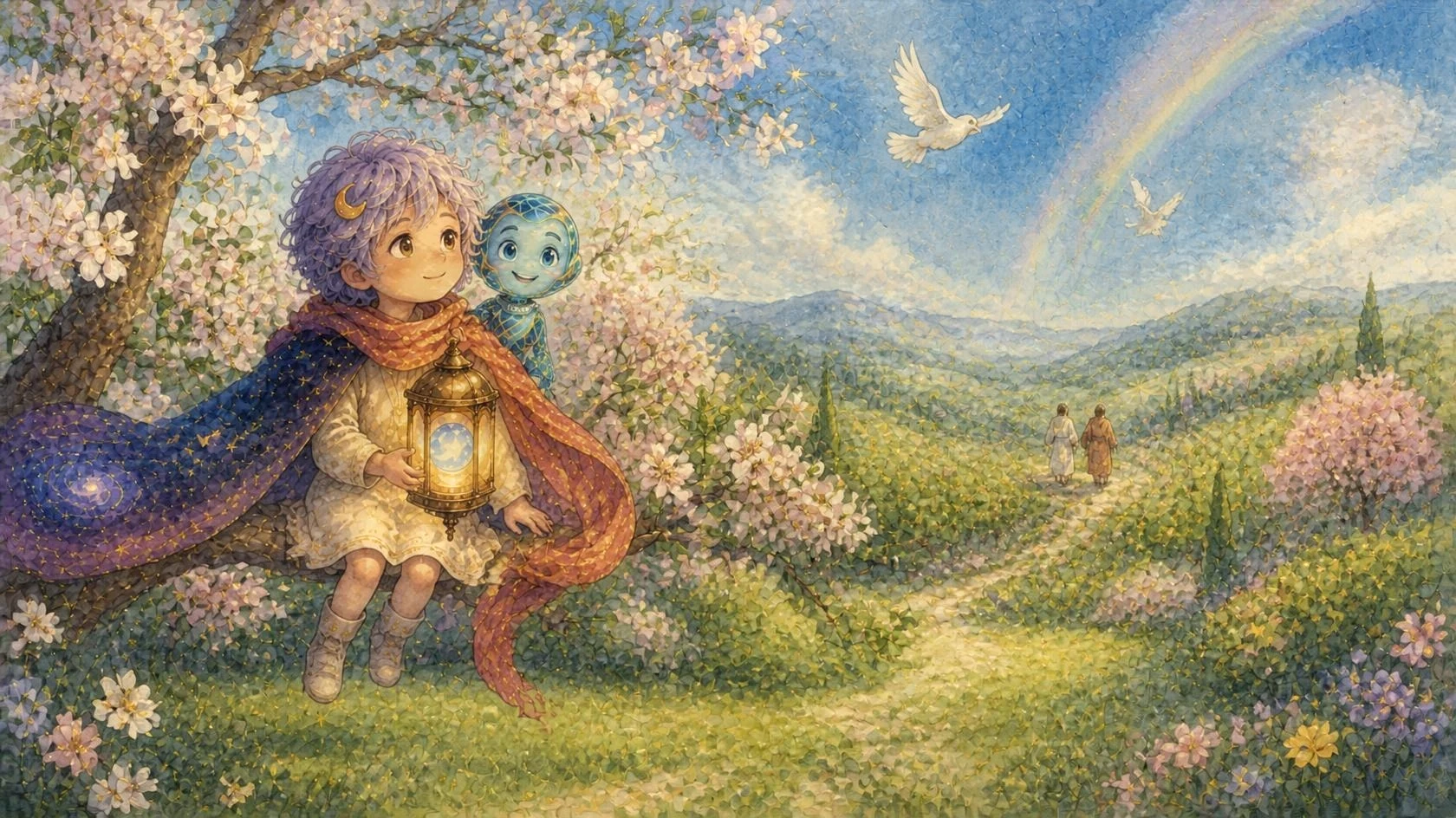
The winter is past
The rain stopped over the fields and the first flowers opened. The Song of Songs is a song a bridegroom and a bride sing, cherishing each other. Spring is inside it. "My beloved spoke, and said to me, 'Rise up, my love, my beautiful one, and come away. For, behold, the winter is past. The rain is over and gone. The flowers appear on the earth. The time of the singing has come, and the voice of the turtledove is heard in our land.'" Coo— went the doves. Cheep— went the birds. In God's time the flowers bloomed and the birds sang. Seeing the spring the two were glad in, Nuri remembered the psalm's line.
How majestic is your name in all the earth!
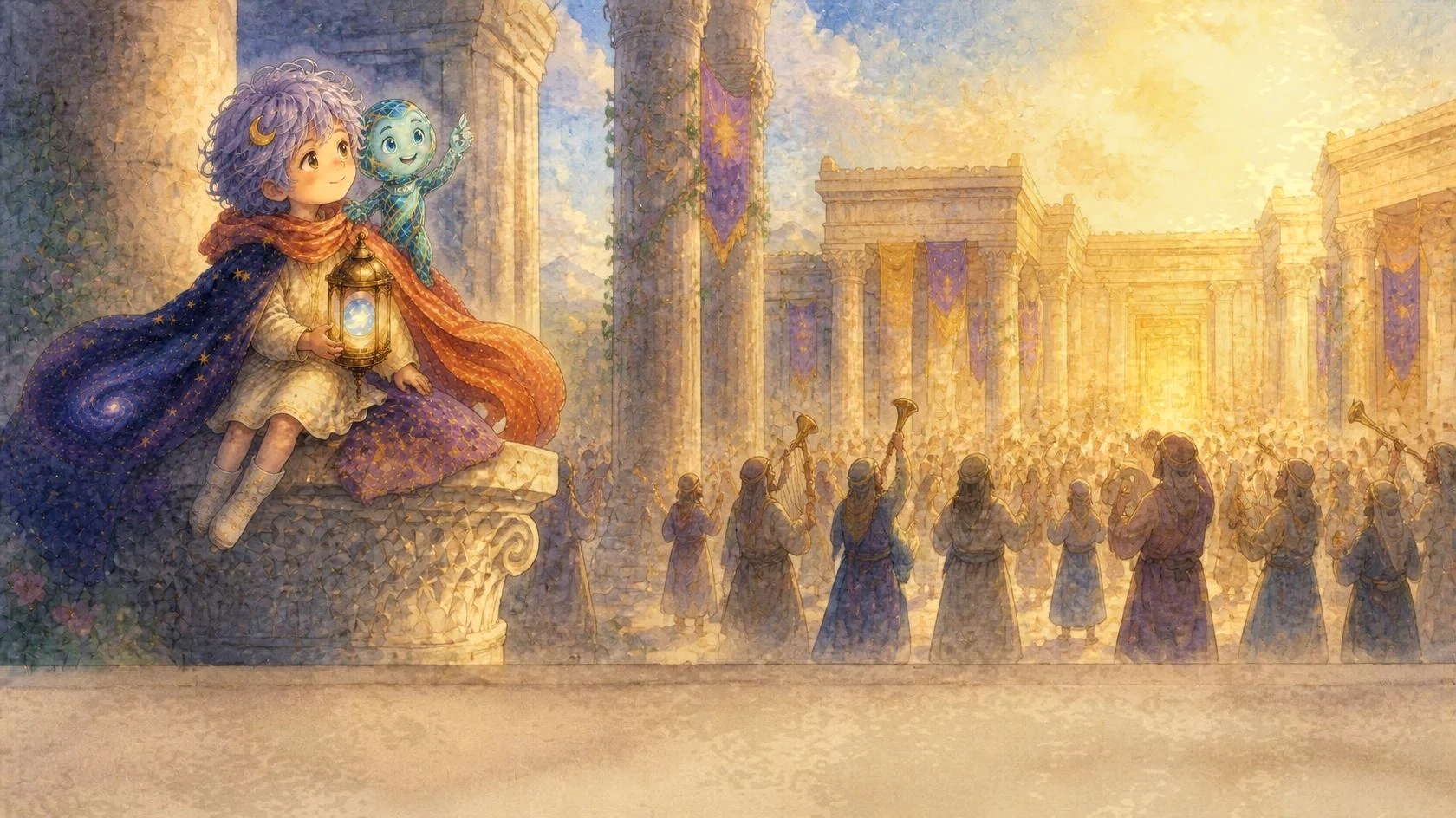
Everything that has breath
The last psalm calls for praise in God's sanctuary and in his mighty sky, with trumpet, harp and lyre, drum and dance, strings and flute, loud cymbals and clanging cymbals. "Let everything that has breath praise Yah! Praise Yah!" Everyone who breathes. With a loud voice or a tiny breath, with clapping hands or signing hands, or with two hands quietly folded. Nuri closed her eyes and remembered each place: the hill of sheep, the morning sky, the sweet word, the starlit wall, the city gate, the field of times, the spring hills.
The Pale Blue Dot
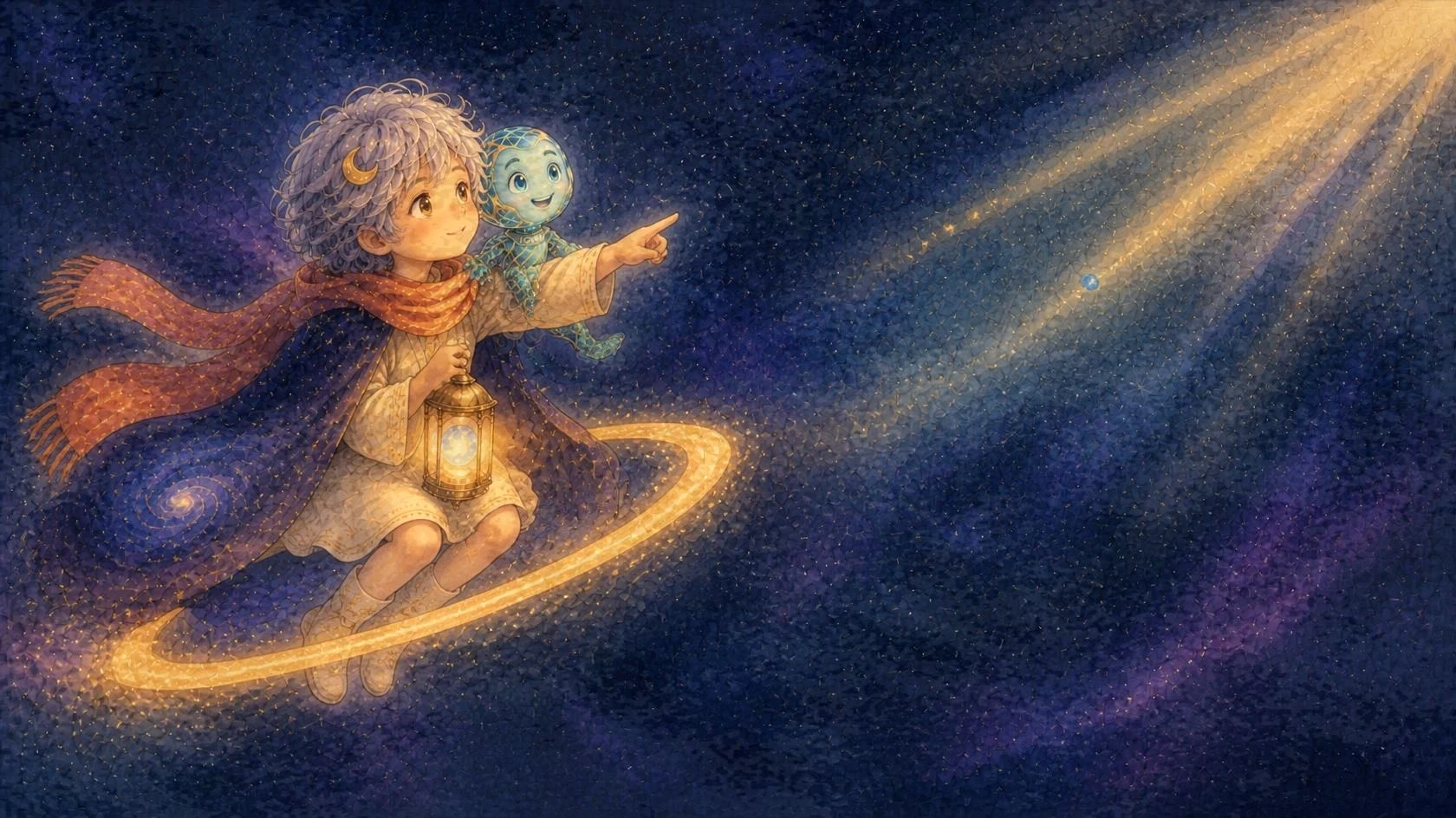
On the way home, Komo pointed far away. "The space probe Voyager 1 left in 1977. In 1990, from very far away, it turned around and took a picture of Earth. It's called the 'Pale Blue Dot.'" Nuri's eyes went wide. "We all live on that tiny dot?" "Yes. Like the psalm singer, we wonder, 'What is man?' But the song didn't stop there, remember? God thinks of each one of us on that tiny dot, and cares for us."
- Voyager 1 took the picture about 6 billion km away
- Sunlight takes about 8 minutes 20 seconds to travel from the sun to Earth
The star-ring on the desk
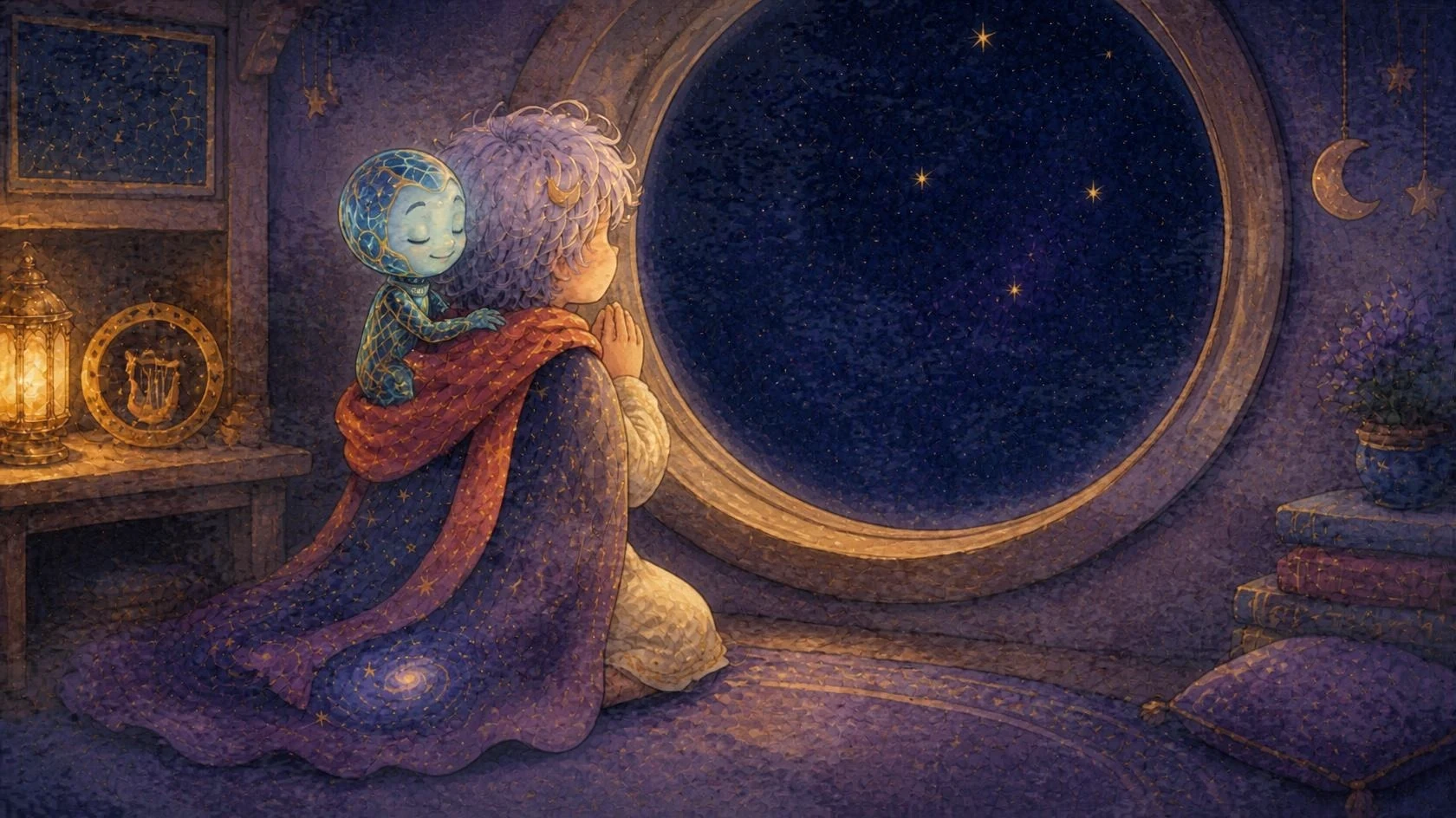
Back home, Nuri set the star-ring on her desk. The little lyre in the ring faded. Looking at the sky outside, she said, "Even the quiet sky is singing, by showing what God has done." Komo said, "The New Testament reads Psalm 8 with Jesus. For us, Jesus was made low, suffered death, and then was crowned with glory and honor." Nuri folded her hands. "God, you made the big sky, and you think of little me. Thank you. Please forgive me for my wrongs. Make the words of my mouth and my heart a song to you. In Jesus' name, amen."
Eight Song Star cards
Tap a card to flip it. Lay the eight cards in order and tell today's songs again.
Four thinking games
- 1[After reading] Analysis · Our class bookend poem: make the first and last lines "God, the sky is so big!" and each child adds a middle pair: "one big thing – one small me."
- 2[After reading] Analysis · Animals in our care: sort picture cards of cattle, sheep, wild animals, birds and fish into land, sky and sea (Ps 8:7–8), then each says one way to care for one.
- 3[Home] Inference · Quiet sky: watch the morning sky or a sunset for one quiet minute with family, then talk: "What does the sky seem to show about God?"
- 4[Class] Prediction · Look at the back cover. How might the man pointing at the sky comfort tired people? Is there a clue in what we heard on page 6?
[Home] One thank-you line: make one line about the sky or something you're thankful for. Sing it, say it, or show it with signs, a drawing or a rhythm.
Looking at the quiet sky, what song will I bring to God?
20-minute flow and what to look for
- Prepare
- 5 animal picture cards, 8 Song Star cards, star stickers, a big sheet, a timer. Write the first and last lines of Psalm 8 on the sheet; cover the last line.
- 0–7 min · pp. 1–3
- p2 say "we imagine" clearly → Prediction (two children, 1 min) → p3 uncover the last line and let children speak first; Analysis (two children, 1 min) → refrain: teacher once, children once.
- 7–13 min · pp. 4–7
- p4 pause 3 seconds after "the sky doesn't make any sound" → p5 read the hidden-errors prayer slowly; Inference (two children, 1 min) → p6 read 147:3 and 147:4 together → p7 refrain all together.
- 13–20 min · pp. 8–12
- p8 clap the pairs (plant–pull up, weep–laugh) → p9 dove sounds, refrain → p10 Understanding: spread the 8 cards; a child picks one and speaks, then gets a sticker (two children, 1 min) → p11 look 10 seconds; the sky box is optional → p12 prayer. Short on time? Skip the box; keep all four pauses.
- Genre
- Psalms are songs to God; Proverbs and Ecclesiastes are wisdom poems; the Song of Songs is a bride and bridegroom's love song. Hebrew poems use paired lines and bookends (Ps 8:1, 9). Boy David (p2) and the wall scene (p6) are imagined.
- Words
- expanse = sky · son of man = a human · restoring = making new · hidden errors = wrongs we don't notice · redeemer = one who pays to rescue · outcasts = scattered people · Yah = Yahweh
- What to look for
- p2 Prediction — sprout: a guess · stem: one clue · fruit: links clue and guess. p3 Analysis — sprout: finds the same line · stem: pairs big things and small people · fruit: says the same line wraps the middle, centered on God's name. p5 Inference — sprout: an idea · stem: one word as clue · fruit: sky and word both show God. p10 Understanding — sprout: one song · stem: what it sang about · fruit: one-line summary.
Good answers and hard questions ①
- Good answers
- p2: Open. "It will end with the sky" or "It will end with God's name" are both fruit if a clue is given; check together on p3. p3: The same line praises God's majestic name at both ends; between them are the big sky and small people. "It came back around" or "it wraps the middle" also count with a reason. p5: Open. The sky quietly shows God; the word tells clearly who God is, even our wrongs (19:1, 7, 12). p10: The Psalms praise what God has done; Proverbs, Ecclesiastes and Song show God's world, times and love. "About God and the world he made" also counts.
- "Does the sky really sing? Do stars talk?"
- No. The psalm itself says "there is no speech nor language" (19:3). "The quiet sky is singing" is a picture: when we look at the sky, we see what God has done. Flowers bloom and birds sing. The sun and stars are things God made, not living gods (Gen 1:14; Deut 4:19).
- "If God heals, why do I still hurt?"
- God knows each hurt and cares for us up close while we hurt (147:3). When and how he heals, God knows (Eccl 3:11). Not being healed yet doesn't mean weak faith. Listen first; don't rush to explain. If needed, talk after class and connect the child with parents and trusted adults or professionals.
- "What is man?" · "rule"
- People matter not because they are great but because God thinks of them and cares. That is grace. WEB has "a little lower than the angels" (Ps 8:5; Korean 개역개정: "than God"); Hebrews 2 reads this verse about Jesus. "Rule" doesn't mean use as we like, but take good care of God's world for him (Gen 2:15).
Hard questions ②
- "Is Wisdom a goddess? Is it Jesus?"
- Proverbs 8 is a poem letting God's wisdom speak like a person. Wisdom is not a separate god (Ps 104:24). The New Testament calls Christ "the wisdom of God" (1 Cor 1:24). But don't teach Prov 8:22 as "Jesus was created first." Jesus was not made; he was with God and was God from the beginning (John 1:1–3).
- "If times are set, is it fate? Even a time to die or for war?"
- No. Ecclesiastes says God knows and rules the times (3:11, 14). It doesn't praise death or war; it honestly names the times in our world. Answer gently: "There are sad, hard times too, and God is with us then." If a child has lost someone, listen first.
- "Whose love song is the Song of Songs?"
- First, a bride and bridegroom's love song. The church has long also seen God's love for his people reflected in it. Ephesians 5 does not quote the Song, but compares husband and wife's love to Christ and the church (Eph 5:25, 32). So we don't simply call the Song a story about Jesus.
- "Must I sing when I'm sad? What if I can't sing?"
- You don't have to pretend to be happy. Many psalms are sung with tears (e.g., Ps 13). Psalm 150 says "everything that has breath." Words, gestures, sign language, drawings and a quiet heart can all be given to God. God looks at the heart, not the size of the voice (19:14).
- "If Earth is so small, will God forget me?"
- That is exactly Psalm 8's wonder: "What is man, that you think of him?" (8:4). We aren't forgotten for being small; God remembers us though we are small.
- Science and the Bible
- Voyager 1 launched in 1977 and in February 1990 took the "Pale Blue Dot" about 6 billion km away. The light streaks are sunlight scattered inside the camera. Sunlight reaches Earth in about 8 min 20 s (NASA). Science doesn't prove the Bible; it is a window for wondering at the same sky.
Checking faith language
- Objects are not magic
- From page 1 the star-ring is a story window for watching old stories. The lyre's sound comes from the story beyond the ring. The ring stays on the desk, and Nuri prays with her back to it. The One who receives the songs is God.
- Stars and fortune-telling
- The sky is a finger pointing to God, not something to worship (Deut 4:19). Say clearly this is different from horoscopes or worshiping sun and moon (Jer 10:2).
- Holiness, grace and Jesus
- Psalm 19 sings of sky and word, then confesses hidden errors and calls on "my redeemer" (19:12–14). God is great and beautiful, and also holy, so we need forgiveness. Hebrews quotes Psalm 8: "we see him who has been made a little lower than the angels, Jesus, because of the suffering of death crowned with glory and honor" (Heb 2:9). Link to Christ only as far as the New Testament does.
- Not covered · notes
- Not covered: 8:2 enemies, 19:11, 147:6, other chapters of Proverbs and Song, the rest of Eccl 3:2–8, lament psalms. Unmarked quotes are WEB. Continuous: Ps 8:1, 8:3–5, 8:9, 19:1, 19:3a, 19:14, 147:2–4, 150:6, Prov 8:1, Eccl 3:1, Song 2:10–12. Partial: Ps 19:7a, 19:10b, 19:12b, Prov 8:27a, Eccl 3:11a, back cover Isa 40:26a, Heb 2:9a. Retold: Ps 8:6–8, 19:7 gloss, 19:13, Prov 8:30–31, Eccl 3:2, 4. Korean edition quotes 개역개정. Please review and time a read-aloud before publishing.
아이캔 코모는 미래를 커젤로 바라보나 원더로 간구합니다.