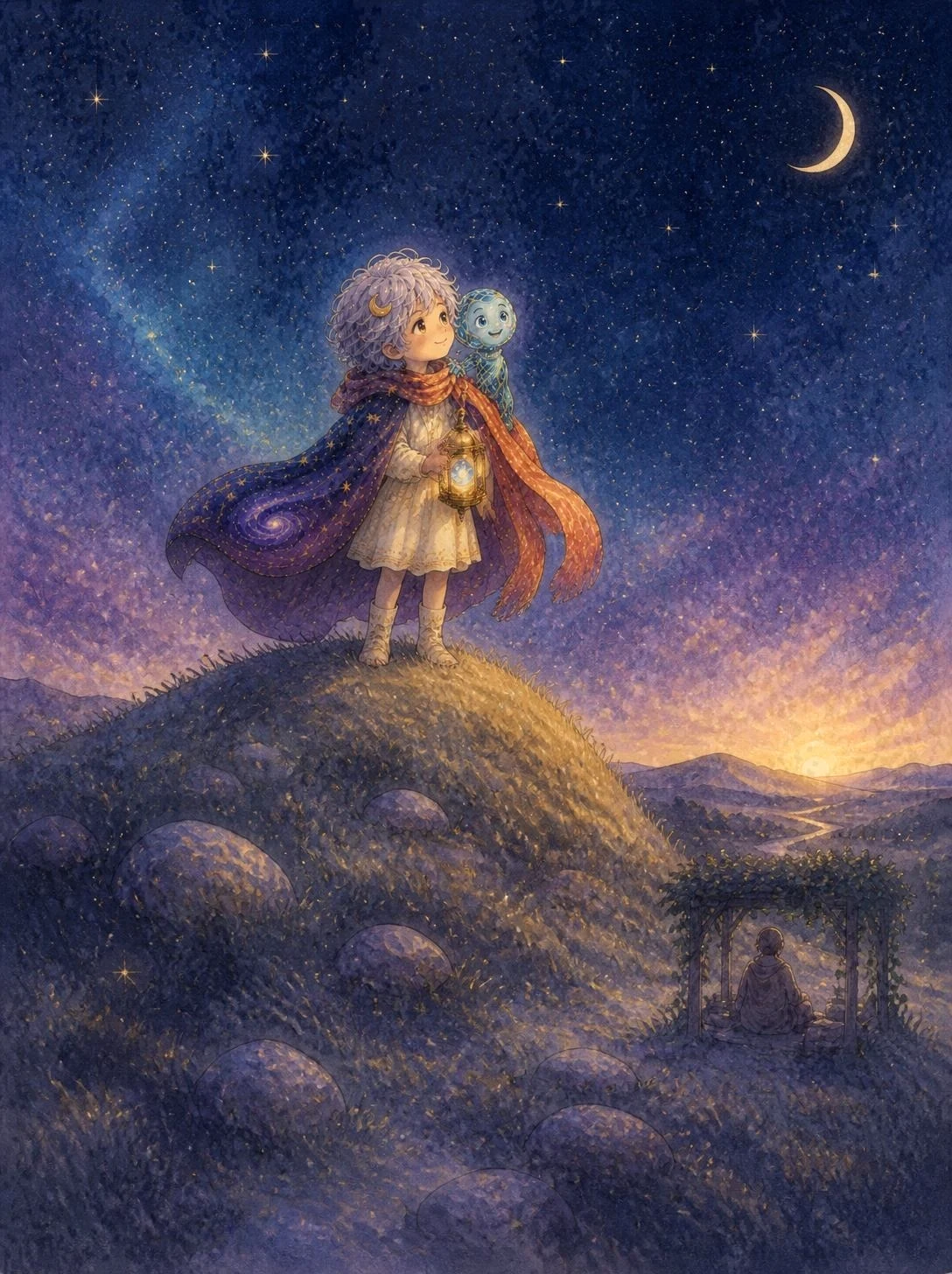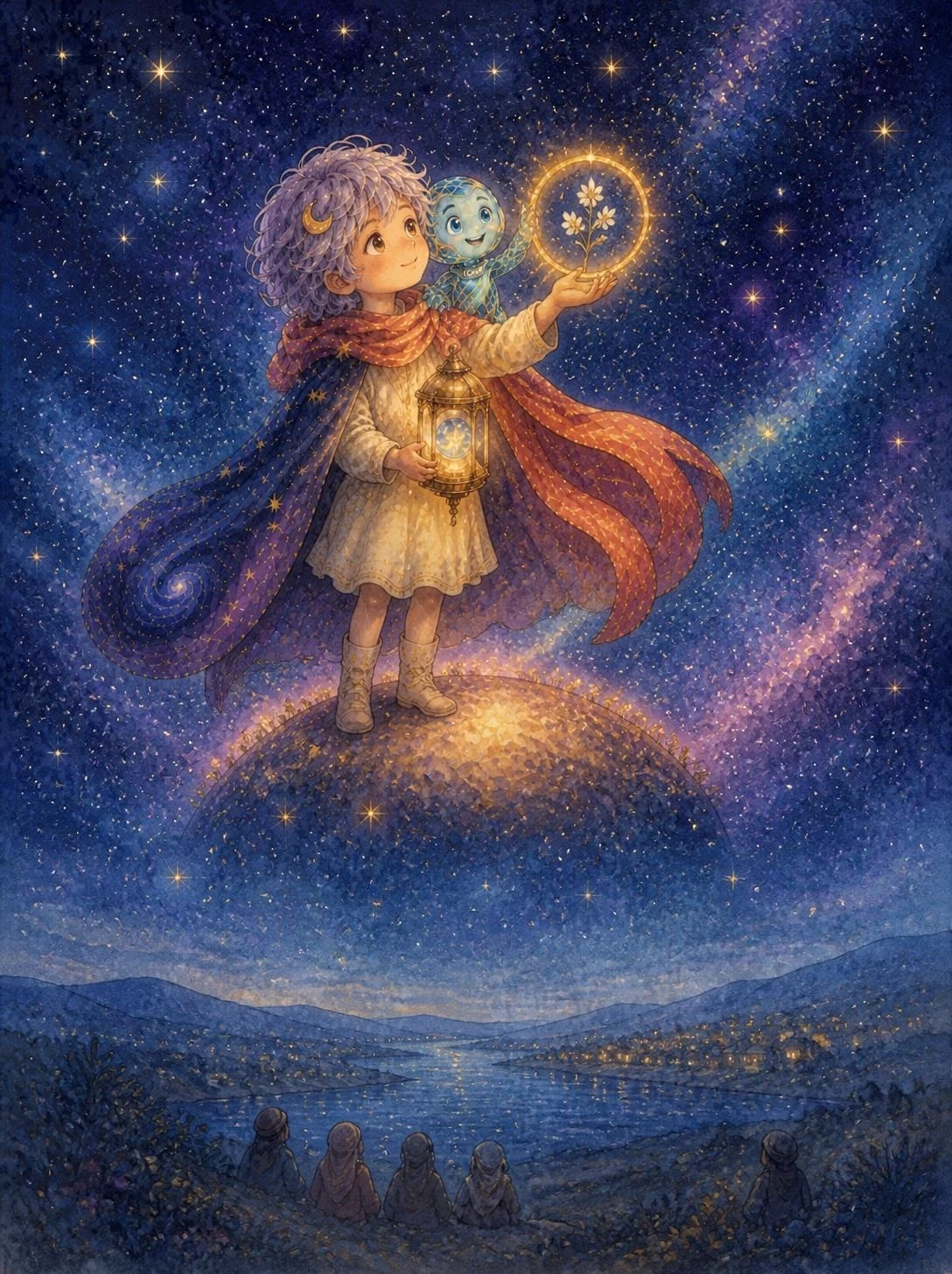
Name Star
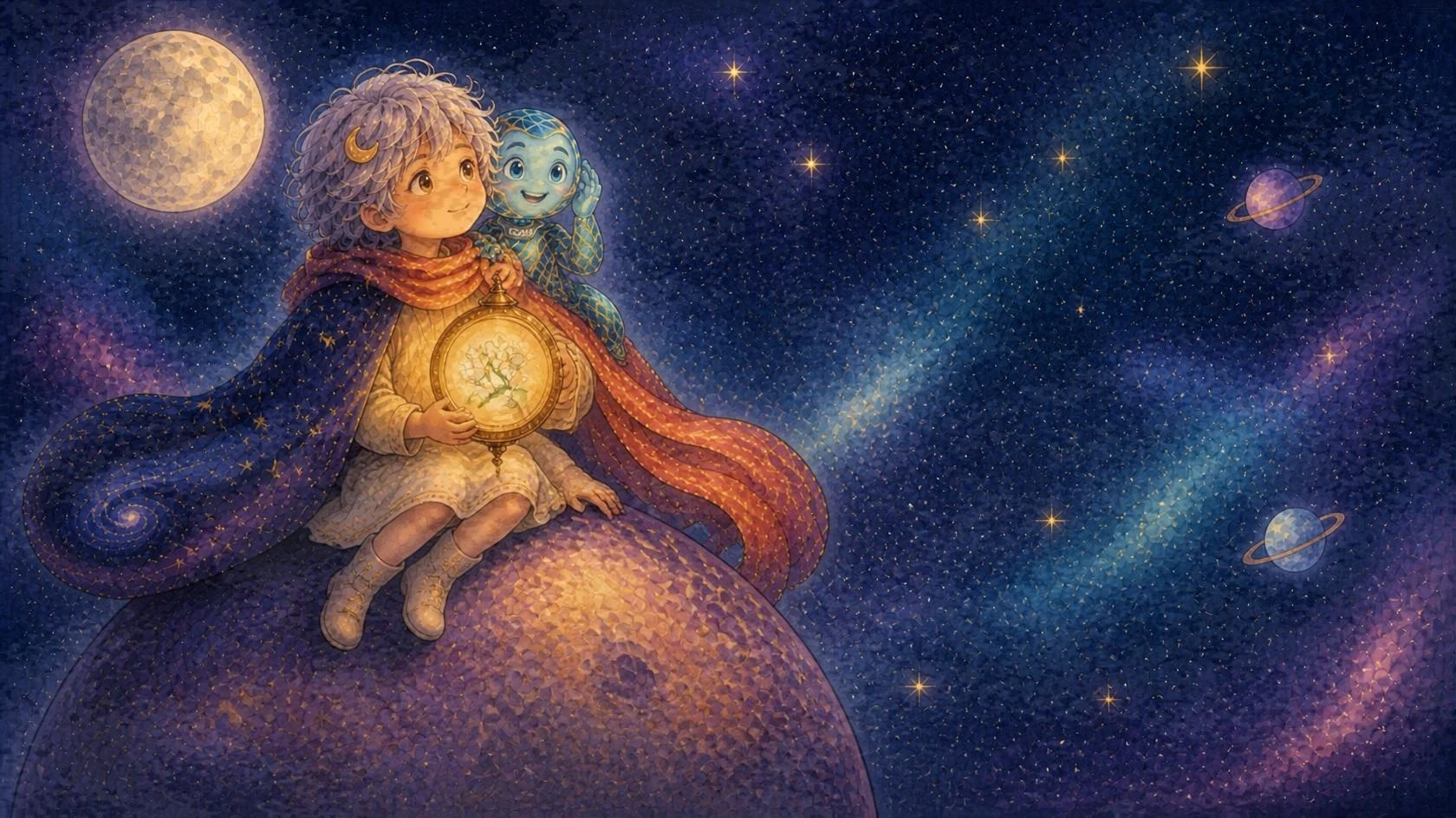
A blossoming branch in the ring
Through the star-ring window, from an old, old story far away, a voice called someone's name. "Jeremiah." In the middle of the ring, a small branch with white blossoms showed. "Komo, what tree is that?" Komo, on her shoulder, tilted his head. "It looks like an almond branch. In early spring it wakes up before the other trees and blossoms. The star-ring is a window to watch old stories together." Komo raised one finger. "We only watch and listen from far away."
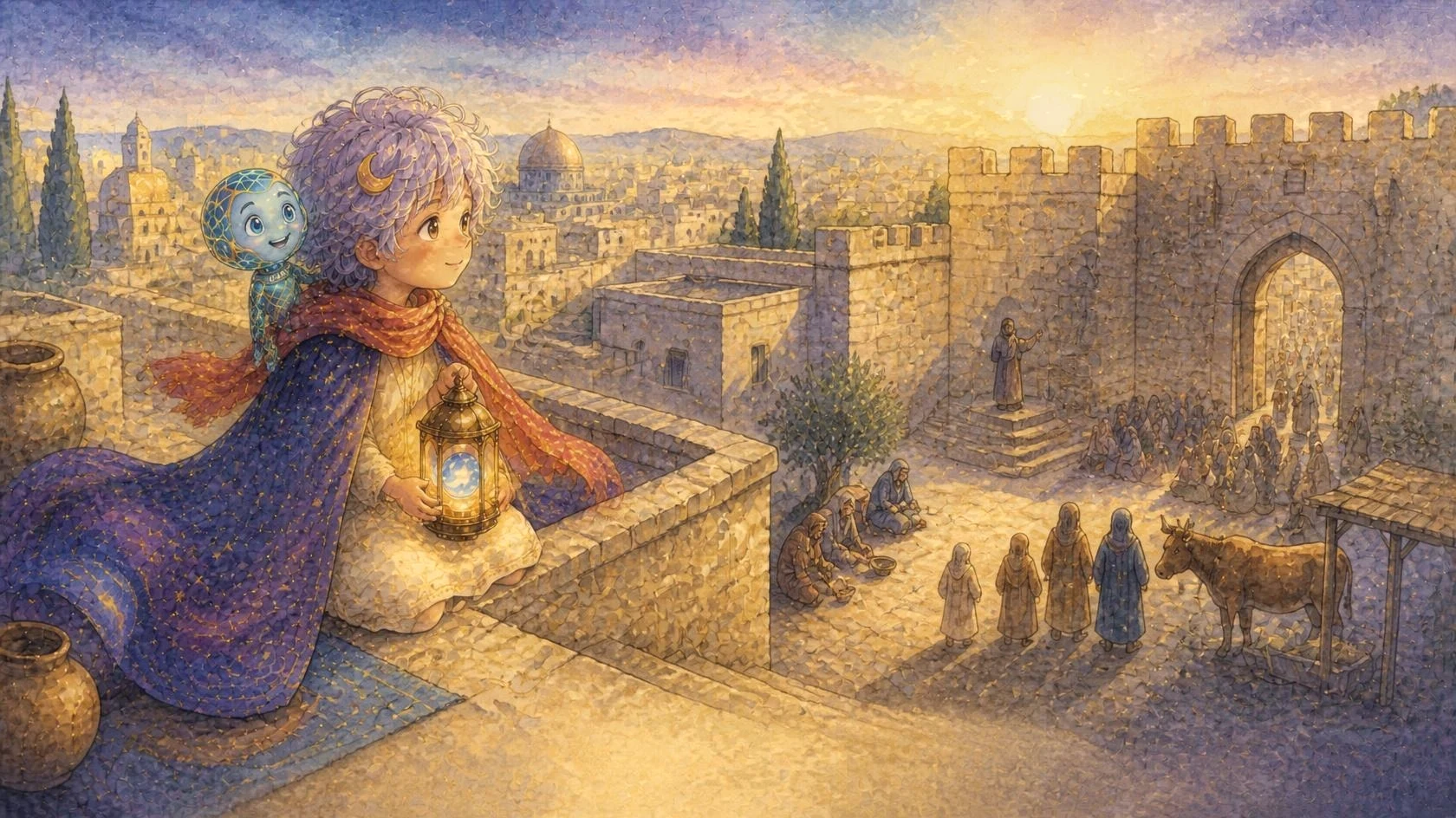
Even the ox knows its owner
The ring showed Jerusalem, long, long ago. People brought many offerings to the temple, but they did not care for the weak. Many worshiped idols, too. Then the prophet Isaiah spoke God's word. "The ox knows his owner, and the donkey his master's crib; but Israel doesn't know, my people don't consider." Still God called again. "Come now, and let us reason together… Though your sins be as scarlet, they shall be as white as snow…" Nuri whispered, "God scolds the wrong, and still calls them to come back."
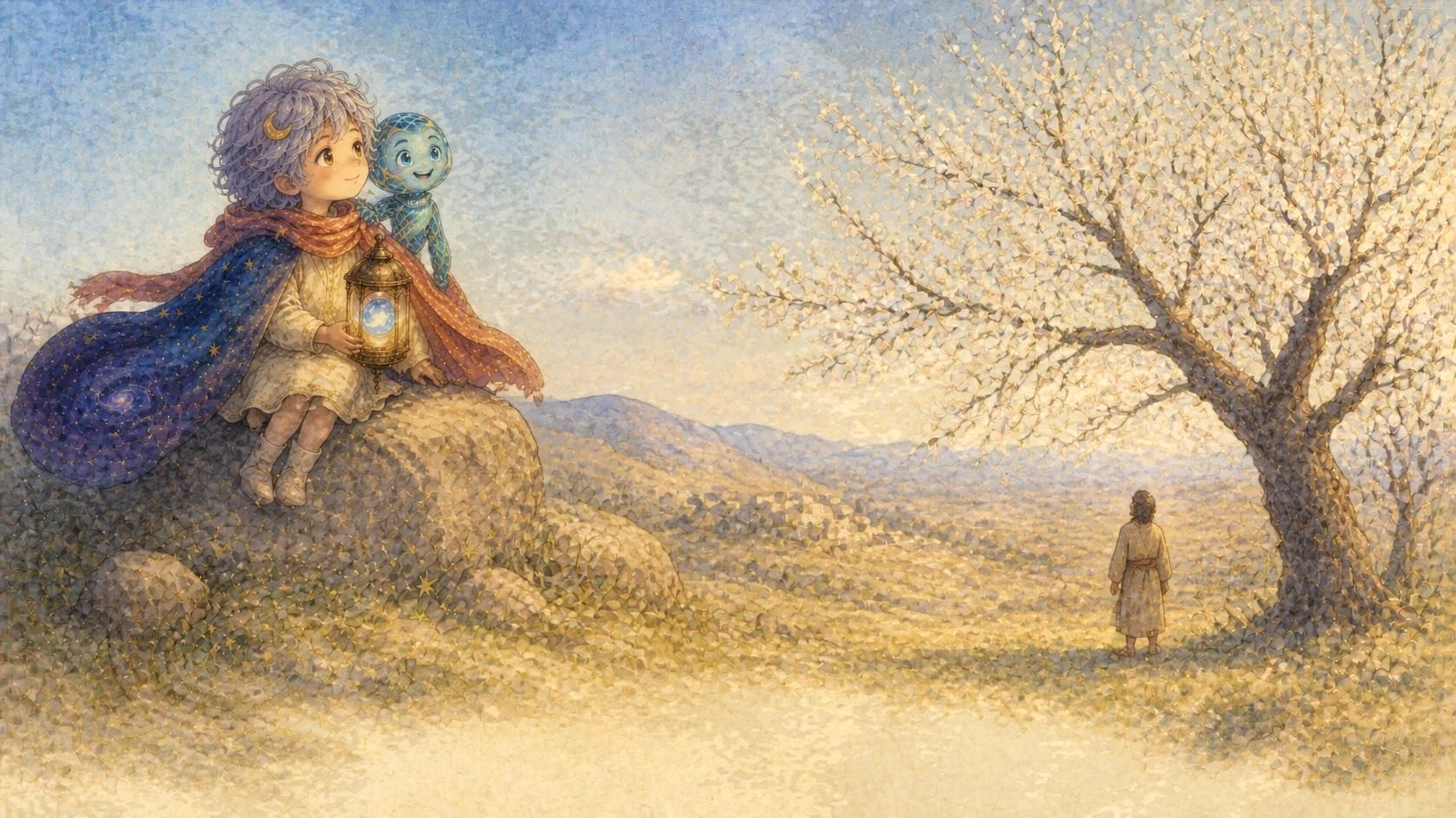
An almond branch
About a hundred years after Isaiah, God called young Jeremiah. Jeremiah was afraid. "Ah, Lord Yahweh! Behold, I don't know how to speak; for I am a child." God said, "Behold, I have put my words in your mouth." Then God asked, "Jeremiah, what do you see?" Jeremiah answered, "I see a branch of an almond tree." God said, "You have seen well; for I watch over my word to perform it." God always watches over what he has said, and surely makes it happen.
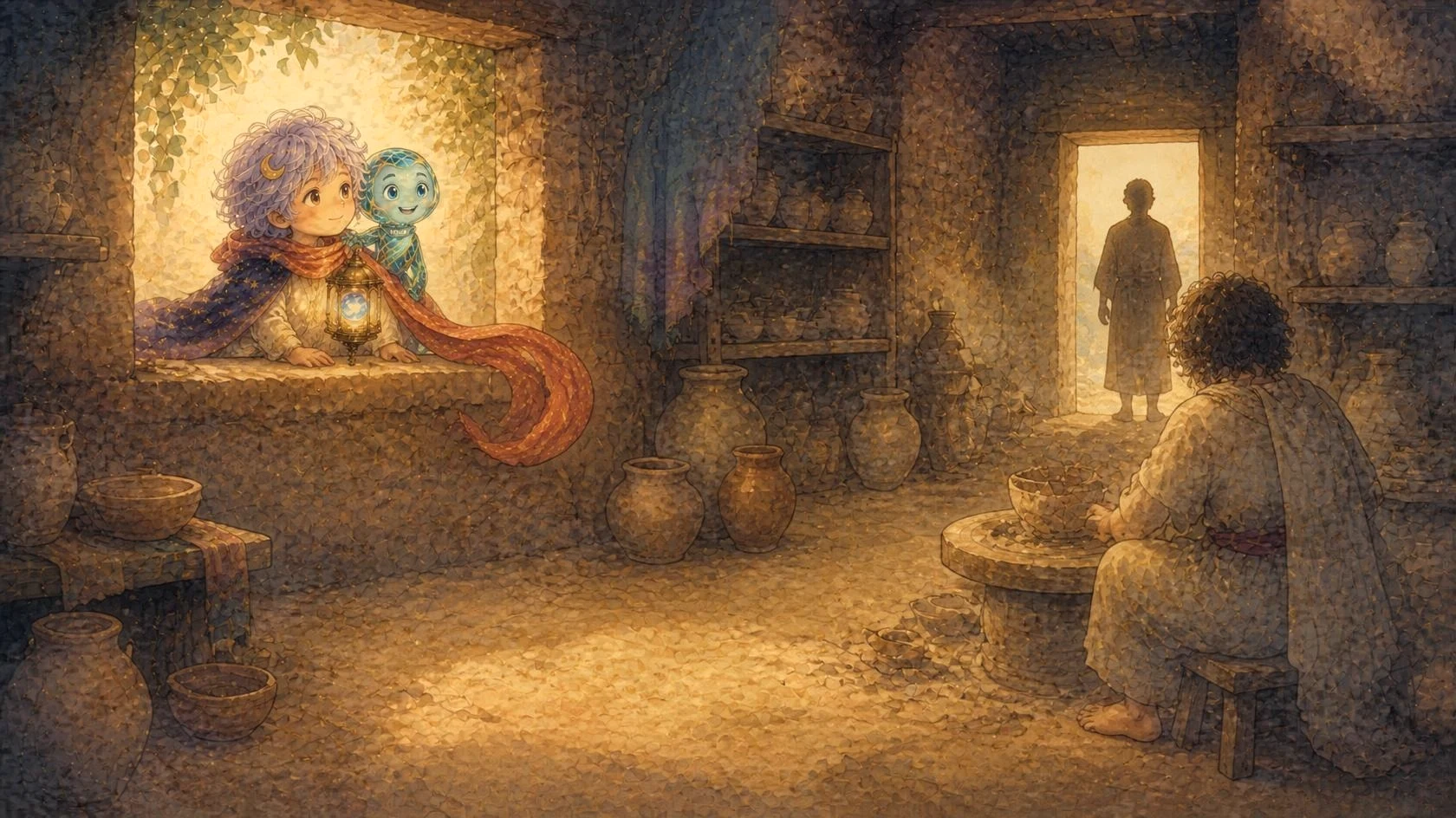
The pot breaks in his hands
God said to Jeremiah, "Arise, and go down to the potter's house, and there I will cause you to hear my words." A potter is someone who shapes pots from clay. When Jeremiah got there, the clay was rising into a pot on the spinning wheel. Then, suddenly — "the vessel that he made of the clay was marred in the hand of the potter…" Nuri held her breath. The potter's two hands rested quietly on the broken clay.
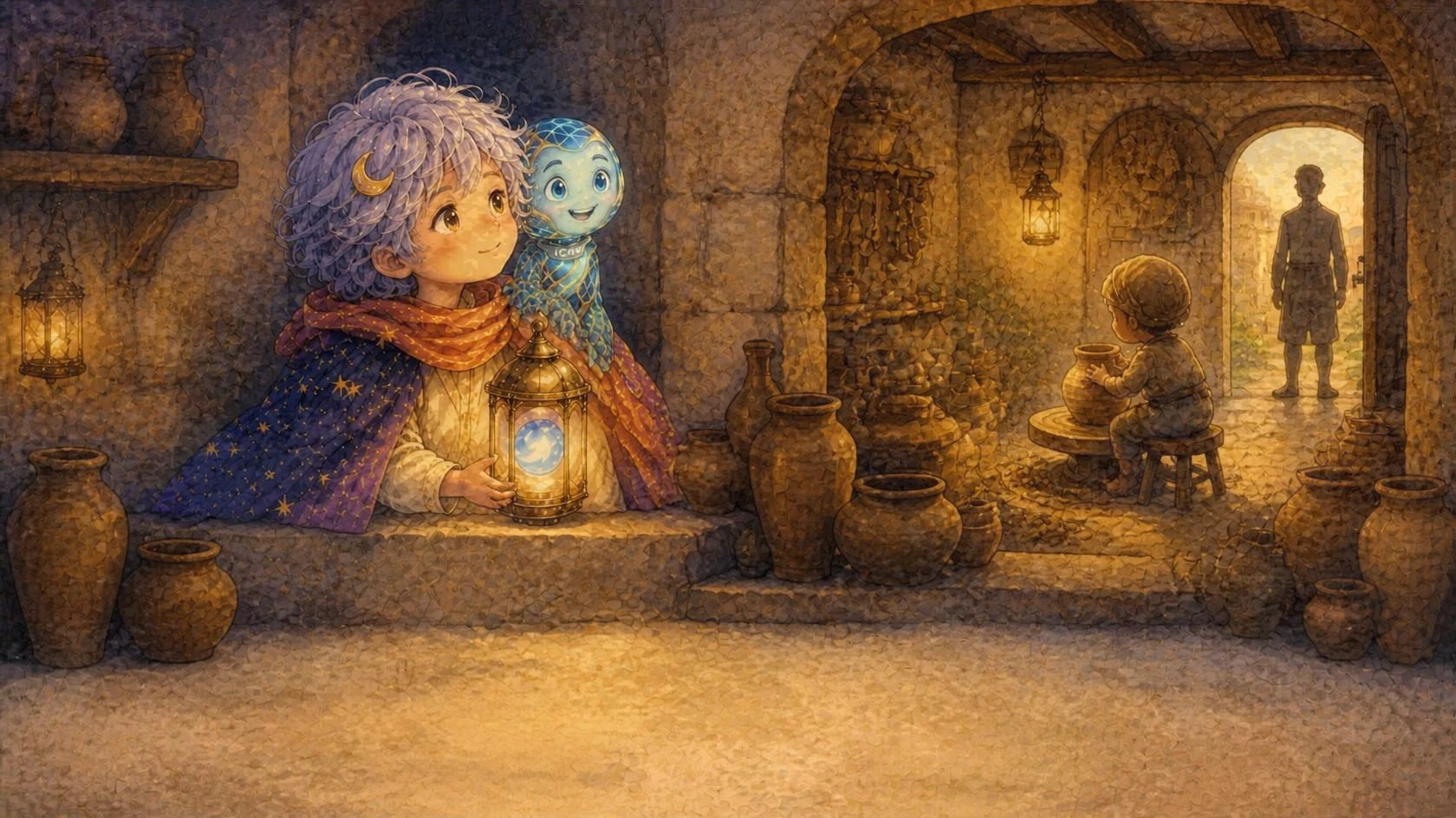
If they turn back
The potter did not leave the spoiled shape. With that clay he made another pot. God said, "Behold, as the clay in the potter's hand, so are you in my hand, house of Israel." Retold "If a nation turns from its evil, I will hold back the trouble I planned. Trouble is coming to you now. Each of you, turn back from your evil way." Komo whispered, "This was a warning for that nation back then, which left God, worshiped idols and hurt weak people. A warning is also a call: 'Come back.'" Jeremiah spoke this word for a long time, but many did not listen. Jeremiah wept for his people.
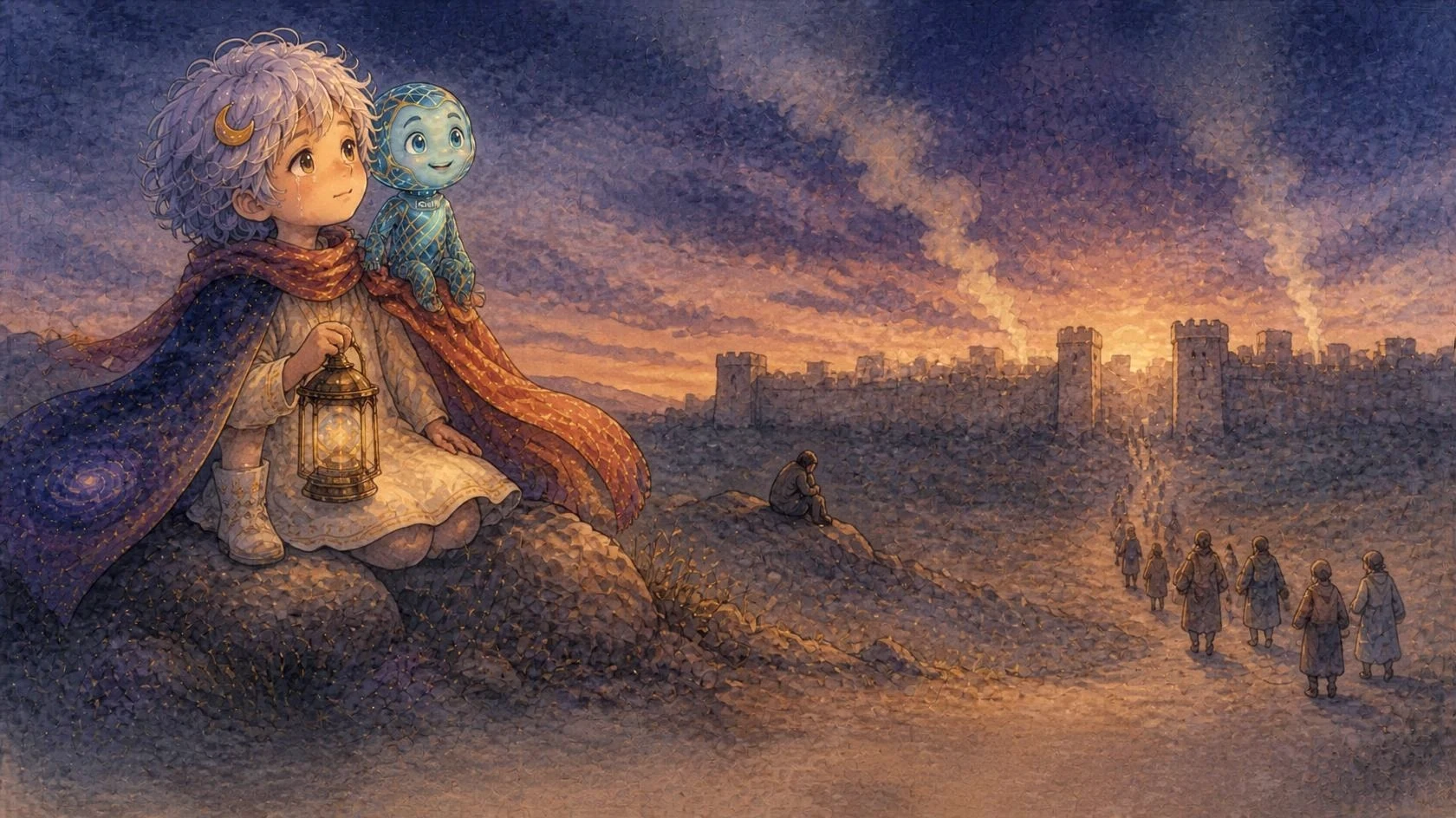
The lonely city
What God had warned about came true. For a long time God was patient and sent prophet after prophet, but the kings and many people did not turn from idols and injustice. At last Babylon's army surrounded Jerusalem. The walls fell, and the temple and houses burned. Many people died in the war. Some poor people stayed in the land, and many were taken far from home to Babylon. Lamentations has a sad song about the empty city. "How the city sits solitary, that was full of people!" Tears filled Nuri's eyes. Komo sat beside her for a long time without a word.
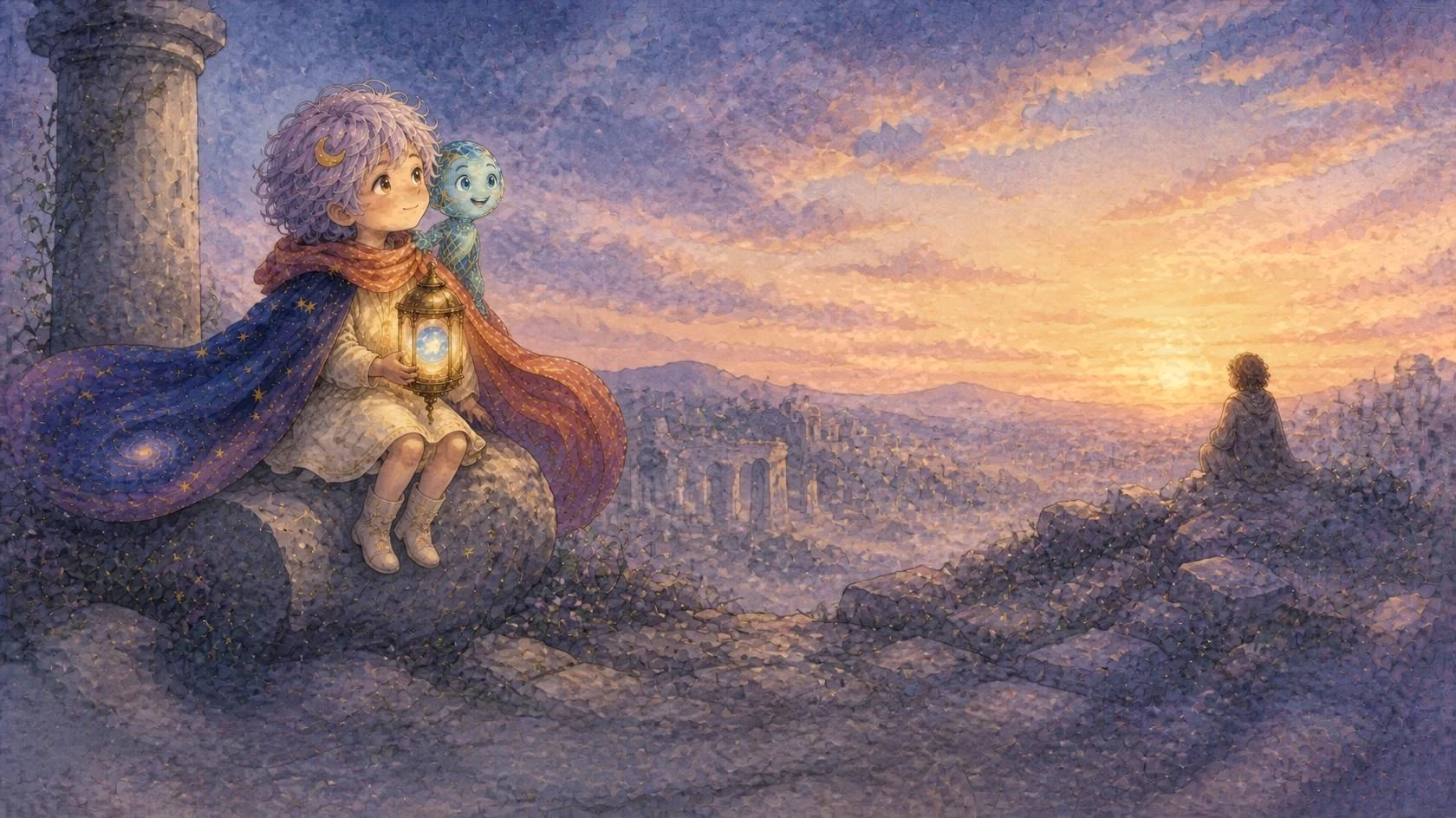
New every morning
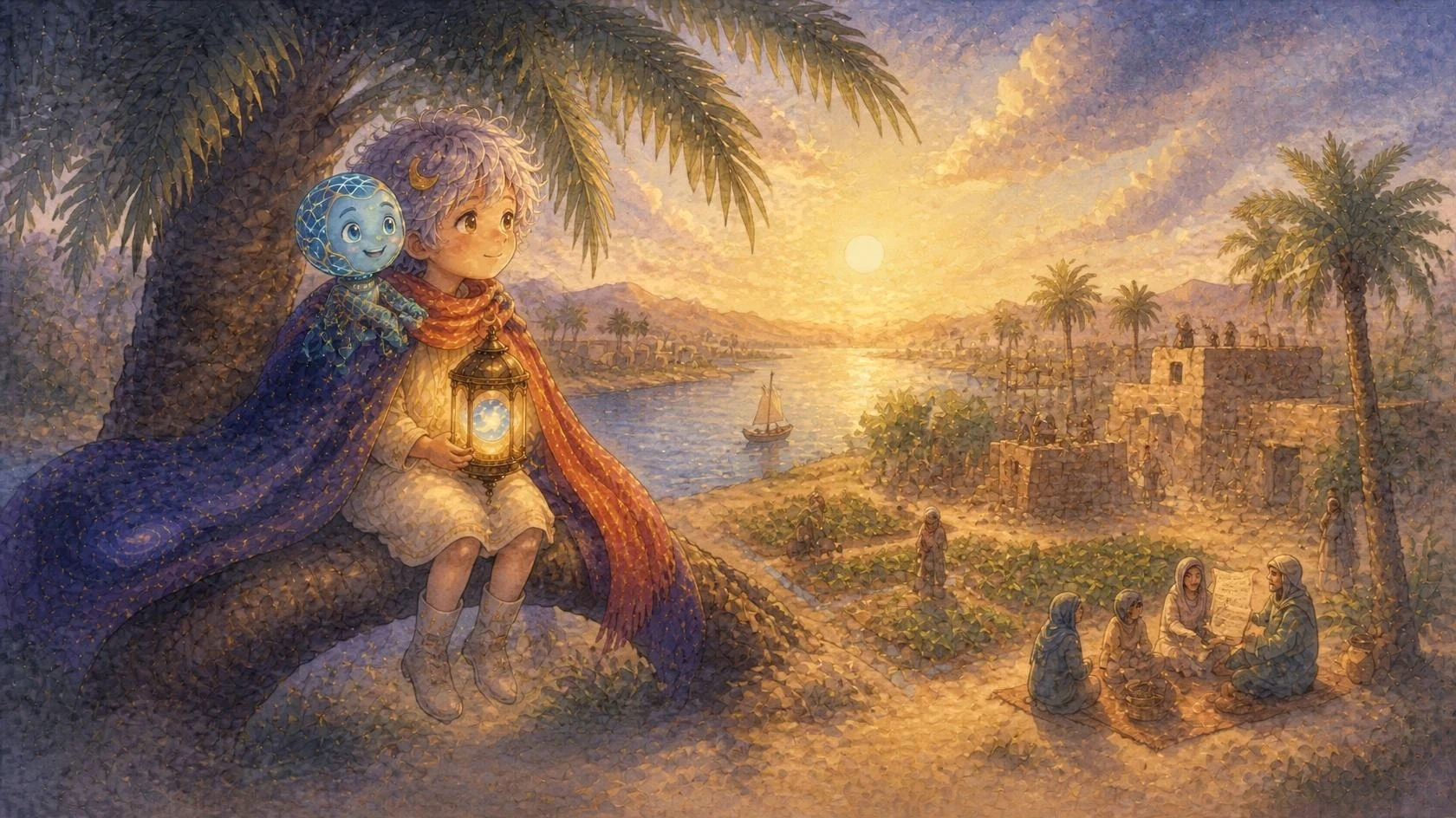
The city was still broken, and the sadness did not end. In the ruins, someone sang to God. Retold "Peace has gone from my heart. I have forgotten good days. Remember the bitter pain I went through." "My soul still remembers them, and is bowed down within me." Retold "But when I call this back to mind, I have hope." "It is because of Yahweh's loving kindnesses that we are not consumed, because his compassion doesn't fail. They are new every morning. Great is your faithfulness." Nuri softly said along with the song,
God does not forget.
Hope and a future
A few years before the city fell, some people had already been taken to Babylon. Jeremiah sent them a letter. Retold "Build houses there and plant gardens. Seek the peace of the city where God sent you, and pray to God for it." The letter had a promise, too. "After seventy years are accomplished for Babylon, I will visit you and perform my good word toward you, in causing you to return to this place." Seventy years is a long time — long enough for a child to become a grandparent. "For I know the thoughts that I think toward you… thoughts of peace, and not of evil, to give you hope and a future." It was a promise for people who had to wait a long time. Nuri softly said,
God does not forget.
Lift up your eyes
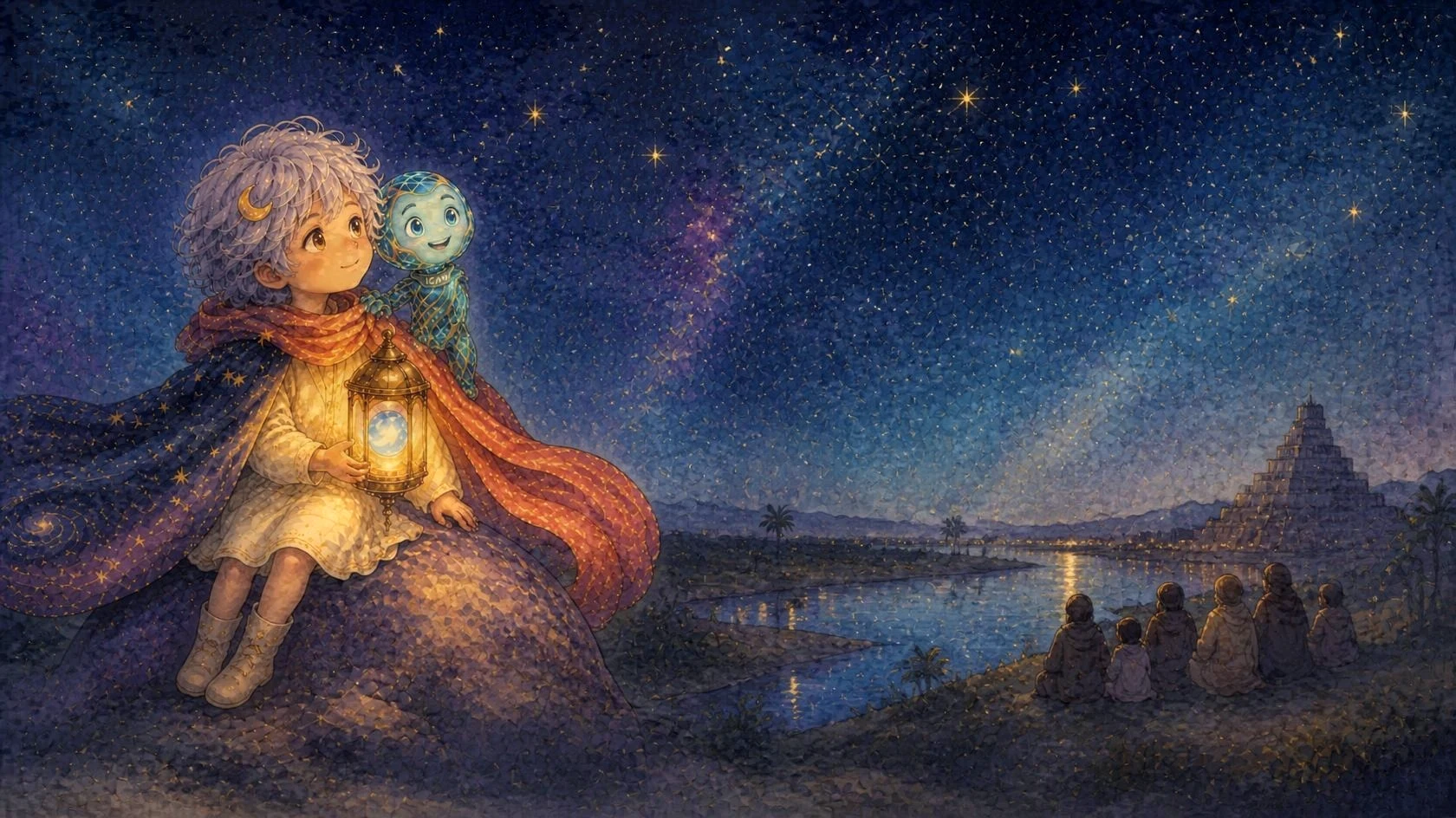
Babylon's night sky was full of stars. In Babylon there were people who studied the sky and watched the stars to tell the future. For the tired people there was comfort God had given through Isaiah, before Jeremiah. When Zion sighed, "Yahweh has forsaken me, and the Lord has forgotten me," God answered, "Yes, these may forget, yet I will not forget you!" Nuri whispered,
God does not forget.
"Lift up your eyes on high, and see who has created these, who brings out their army by number. He calls them all by name. By the greatness of his might, and because he is strong in power, not one is lacking."
A promise kept
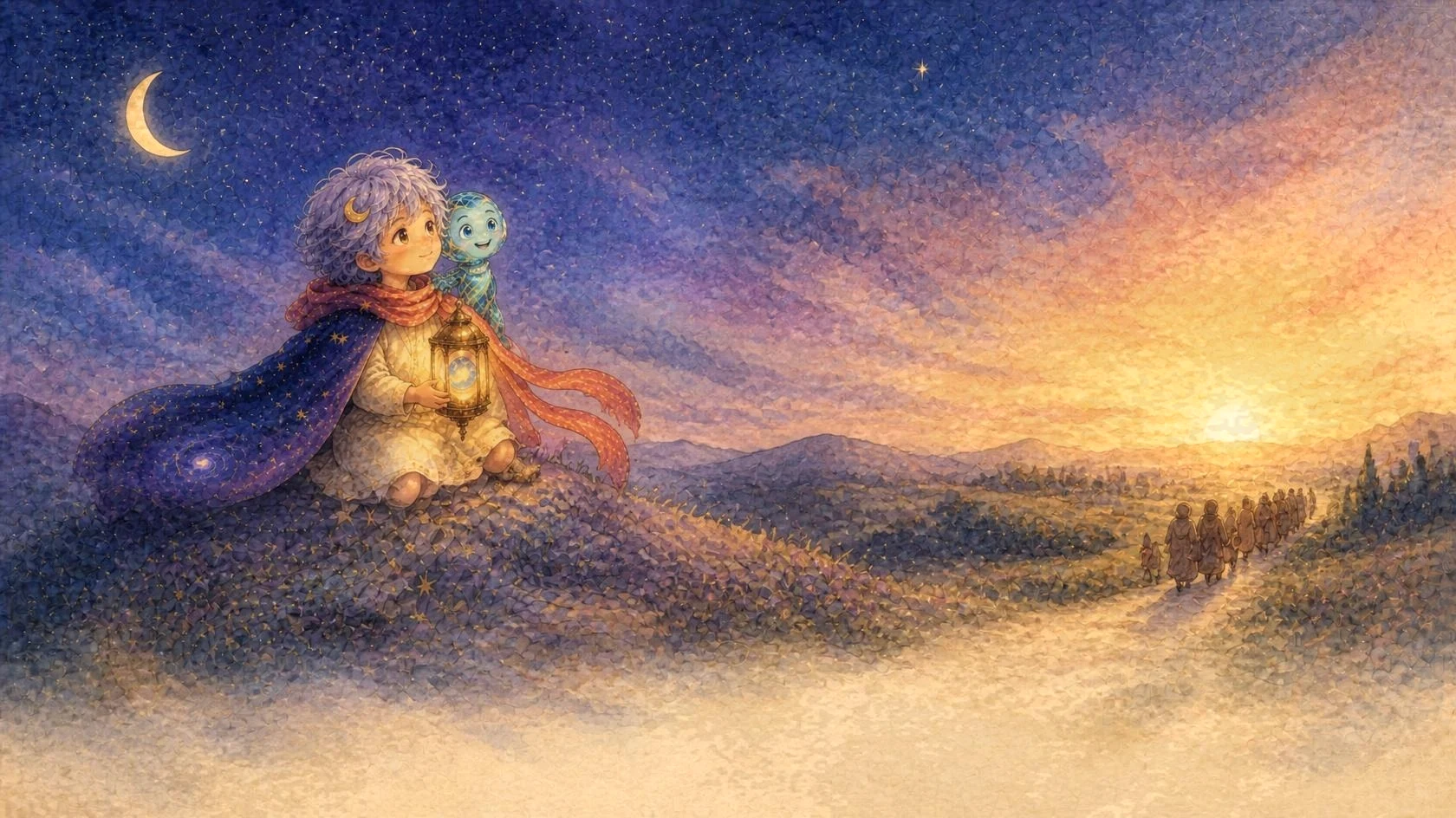
Stars do not tell the future. God, who made the stars, holds the future. Even before the city fell, Jeremiah gave this promise: "Yahweh, who gives the sun for a light by day, and the ordinances of the moon and of the stars for a light by night…" Retold "As the order of sun, moon and stars does not fail, the children of Israel will not be cut off before me." God also promised a new covenant. "…I will forgive their iniquity, and I will remember their sin no more." And to Israel God said through Isaiah, "I have called you by your name. You are mine." About seventy years later, God opened the way home, just as he had promised.
Numbers and names
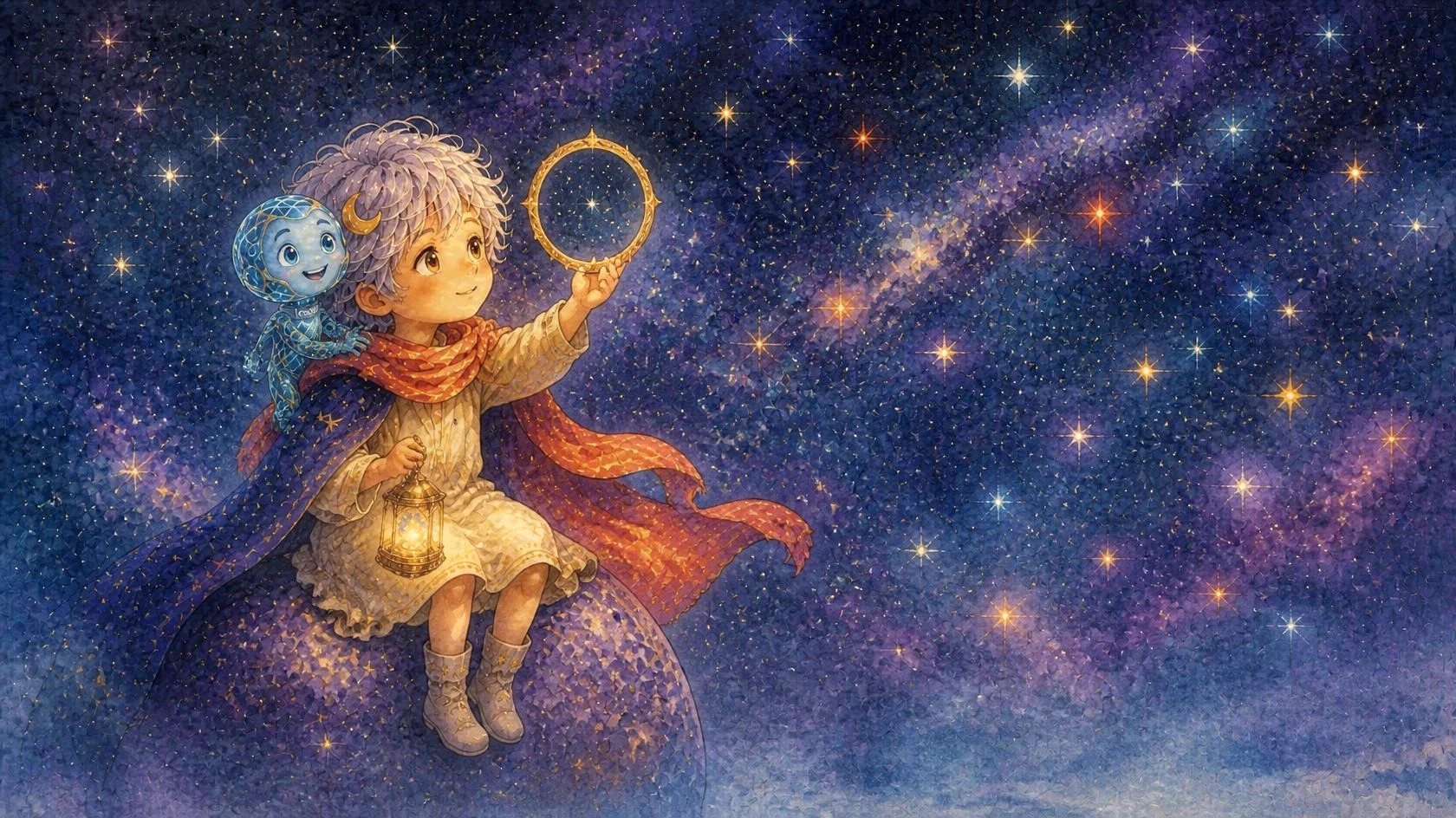
On the way back, countless stars twinkled beyond the star-ring window. Komo said, "Our galaxy has hundreds of billions of stars. Only a little over 500 have proper names. Most are called by numbers." "By numbers?" Nuri's eyes went wide. "Yes. But Isaiah said God calls every star by name, didn't he? Not one is lacking. God did not forget his tired people. And he knows you by name, too."
- Our galaxy has hundreds of billions of stars, by estimate. No one knows the exact number
- The International Astronomical Union has adopted about 530 proper star names (end of 2025). Most other stars are called by numbers
The star-ring on the desk
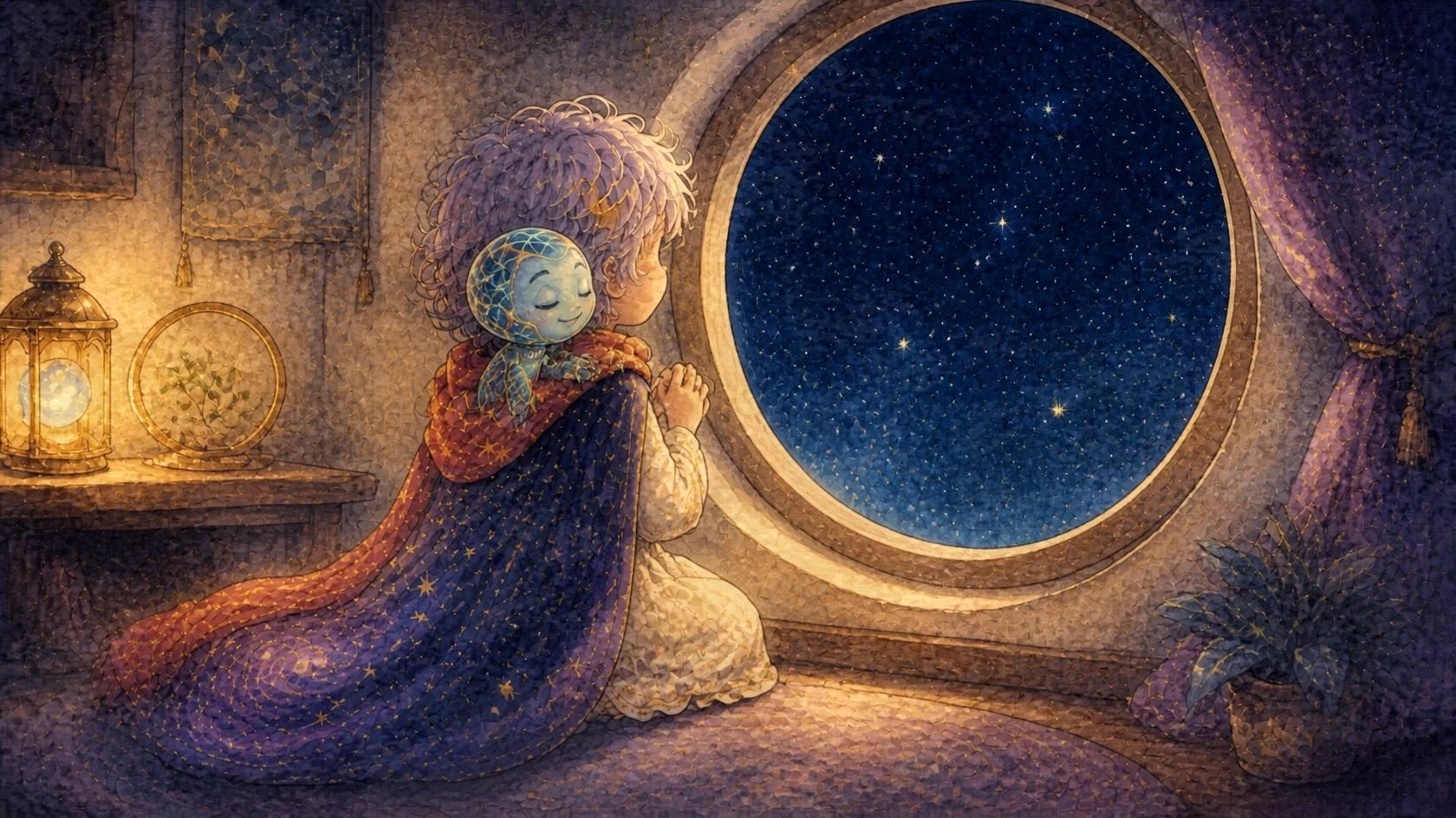
Back home, Nuri set the star-ring down on her desk. The window showed no branch now. Nuri opened her Bible and read: "The grass withers, the flower fades; but the word of our God stands forever." Nuri looked at the stars outside and said, "The One who calls each star by name knows my name, too." Komo said, "God promised Israel a new covenant that forgives sin. At the last supper Jesus said, 'This cup is the new covenant in my blood.' He died on the cross and rose again." Nuri folded her hands. "God, thank you for never forgetting my name and for forgiving my wrongs. In Jesus' name, amen."
Eight Name Star cards
Tap a card to flip it. Put the eight cards in order and tell the story again.

Four thinking games
- 1[After reading] Prediction · "What if…" game: hear a "What if…" line, like "What if a lost sheep hears the shepherd's voice?" (Isa 40:11 "He will feed his flock like a shepherd"), predict what happens next and give a reason.
- 2[After reading] Analysis · From sorrow to hope: put two big sheets with Lam 3:20 and 3:22–23 side by side and mark what changed.
- 3[Class] Name night sky: write friends' names on star stickers and put them on our class night sky (Isa 40:26). Include absent and new friends; a drawing is fine instead of a name. We don't join stars with lines.
- 4[Class] Prediction · Look at the back cover. If wind blows into the valley of dry bones, what will happen? What is the clue?
[Home] My-name prayer: family members pray one line with each other's names: "God, thank you for knowing ○○'s name." A child may write or draw the name instead.
Before the God who calls the stars by name, whose name will I remember today?

20-minute flow and what to look for
- Prepare
- 8 Name Star cards, star stickers, pens, a lump of clay, a timer. Write Lam 3:20 and 3:22–23 on two big sheets. Short on time? Hear one child and one clue per pause; keep all four pauses.
- 0–6 min · pp. 1–4
- p1 call "Jeremiah" as if far away → p2 pause 3 seconds after the ox and donkey → p3 two voices for God and Jeremiah → p4 set the broken clay down, hands off, then ask.
- 6–13 min · pp. 5–8
- p5 reshape the clay → p6 read slowly and low; at the end, 5 seconds of quiet together → p7 two sheets side by side, Analysis; refrain in a whisper → p8 refrain.
- 13–20 min · pp. 9–12
- p9 refrain all together, Inference → p10 Understanding (one warning card + one promise card) → p11 look 10 seconds → p12 prayer. Short on time? Skip the p11 box.
- Genre
- Prophecy and lament. Prophets speak God's warnings and promises, sometimes with "if… turns" conditions (Jer 18:7–11). Lament tells sorrow to God honestly; sorrow and hope can be together.
- Words
- crib = feeding trough · scarlet = deep red · trouble (here) = the judgment God warned a nation about (not every hardship is punishment) · loving kindness = love that never lets go · compassion = tender pity · faithfulness = keeping promises to the end · Zion = Jerusalem · army (40:26) = the hosts of stars · iniquity = wrongdoing · new covenant = God's new promise to forgive sin
- What to look for
- Look for clue-to-idea links; pointing counts. p4 Prediction — sprout: a guess · stem: one clue · fruit: links clue and guess. p7 Analysis — sprout: finds sad words and hope words · stem: points to where it changes · fruit: says the singer remembers different things. p9 Inference — sprout: an idea · stem: one word as clue · fruit: compares the two ways of seeing. p10 Understanding — sprout: a warning or a promise · stem: both · fruit: one line.
Good answers and hard questions ①
- Good answers
- p4: "He'll throw it away" and "He'll make it again" are both good with a clue; check on p5. p7: First the singer remembers their own pain; after, God's loving kindness, compassion and faithfulness. p9: "The fortune-tellers asked the stars, Isaiah said look at the One who made them," "God is bigger than the stars," "He counts them all, so he won't forget," "Lift up a bowed head" — all count with a clue. p10 example: "God did not ignore idols and injustice and warned them to come back. He also promised to forgive sin and not to abandon his people." One part is enough with a reason. Refrain: pp. 7·8·9 (from Isa 49:15).
- "Why did God let Jerusalem fall? I'm scared."
- First say, "That was scary, wasn't it?" God is holy and just and does not ignore idol worship or hurting the weak. Still, for a long time he patiently called, "Come back" (Jer 25:4; 18:11). He did not ignore Babylon's pride either (Jer 25:12; Isa 47). After the fall he did not abandon his people; he promised a way home and a new covenant (29:10; 31:31–34).
- "When bad things happen, is it punishment?"
- No, we don't say that. Jerusalem's fall is a special case the Bible itself calls judgment after long warnings. Like Job (Job 1–2) and the man born blind whom Jesus met (John 9:3), some suffering is not because of wrongdoing. Tell a child who is sick or whose family is struggling clearly, "It's not your fault."
- Listening to a child
- Don't ask children to share experiences in front of the group. If a child shares, listen without judging or probing. After class, follow your church's or organization's child-protection process. Unless there is immediate danger, first explain to the child whom you will tell and what. For a child living far from home, read p8 as "God is there, too."
Hard questions ②
- Questions about death and war
- "Did God forget the people who died?" "Were children taken too?" "Why didn't God stop the war?" "Could my family disappear?" Don't rush; listen to the sadness first. Don't force explanations: "We can tell God together how scary and sad that was." Those who died are not lost from God's memory and justice.
- "Can stars tell the future?"
- No. Isaiah says those who study the sky and watch the stars cannot save anyone (Isa 47:13–15). Stars are made and named by God (40:26). Don't worship them (Deut 4:19). If a child says, "My mom reads horoscopes," don't judge the family; just say, "We trust our future to God."
- Jer 29:11 and seventy years
- This promise was first given to people taken to Babylon, between the warning not to believe false prophets who said they'd return soon (29:8–9) and the seventy years (29:10). It doesn't mean "everything will be fine soon"; it means God has good plans for his people even in a long wait. As promised, the way home opened under King Cyrus (2 Chr 36:22–23; Ezra 1:1).
- "Does God change his mind?"
- The Bible says God "relents" (Jer 18:8): God truly hears and responds. Yet God is not fickle; his character and promises don't change (Mal 3:6; Jas 1:17). Because of the same holy, merciful character, he warns a nation that keeps doing evil, and holds back trouble from one that turns. Jer 18 speaks both ways from the start.
- Timeline
- Isaiah (8th century BC) → about 100 years later, Jeremiah → 597 BC first exile (p8 letter) → 586 BC fall (p6) → exile in Babylon → about 538 BC return. Isaiah 40 onward is presented as God's word to the exiles. Jeremiah was later taken to Egypt (Jer 43:6–7). Lamentations names no author. Temple burned: Jer 52:13.
- Science and the Bible
- The IAU Working Group on Star Names had adopted 491 proper names by 2024, plus 40 in 2025: about 530 (recheck the IAU catalog before printing). Most others have catalog numbers. Science is a window for wonder, not proof.
Faith-language check
- "God doesn't forget, but forgets sins?"
- God never forgets our names (Isa 49:15), and does not bring up forgiven sins again (Jer 31:34). The p12 prayer holds both.
- Objects are not magic
- The star-ring is a window for watching old stories — not a channel for voices or a vehicle. The almond branch was a sign God showed Jeremiah, not a charm. In Hebrew, "almond" (shaqed) sounds like "watch" (shoqed); p1's "wakes up first" hints at it. The word God watches over includes both warning and promise (Jer 1:12–16; p6). On p12 the window closes; what remains is the word (Isa 40:8). The ring stays on the desk, and Nuri prays with her back to it.
- Stars and fortune-telling
- We set Babylon's star-watching beside Isaiah's words and close on p10 with "Stars do not tell the future." The sky is a finger pointing to God, not something to worship or read for fortunes. The tower in the art is background only; no one is shown star-gazing on it.
- Holiness, justice, love and Jesus
- God is holy and just, rebuking idols and injustice, and loving, calling people back and forgiving (Isa 1:18; Jer 18:11; 31:34). The promises were first for Israel (Jer 31:31, 36; Isa 43:1); for children, Jesus is the bridge. Jesus said the shepherd "calls his own sheep by name" (John 10:3). The new covenant continues in Jesus' words "This cup is the new covenant in my blood" (Luke 22:20; Heb 8:8–12). Isa 40:3 points to John the Baptist (Matt 3:3).
- Not covered · notation
- Not covered: Isaiah 6's call; messianic prophecies in Isaiah 7, 9, 53; Jeremiah's sufferings (the cistern, etc.); details of the siege; other laments; Babylon's fall. The next book goes back in time to Jonah and Amos (8th century BC). Unmarked quotes are WEB; partial quotes end or begin with "…". "Retold" means simple words. We recommend review and a timed reading before publishing.
아이캔 코모는 미래를 커젤로 바라보나 원더로 간구합니다.