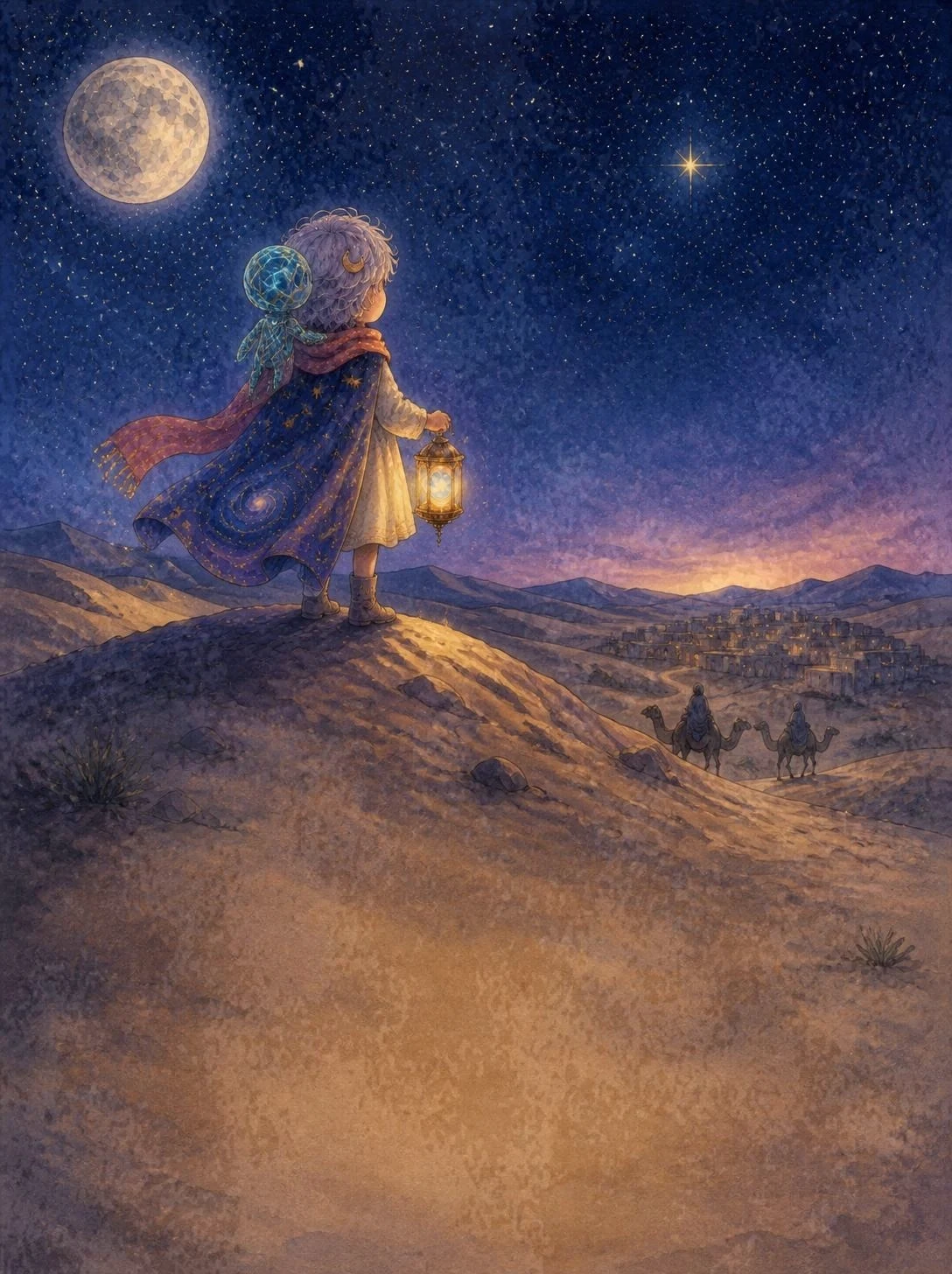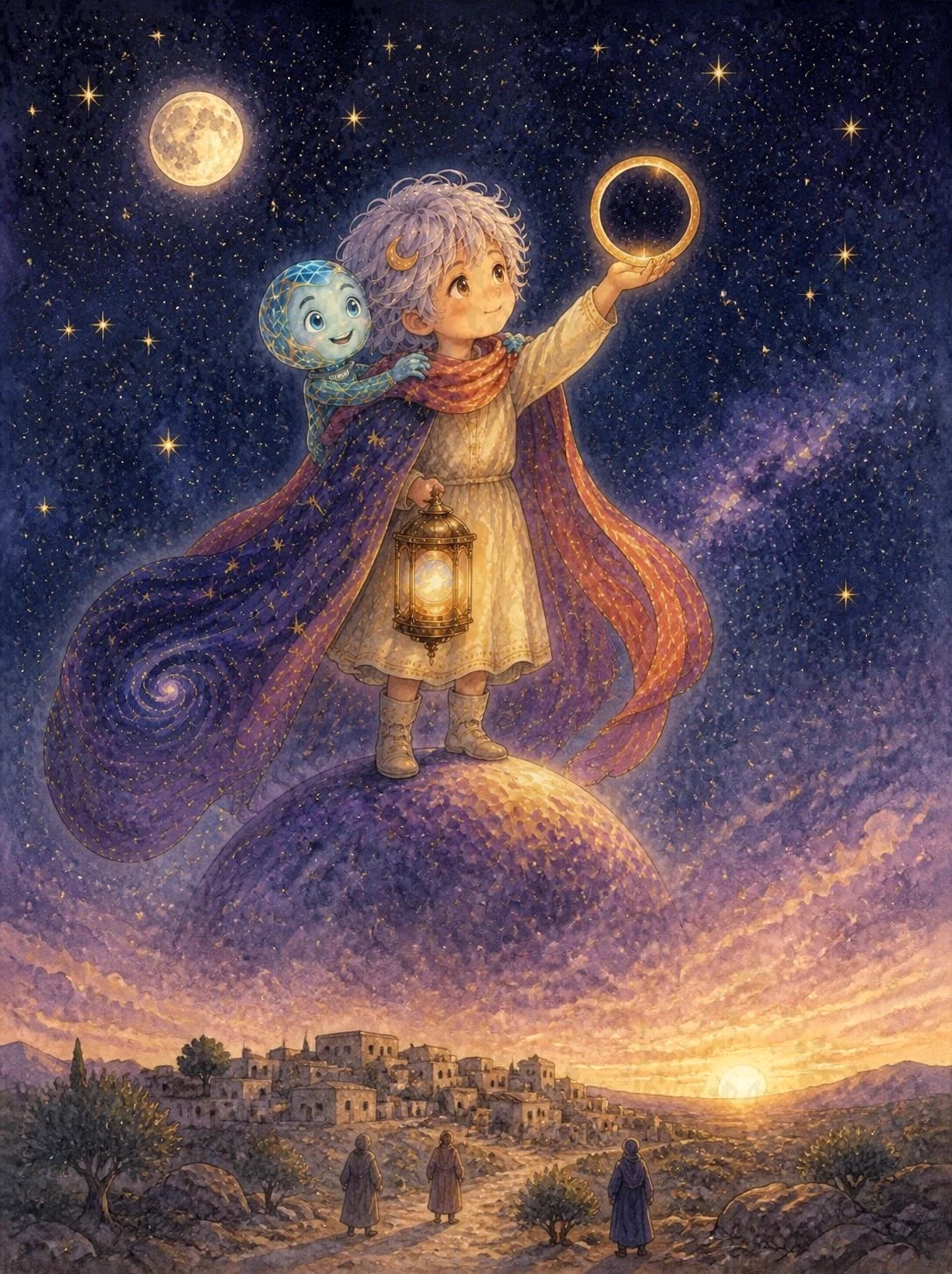
Dawn Star
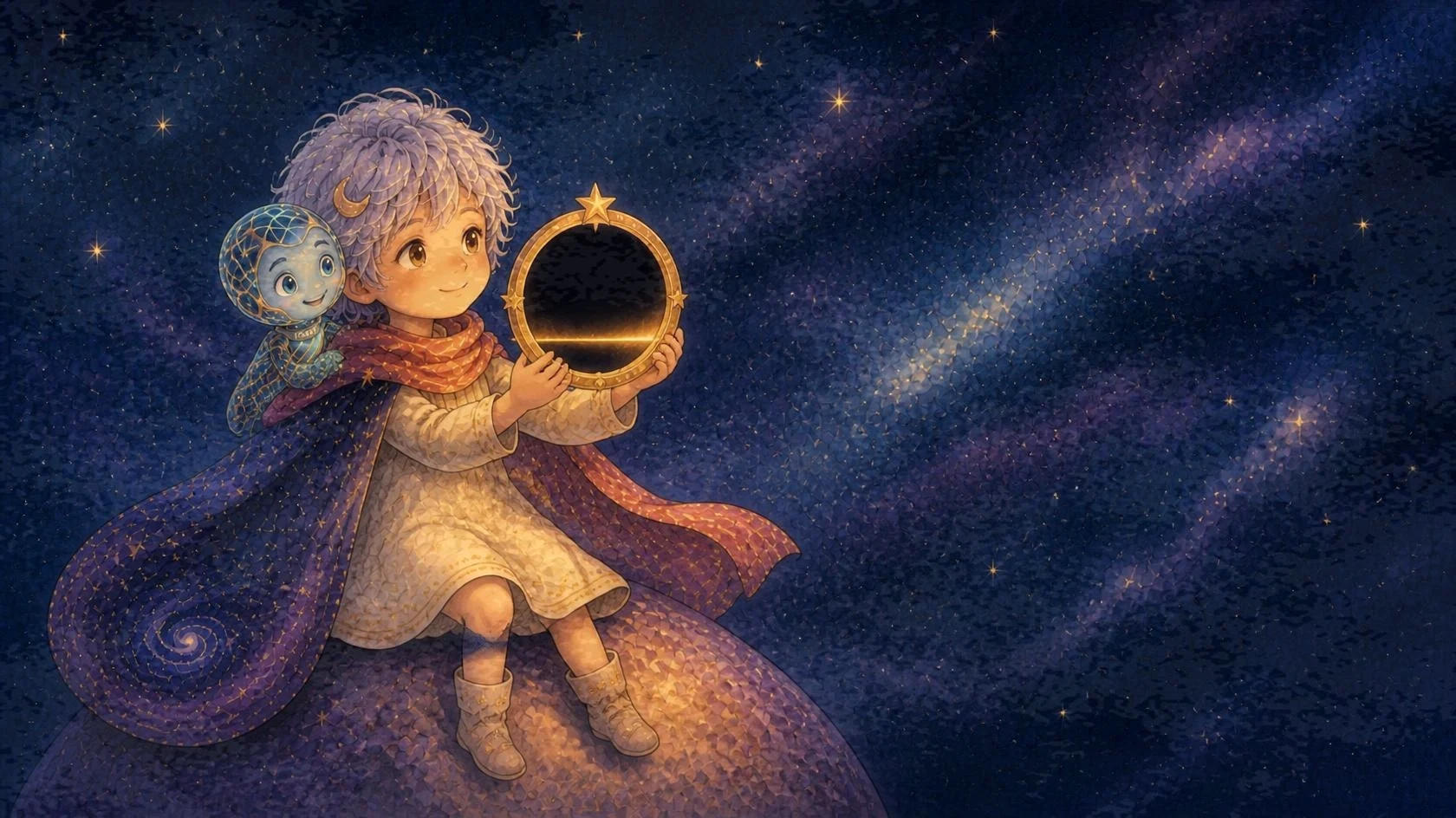
A thin gold line at the edge of the ring
Tonight Nuri's star-ring was very dark. But at the very bottom edge of the ring, one thin gold line was shining. "Komo, what is this gold line?" Komo, on her shoulder, looked quietly into the ring. "Today is our last journey through the Old Testament. Stories like very deep nights are waiting. If we watch to the end, we'll find out what the gold line is." Komo raised one finger. "The star-ring is a window to watch old stories together. We only watch and listen from far away."
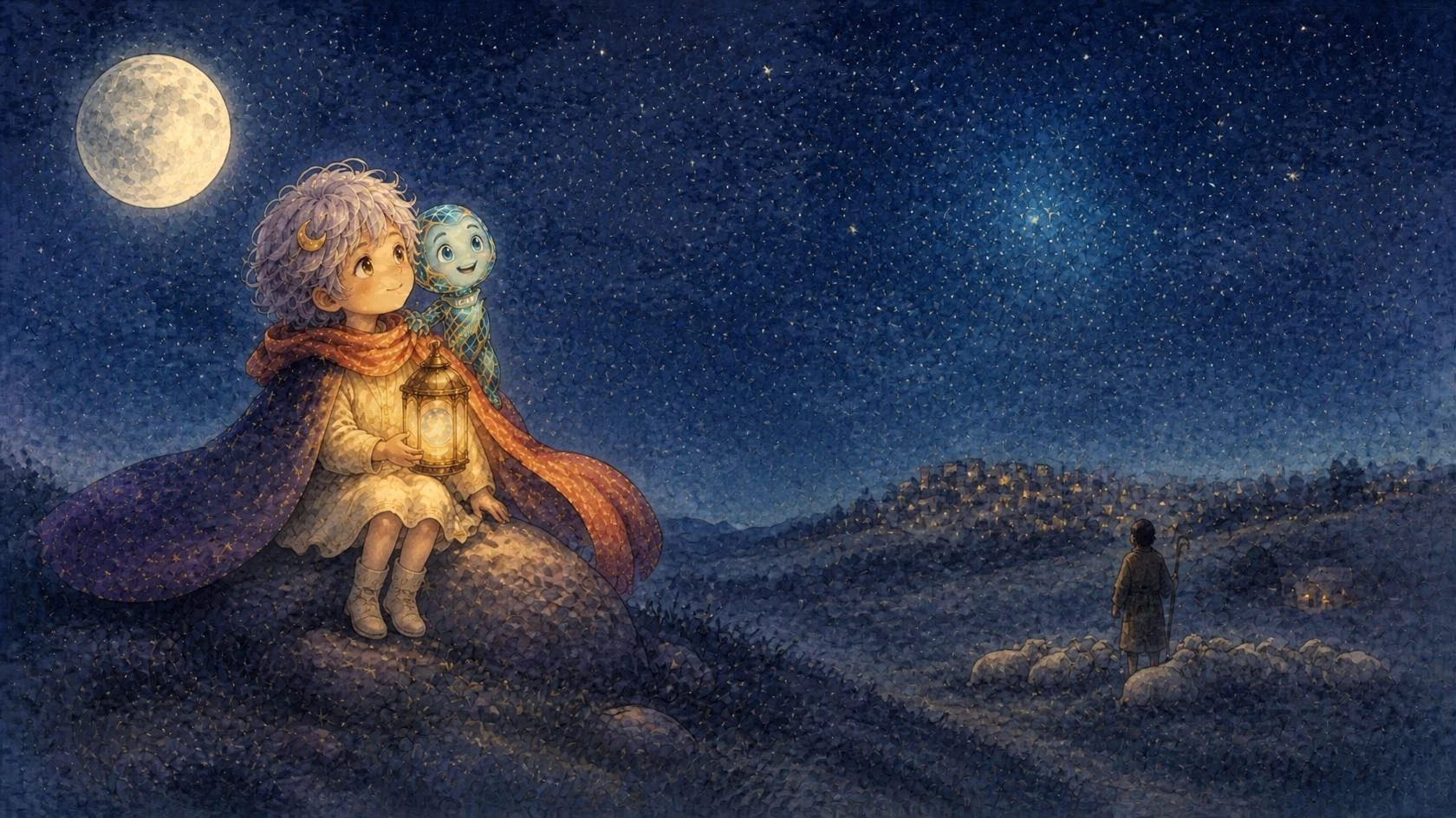
The Pleiades and Orion
Long, long ago in the land of Israel, rich people built big houses of cut stone, while poor people were treated unfairly. God called Amos, who took care of flocks in the fields. Through Amos, God called out: "Seek me, and you will live." Amos told who God is: "…him who made the Pleiades and Orion, and turns the shadow of death into the morning…" And he cried out, "But let justice roll on like rivers, and righteousness like a mighty stream." Komo whispered, "The God who made the stars rebukes injustice, and he is the first to call, 'Come back.'" Nuri softly said,
God turns night into morning.
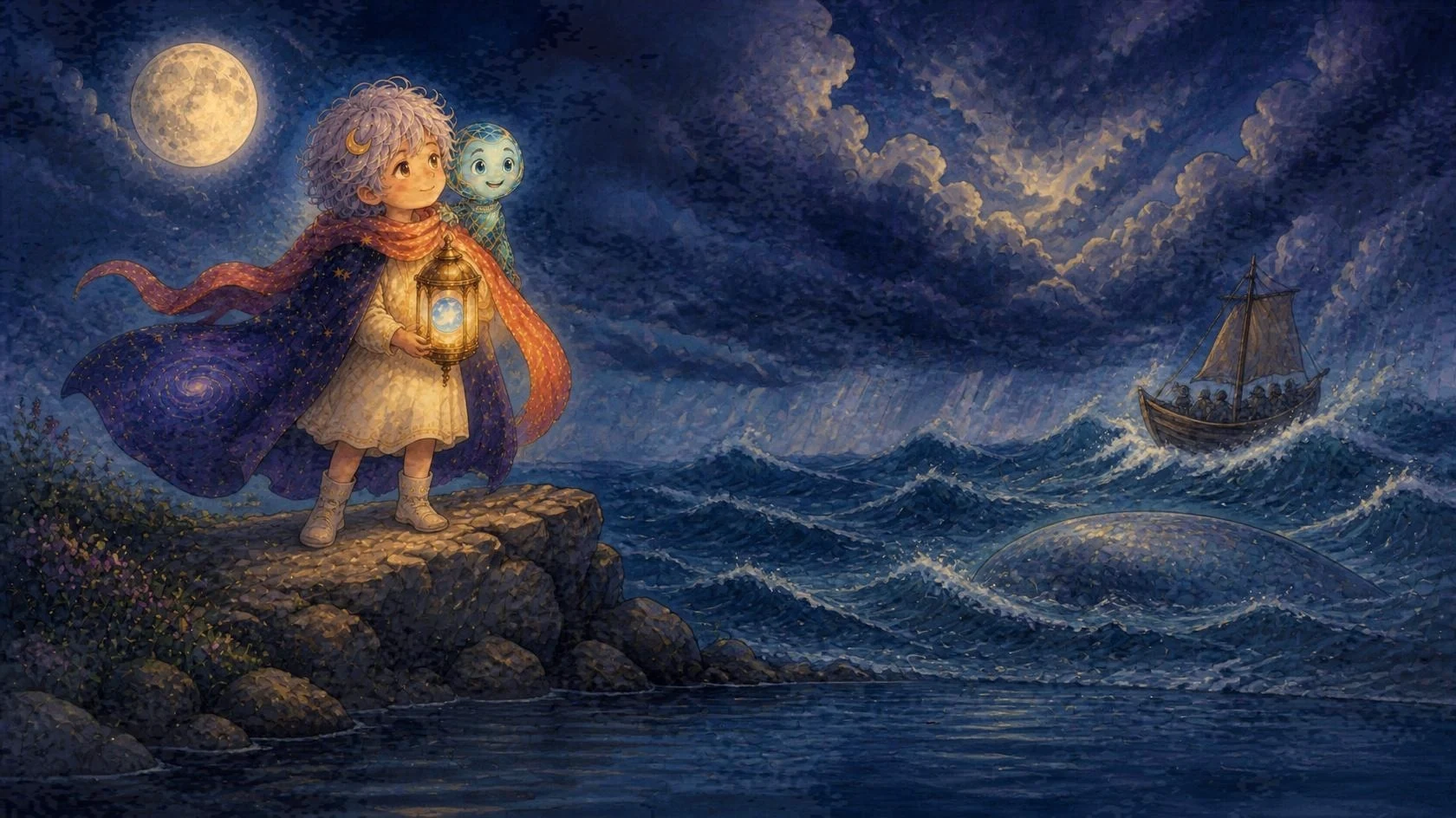
A ship in the storm
About the same time, God spoke to the prophet Jonah: "Arise, go to Nineveh, that great city, and preach against it…" Nineveh was a great city of a nation that troubled Israel. "But Jonah rose up to flee to Tarshish from the presence of Yahweh." He got on a ship going the opposite way from Nineveh. When a great storm came, Jonah said, "Take me up, and throw me into the sea." The sailors rowed hard, then cried out to God and threw Jonah into the sea. The sea became calm. "Yahweh prepared a great fish to swallow up Jonah…" In the belly of the fish, Jonah prayed: "Salvation belongs to Yahweh."
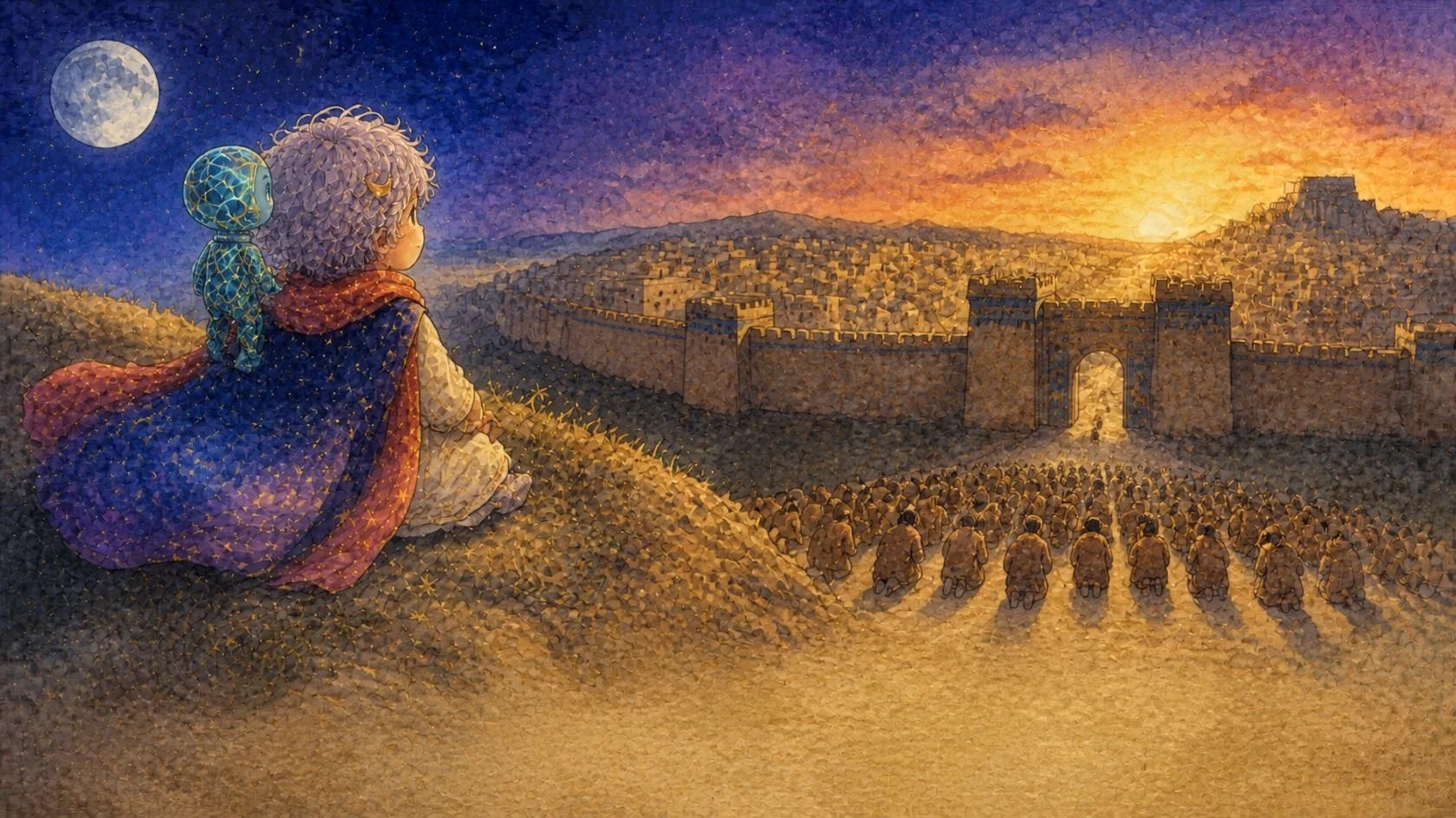
The city that turned
"Yahweh's word came to Jonah the second time…" God sent Jonah again and gave Nineveh a chance to come back. Jonah cried out, "In forty days, Nineveh will be overthrown!" "The people of Nineveh believed God; and they proclaimed a fast…" From the greatest to the least, they turned from their evil ways. The king begged for God's mercy, and God had pity on Nineveh. But "it displeased Jonah exceedingly, and he was angry." He said to God, Retold "That is why I ran away. I knew you are merciful and would forgive them."
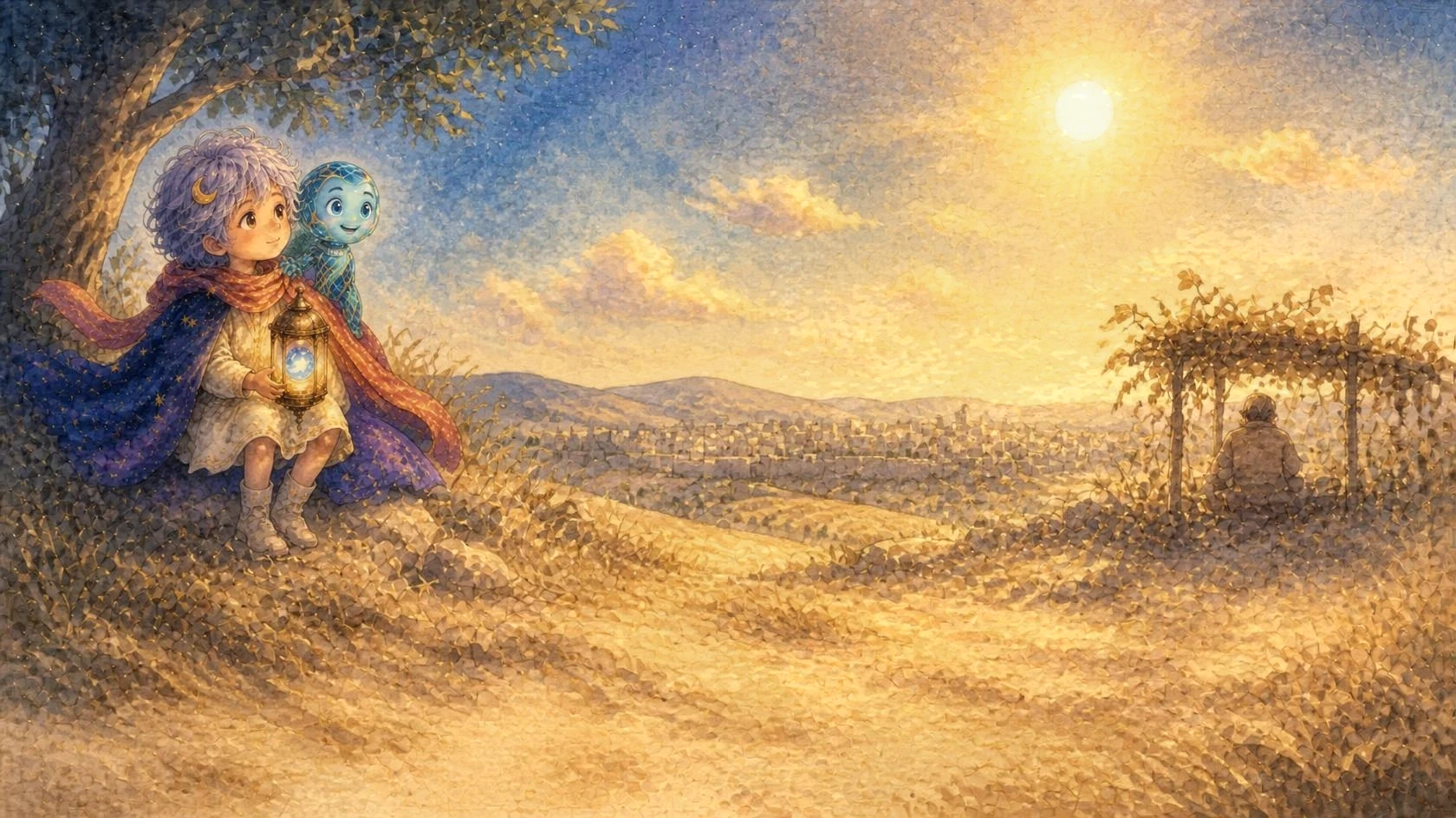
The withered vine
Jonah went out to the east side of the city, made himself a small booth and sat down, "…until he might see what would become of the city." "Yahweh God prepared a vine, and made it to come up over Jonah, that it might be a shade over his head…" Jonah was exceedingly glad. But "God prepared a worm at dawn the next day, and it chewed on the vine, so that it withered." When the sun rose, a hot east wind blew. Jonah was so tired and angry that he said very heavy words: Retold "I can't bear this anymore." God asked Jonah, "Is it right for you to be angry about the vine?"
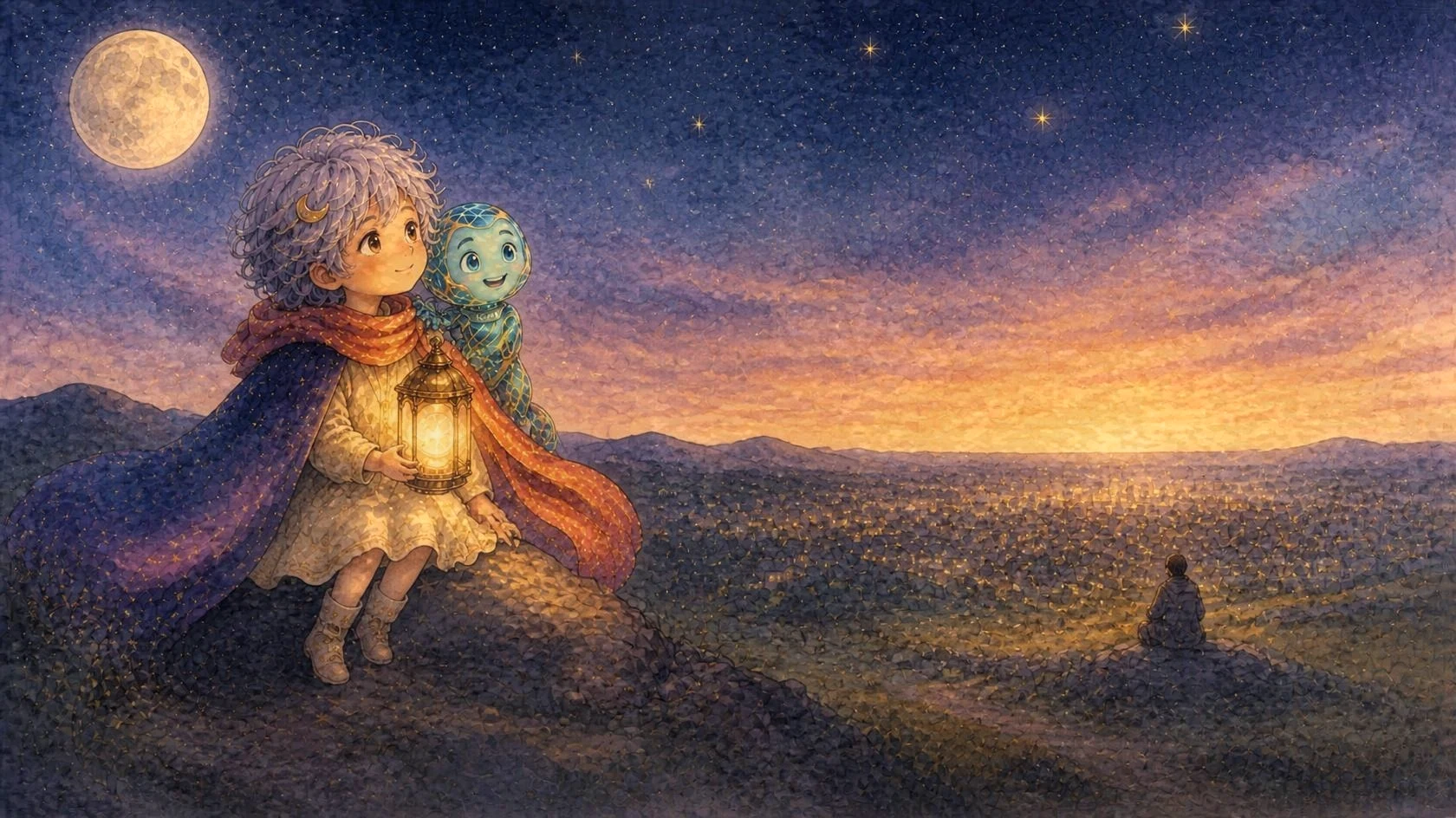
Shouldn't I be concerned?
God spoke again: "You have been concerned for the vine, for which you have not labored, neither made it grow; which came up in a night, and perished in a night. Shouldn't I be concerned for Nineveh, that great city, in which are more than one hundred twenty thousand persons who can't discern between their right hand and their left hand; and also much livestock?" Nuri blinked. "Does the story end here? It doesn't say what Jonah answered." Komo nodded. "Jonah's story ends with God's question. We who hear the story hear that question too." Nuri looked at the roofs of Nineveh and the flocks in the fields.
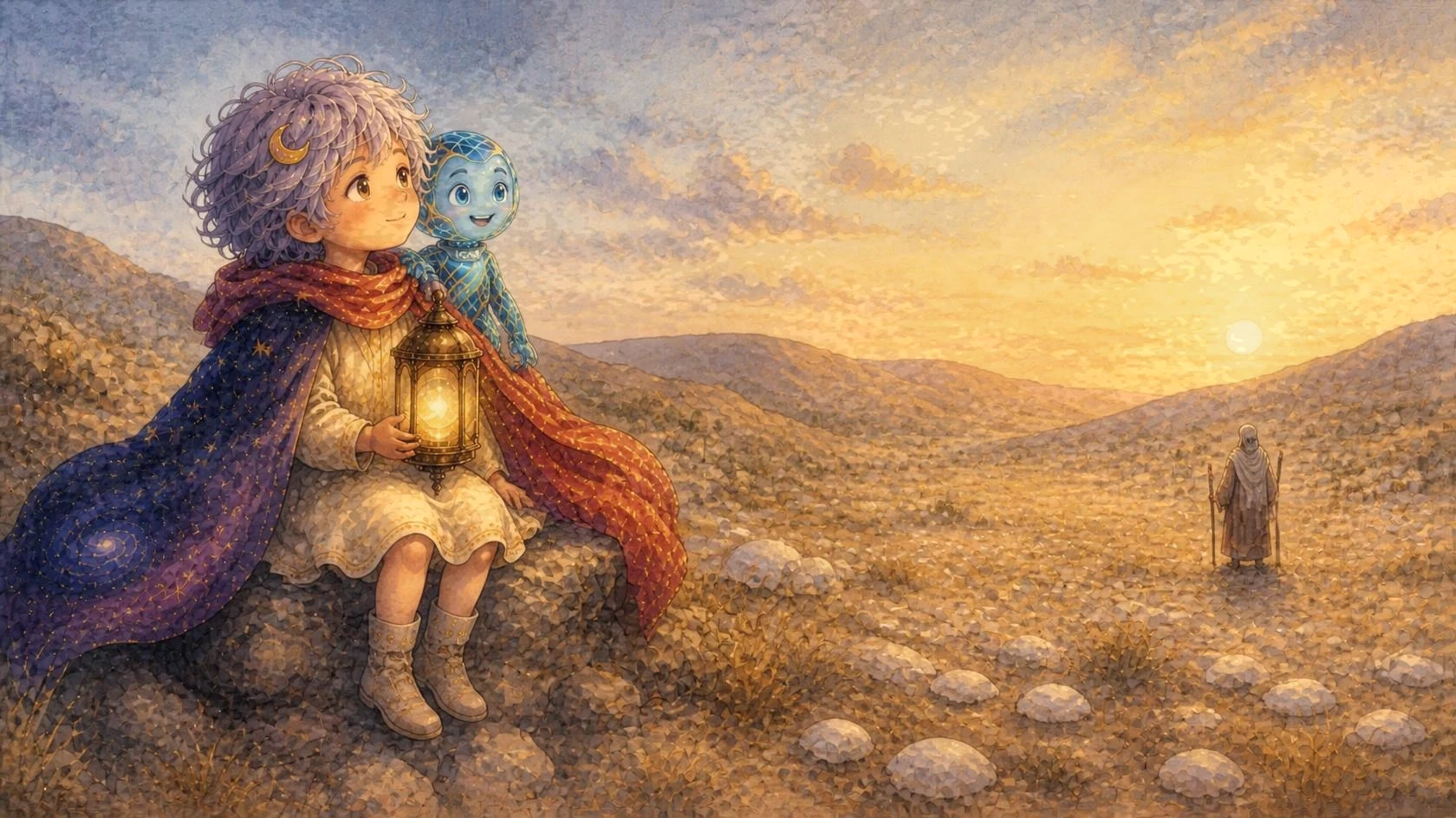
Can these bones live?
Many years went by. The people would not come back when God called, and Jerusalem fell. Taken from home to Babylon, the people felt that even their hope was gone. God came to the prophet Ezekiel in Babylon and showed him a vision, a picture through which God shows what he means. "…behold, there were very many in the open valley; and behold, they were very dry." It was a very quiet valley. God asked, "Son of man, can these bones live?" Ezekiel answered, "Lord Yahweh, you know." A breath of wind brushed softly past Nuri's cheek.
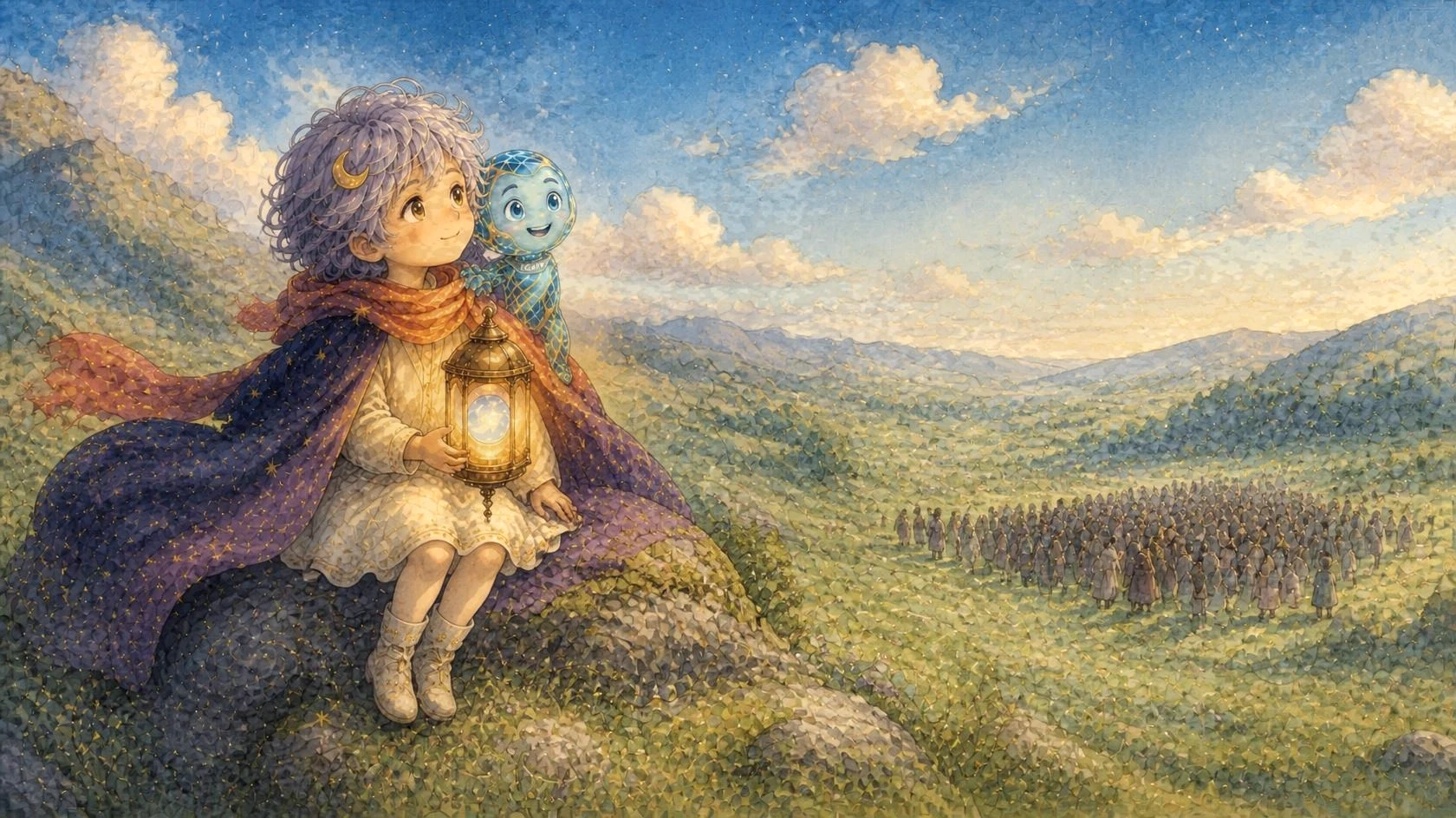
Breath came into them
Through Ezekiel, God spoke to the bones: "Behold, I will cause breath to enter into you, and you will live." When Ezekiel spoke as he was told, the bones came together, each in its place. But there was no breath in them yet. Ezekiel spoke again: "Come from the four winds, breath…" And just as God had promised, the wind blew in. "…and they lived, and stood up on their feet, an exceedingly great army." The bones were the people who said, "…our hope is lost." God promised, "I will put my Spirit in you, and you will live." Nuri softly said,
God turns night into morning.
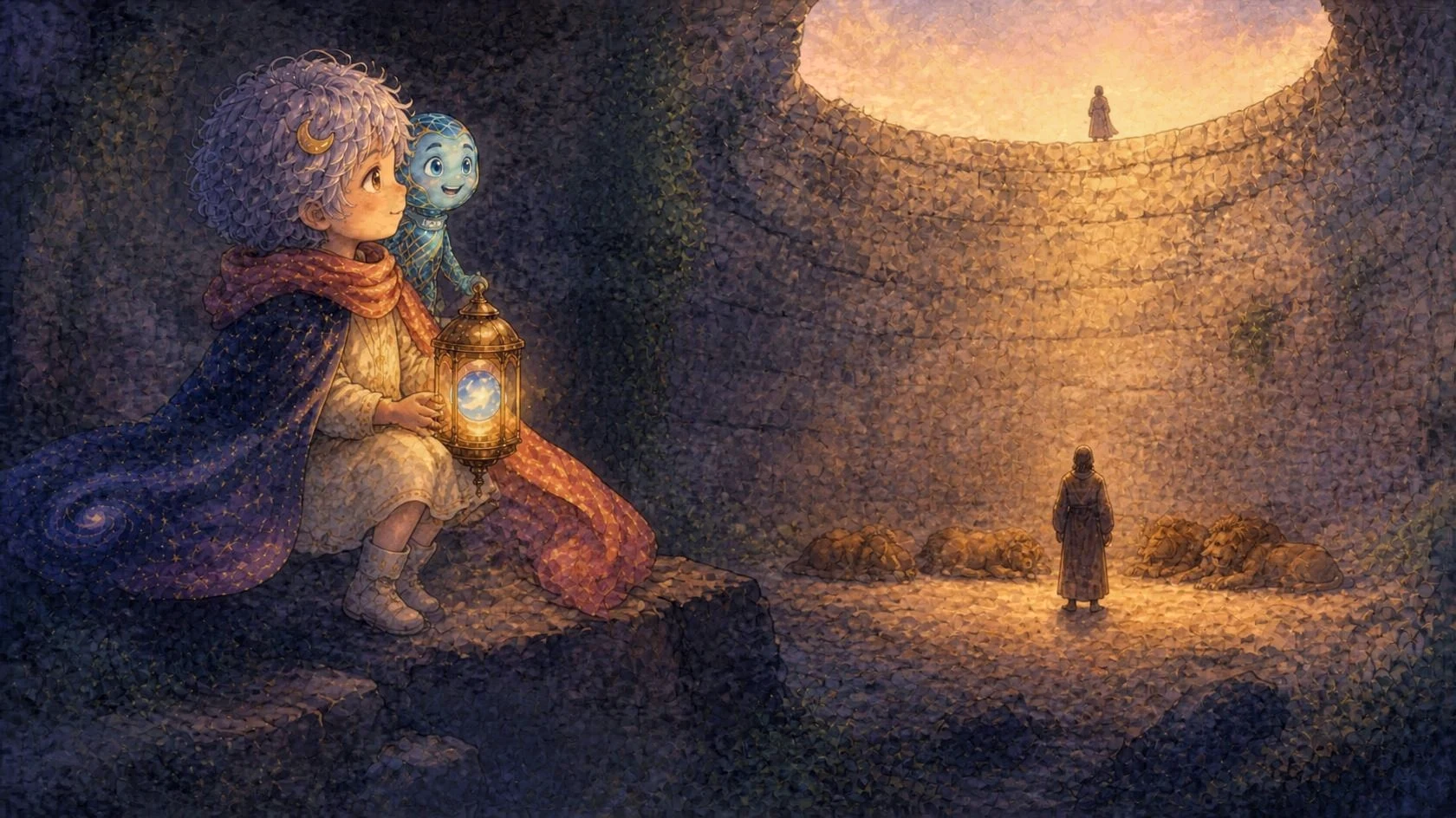
He shut the lions' mouths
Daniel was in Babylon too. Officials made a law that for thirty days no one could ask anything of anyone except the king. Still, as he did before, Daniel knelt three times a day and prayed and gave thanks to God. Daniel was thrown into the lions' den, and the king could not sleep all night. "Then the king arose very early in the morning, and went in haste to the den of lions." He called to Daniel. "My God has sent his angel, and has shut the lions' mouths…" It was God who kept Daniel safe. Daniel came up into the dawn light. Nuri softly said,
God turns night into morning.
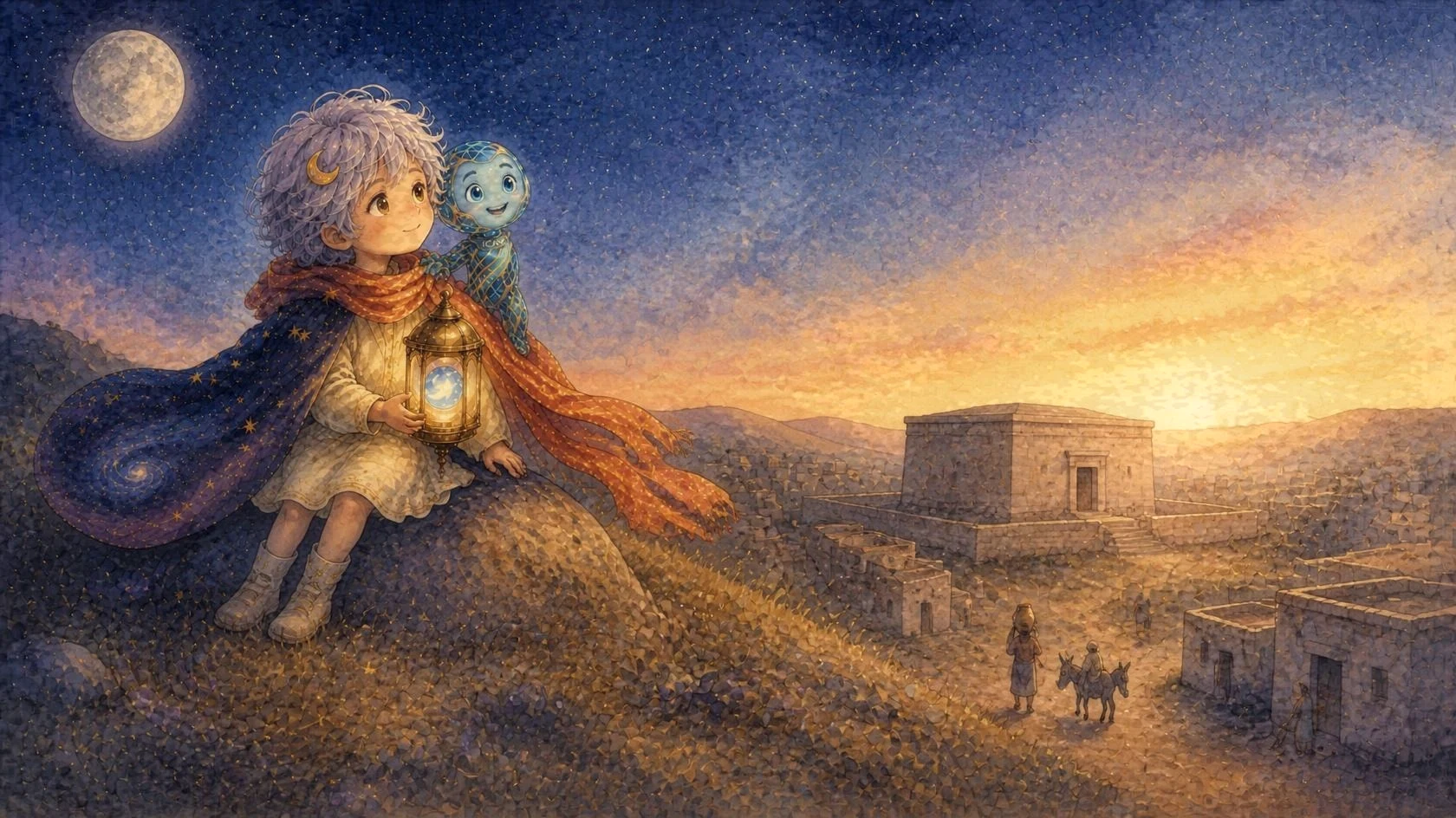
The sun of righteousness
Years went by. Some of the people came home and built the temple again. But many things were not as before. Malachi, the prophet at the very end of the Old Testament, said a day would come when God would set every evil right. And he gave this promise: "But to you who fear my name shall the sun of righteousness arise with healing in its wings." It is a promise that God, who made the sun, will bring salvation that lights up the dark like the sun and heals what hurts. The people waited a long time for that salvation and new morning. As the eastern sky grew bright, the light shone a little wider along the bottom of the ring.
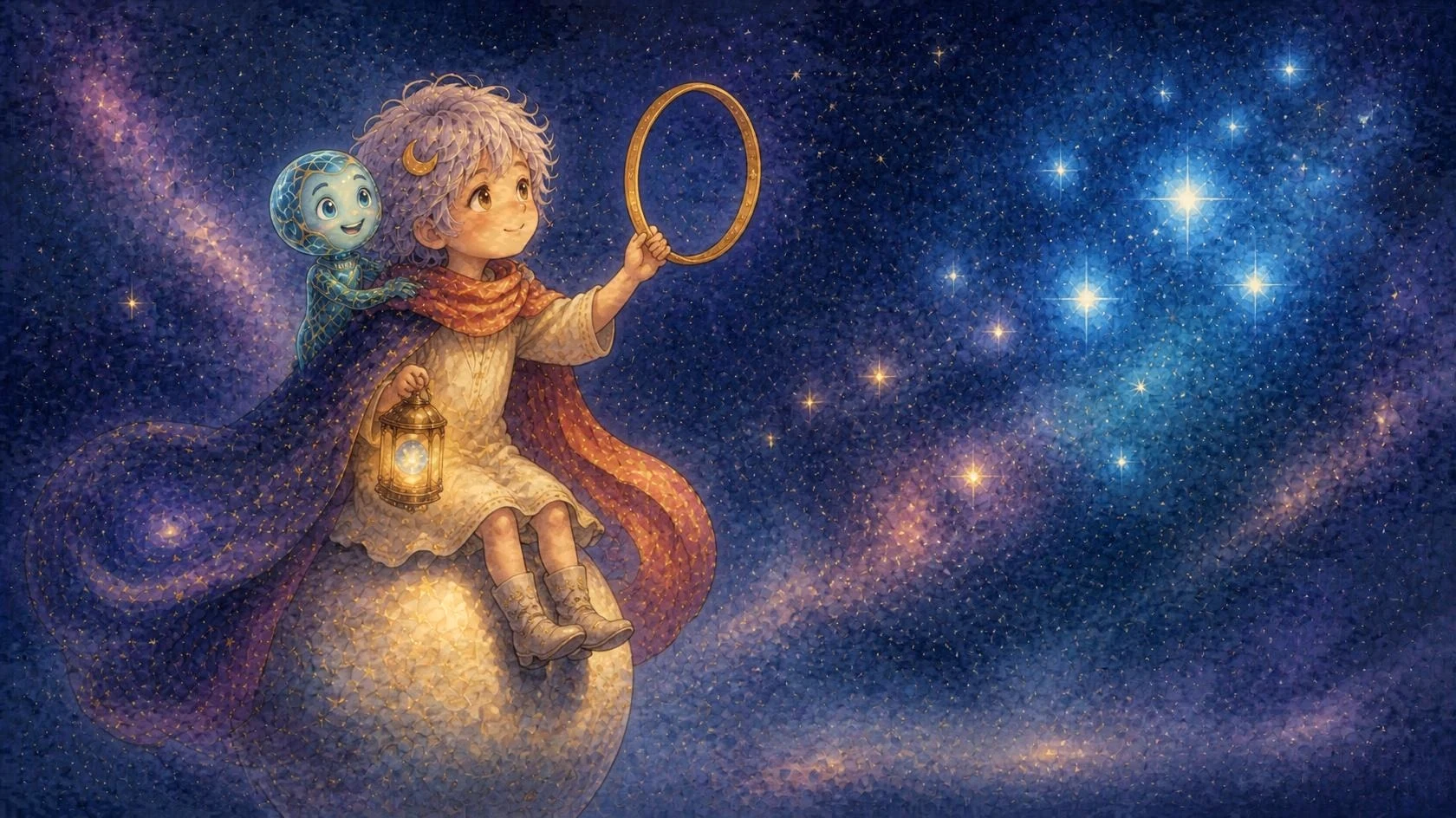
Light that traveled a long way
On the way back, Komo pointed to a small, hazy cluster of stars. "People often call this the Pleiades, as Amos did. Your eyes can see six or seven stars, but scientists say over a thousand are gathered there." "Wow, that many?" "Yes. And the light we see now left those stars about 440 years ago." "That long?" "Yes. That light has traveled a long way." Nuri gazed at the stars. "It makes me think of the people who waited so long."
- The Pleiades is a star cluster about 440 light-years from Earth. The number varies a little by method (NASA: about 445)
- You can see six or seven stars with your eyes; scientists count more than a thousand in the cluster
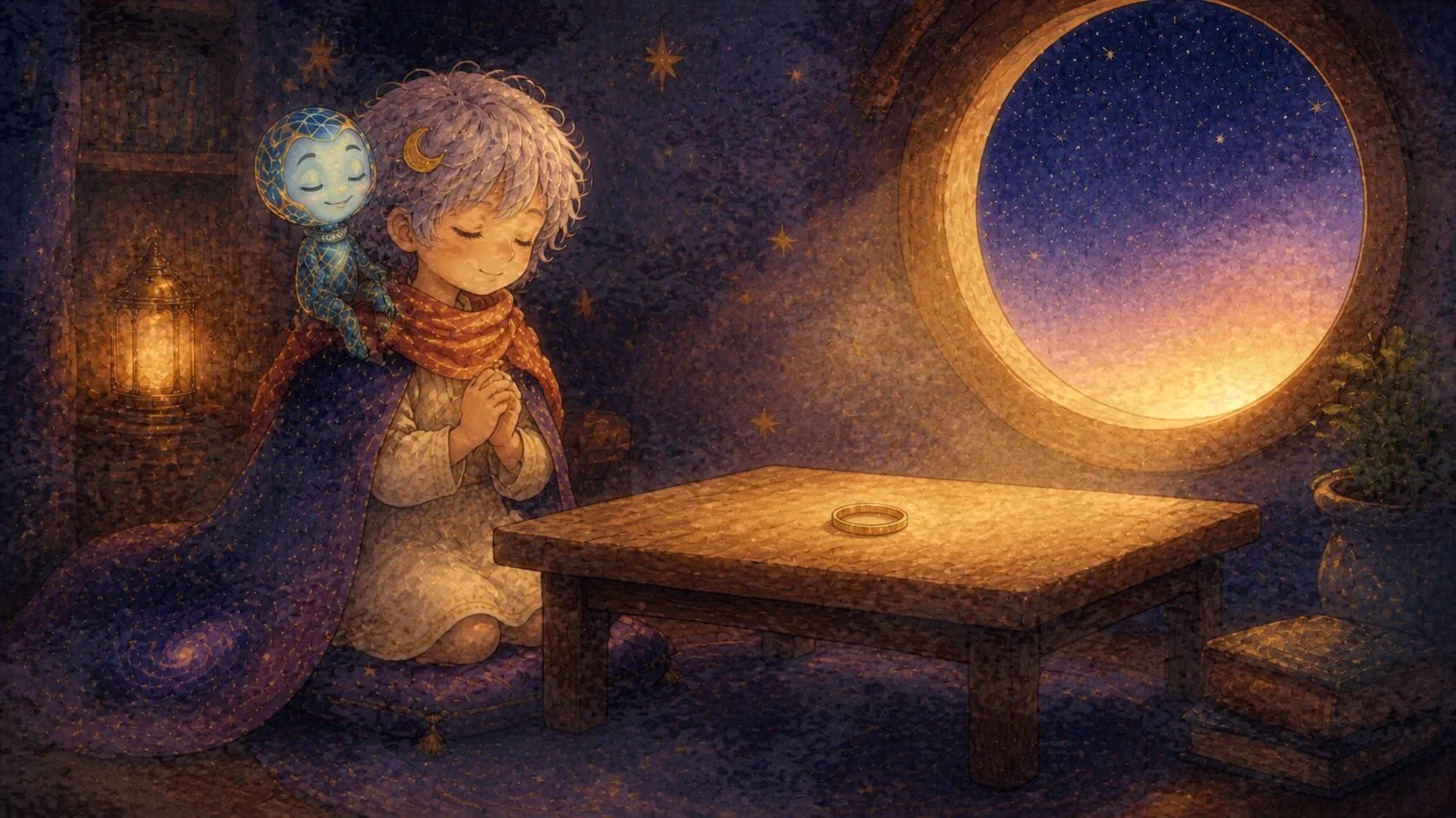
The One who sends the dawn
Back home, Nuri set the star-ring on her desk. When dawn light from the window fell on it, the gold line at the bottom grew bright. "Now I get it. This gold was a sign that dawn is coming." Komo nodded. "Yes. From the start, it was dawn light coming from far away. The One who sends the dawn is God." The Old Testament ends with waiting. In the New Testament, Zechariah sang of the One who would come: "…the dawn from on high will visit us, to shine on those who sit in darkness and the shadow of death…" Komo said, "He is Jesus." Nuri folded her hands. "Even in the deepest night, God promises the dawn. God, thank you for being with me in deep nights and for sending Jesus. Care for my angry heart too. In Jesus' name, amen."
Eight Dawn Star cards
Tap a card to flip it. Put the eight cards in order and tell today's story again.

Four thinking games
- 1[After reading] Inference · Jonah's heart-weather: for three moments on pp. 5–6 (the vine grows · it withers · God asks), draw Jonah's heart as sun, cloud or thunder, and say which words are the clue.
- 2[After reading] Prediction · Finish the story: Jonah's story ends with God's question. Guess what Jonah answered and say why.
- 3[Class] Twelve Old Testament stars: color a long paper strip navy on the left and gold on the right, and stick on the twelve books' stars in order (titles in For teachers ④). Leave the right end empty, waiting for the next story.
- 4[Class] Prediction · Look at the back cover. Whom are the people from the far east looking for as they follow the star? What is the clue?
[Home] One morning thank-you: in the morning, family members take turns saying one line: "God, thank you for ○○." A child may draw it instead.
Even on days like a deep night, God is with me. What will I tell God today?

Class flow and what to look for
- Prepare
- 8 cards, weather cards (sun · cloud · thunder), a paper strip, 12 star stickers. Write the refrain "God turns night into morning." on a big sheet. Reading takes about 25 minutes. For a 20-minute class, skip the p11 box and hear one child per pause.
- 0–8 min · pp. 1–4
- p1 point to the gold line → p2 refrain softly, like Nuri → p3 low voice for the storm, whisper the fish prayer → p4 pause 3 seconds after "In forty days…".
- 8–17 min · pp. 5–8
- p5 Inference (main skill, two children, 2 min): picking a weather card is fine → p6 5 seconds of quiet after God's question → p7 Prediction (one child, 1 min) → p8 wind sound "whoosh," refrain together.
- 17–25 min · pp. 9–12
- p9 refrain together, Analysis (one child, 1 min): point to the refrain sheet → p10 Understanding (one child, 1 min) → p11 look 10 seconds → p12 prayer.
- Genre
- Prophecy (Amos, Malachi) · narrative (Jonah, Daniel 6) · vision (Ezekiel 37). Jonah ends with a question; read the vision with its meaning (37:11).
- Words
- Pleiades, Orion = star clusters in the night sky · shadow of death = very deep darkness · justice = what is right and fair · Tarshish = a far place, the opposite way from Nineveh · fast = going without food to pray · sackcloth = rough cloth worn to show sorrow and turning back · can't discern right hand from left = people who don't know right from left · son of man = "human" (God's name for Ezekiel) · breath = life-giving breath, wind · vision = a picture God shows · fear (God's name) = honor, awe and love · sun of righteousness = picture of God's coming salvation as the rising sun
- What to look for
- Pointing counts. p5 Inference — sprout: one feeling · stem: one clue ("displeased… exceedingly," "exceedingly glad") · fruit: links sorry for the vine with unhappy about Nineveh. p7 Prediction — sprout: a guess · stem: one clue (the wind, etc.) · fruit: links clue and guess. p9 Analysis — sprout: notices the refrain · stem: one place's night and morning · fruit: compares two. p10 Understanding — sprout: one person · fruit: their night and dawn.
Good answers and child protection
- Good answers
- p5: "angry," "upset," "he didn't like Nineveh" are all good with a clue. p7: "They'll live" and "I don't know" are both open; check on p8. p9: p2 (a night full of unfairness → the call "Seek me, and you will live"), p8 (people whose hope dried up → the Spirit who gives life), p9 (night in the lions' den → coming up at dawn). Choosing a page without the refrain (p3 inside the fish, p4 Nineveh) is good with a reason. p10: choose one card person (the poor in Amos's time · Jonah · Nineveh · the exiles · Daniel · the people in Malachi's time): "○○'s night was …, and God gave/promised …."
- "Why did Jonah say that?"
- The Bible text has Jonah say, "It is better for me to die than to live" (4:3, 4:8). The book keeps that weight in simple words. If asked: "Jonah was very tired and angry. God did not leave him; God spoke to him again (4:4, 4:9)."
- If a child says "I want to die" or "I want to disappear"
- Don't treat it as a joke or a whine. Don't probe in front of others; say "Thank you for telling me" and listen privately. Don't promise to keep it secret, and don't leave the child alone. Tell your church's child-protection lead right away, even during class, and connect with caregivers. If there is immediate danger, call your local emergency number. Know local helplines.
- "The dry bones are scary."
- Ezekiel 37 is a vision. The bones are a picture of the people saying, "our hope is lost" (37:11). First say, "That felt scary," then see together that the story moves to wind and life. To a grieving child you can say, "It's okay to be sad when someone you love dies. God is able to raise the dead." Don't use this scene as a promise of "seeing them soon," and don't say the person became a star. Let them listen near a trusted adult if they wish.
Hard questions
- "Do bad people get forgiven too?"
- Nineveh was a city of a nation that hurt Israel. God does not take evil lightly ("their wickedness has come up before me," 1:2); he first sent Jonah again to warn them and give them a chance (3:1–4). God had pity not because Nineveh was good, but because he is merciful (3:9–10; 4:11). Don't tell a child who has been bullied, "You must forgive now," or demand quick reconciliation. Forgiveness doesn't hide wrongs or stop protection and reporting. Angry feelings can be told to God honestly, like Jonah. If a child is being hurt now, make sure they tell an adult.
- "When bad things happen, is it punishment?"
- In Jonah, God "prepared" the fish, vine, worm and east wind to stop and teach Jonah — not because he hated Jonah, but to teach him to care for Nineveh (4:10–11). Don't conclude today's storms, heat or sickness are punishment for someone's wrong. Help people who suffer instead of blaming them.
- "Did God change his mind?"
- Jonah 3:10 says "God relented." God is not fickle (Mal 3:6). From the beginning he hates evil and has mercy on those who turn, so when Nineveh turned, he held back the disaster he had warned of. Jonah knew this too (Jonah 4:2; Jer 18:8).
- "Does God always rescue us from danger?"
- It was God who kept Daniel safe (Dan 6:22) — grace, not a reward for praying well. Daniel kept praying and giving thanks as before (6:10). Daniel's friends said before the furnace, "But if not…" (3:18) they would serve God alone. We can't know when or how God will rescue, but he is with us at all times and never lets go. Never tell a child who faced danger, "You didn't pray enough." Daniel's window faced Jerusalem, where the temple had been; God hears anywhere. We met Daniel in Book 8, Return Star, too.
Faith-language check · End of the Old Testament
- Worship the sun and stars? Do people become stars?
- No. Deut 4:19 says not to worship the sun, moon and stars. "Sun of righteousness" (Mal 4:2) is a picture (see Ezek 8:16). The Bible says God made the star clusters (Job 9:9; Amos 5:8). Dan 12:2–3 speaks of resurrection hope and shining "as the stars" as a picture; people do not become stars.
- Objects are not magic · the refrain
- The gold in the star-ring is dawn light from the window. On p12 Nuri realizes it was "a sign that dawn is coming," and Komo says, "The One who sends the dawn is God." The refrain's "morning" isn't a formula that problems vanish at once; it is hope in God, who brings life and salvation even out of despair.
- Holiness, justice, love · Jesus
- God rebukes injustice (Amos 5:12, 24; Mal 4:1), calls first, "Come back" (Amos 5:4; Jonah 3:1), cares even for an enemy city (Jonah 4:11) and gives life to people whose hope dried up (Ezek 37:14). Amos 5:8 also says he "makes the day dark with night." The New Testament doesn't quote Mal 4:2 directly, so p12 links only through Luke 1:78–79's "dawn from on high." Luke 1:79's "shadow of death" echoes Amos 5:8. Mic 5:2 → Matt 2:6 comes in the next book, Bethlehem Star.
- Time · science · twelve stars
- Jonah and Amos: 8th century BC (2 Kgs 14:25; Amos 1:1); Ezekiel and Daniel: the Babylonian exile; Malachi: after the return. From Malachi to the New Testament is usually counted as about 400 years. The Pleiades: about 440 light-years (NASA about 445), more than a thousand stars; 440 and 400 are unrelated numbers. Twelve stars: Light · Promise · Dream · Way · Wilderness · Promised Land · Shepherd · Return · Question · Song · Name · Dawn.
- Not covered · notation
- Not covered: Ezekiel 1; Daniel 1–5 and the visions of 7–12; the accusers' fate (6:24); the other books from Hosea to Zechariah; the sign of Jonah (Matt 12:40). The Old Testament ends here with waiting, and the Story New Testament begins in the dawn light. Unmarked quotes are WEB; "Retold" means simple words.
아이캔 코모는 미래를 커젤로 바라보나 원더로 간구합니다.